

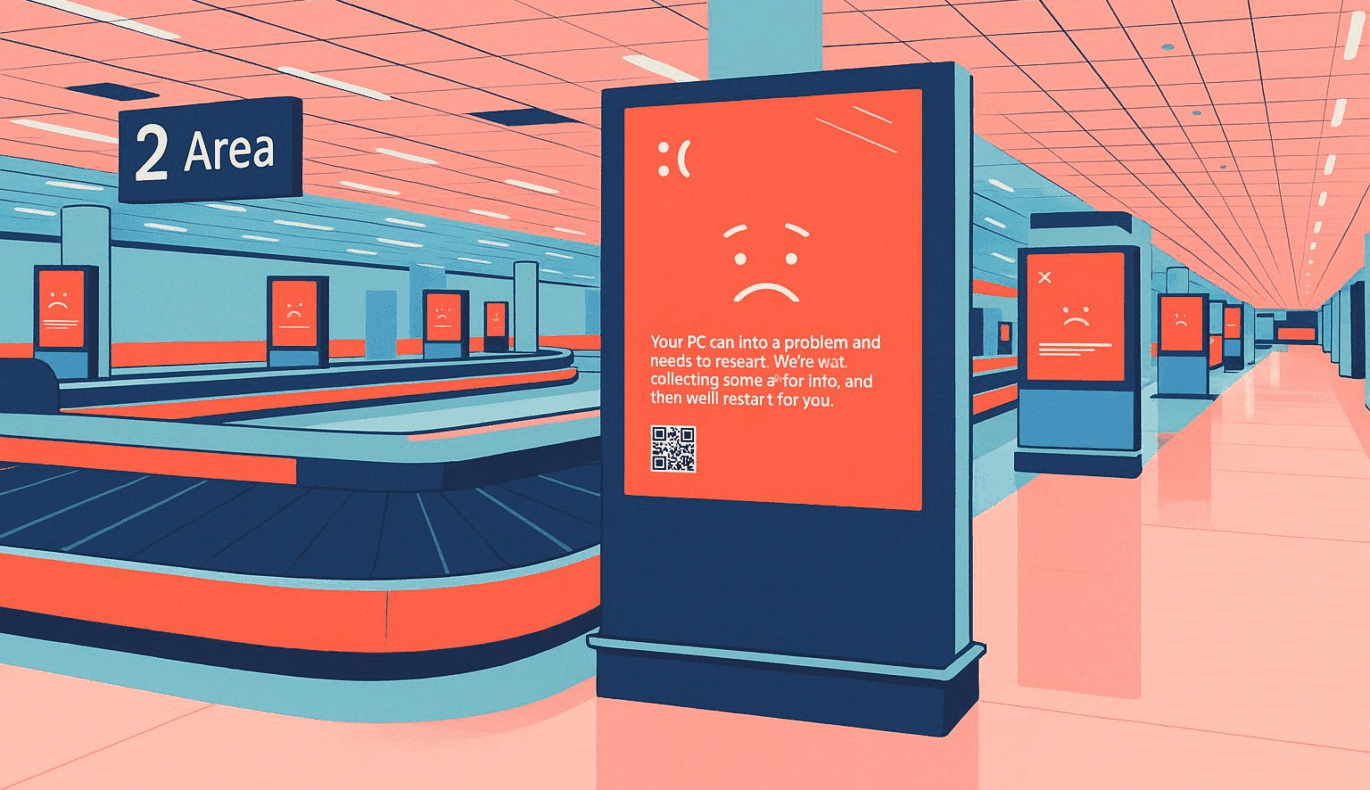
The world of cyber security was forever changed by a 78-minute outage that happened just a year ago. Incidents like this not only shake the trust of stakeholders, but also redefine the strategic and operational makeup of cyber security protocols. The reverberations of this outage are still being strongly felt — and its legacy has even transcended the enterprise that directly suffered the impact: none other than CrowdStrike.
CrowdStrike, a company synonymous with leading-edge cyber security services, faced an unusual event leading to a significant service disruption. Downtime in cyber security service provisioning isn’t just a chink in the armor — it’s akin to affliction of the vital organs. This event presented a gap in the shield, allowing adversaries a fleeting window to launch attacks and compromise vital networks — a cyber chaos that companies can ill-afford.
What transpired within CrowdStrike did not stay confined within its walls; rather, it led to an industry-wide introspection turning crisis into an opportunity. The realization dawned that the ecosystem needed to be prepared for possibilities that they considered were reserved for worst-case scenarios. This reshaping of the industry was a collective reassessment — to not just protect but to predict, prevent, and respond more robustly.
Staged Rollouts Change The Game
In response to the crisis, organizations have turned to the strategy of “staged rollouts”. Much like rehearsals, staged rollouts work on the premise of phased deployments — a strategy where changes are not immediately implemented across an entire network but systematically released in chunks. This approach provides a measure of control and allows time for error identification and rectification without jeopardizing the whole system.
Staged rollouts offer a safety net, a cushion against disasters. While testing changes in a controlled environment or limited scale does not eliminate glitches, it helps minimize the potential damage and allows teams to adjust and troubleshoot issues without having to face full-scale meltdown.
Manual Override: The Failsafe We Need
Imagine driving a car which doesn’t allow you to take manual control — you’d feel helplessly trapped and at the mercy of the vehicle’s whims. The same principle applies in the cyber security space, due to the adoption of ‘manual override’ capabilities.
In essence, manual override serves as a fallback mechanism that allows human intercession to overrule automated systems when required. It provides a failsafe when automation, in interpreting its surrounding scenario, may potentially misjudge situations leading to unanticipated outcomes.
One can’t emphasize enough how vital these updates to cyber security protocols are. It’s akin to a vaccine for a disease, the learnings and prevention strategies are harbingers to a healthier and more resilient cyber cathexis. Outages like the one experienced by CrowdStrike can and will happen in our increasingly complex digital landscape. The key question is, have we learned enough to prevent the next major cyber outage from causing chaos?
Thanks to these adaptive strategies, organizations are not left vulnerable. The echoes from the 78-minute outage have carried vital lessons and brought about tangible changes, promoting a more holistic approach to contingencies. It’s through navigating such challenges that the industry is reshaped, and gradually, made invariably stronger.
You can dive deeper into the event and its repercussions by reading the original article here.