
Pushing Against the Boundaries
Artificial Intelligence (AI) has positioned itself on the frontier of many of our technological advancements. From self-driving cars to predictive algorithms that can forecast our entertainment preferences, AI-tools are woven into the fabric of our daily lives; they’ve become the invisible conductors orchestrating our digital experiences. But with these fascinating progressions comes a weighty question: Where is AI taking us?
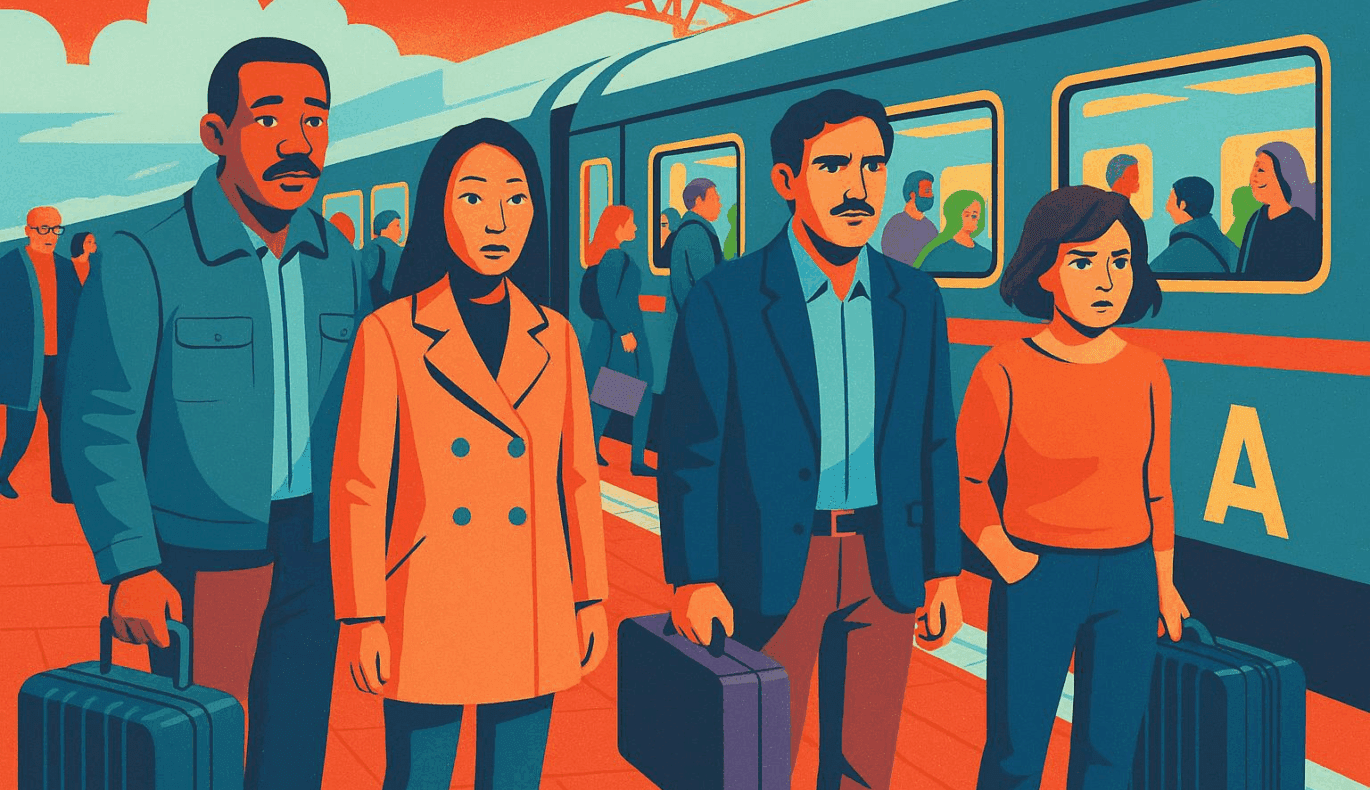
Truthfully, we may be too mesmerized by the opportunities AI presents to look at the broader picture. Similar to the passengers in a high-speed train, whisked away by the marvel of swift mobility, we overlook the implications of our destination.
Unwrapping the Promise of Opportunity
Often accompanied by eye-catching headlines promising utopian-like advancements, AI is seen as a harbinger of progress. How could one possibly resist the allure of streamlined operations, breakthroughs in medicine, or increased energy efficiency? These impressive leaps forward are true indicators of AI’s potential. Yet, we must ensure our discussion doesn’t stop at the surface level.
There’s a paradox in AI’s promise of opportunity, which deserves a deliberate pause for contemplation. The reality is, this promise often masks a harsh reality of managed displacement. AI’s capability to augment or replace human input in various tasks and occupations isn’t a fiction of some dystopian novel; we’re living it.
Historically, every industrial evolution brought displacement. But unlike the industrial revolution or the advent of the internet, AI’s influence isn’t limited to specific sectors or geographic locations.
While some argue that AI may give birth to new job fields and opportunities, we are venturing into the unknown. Proactive action and complex problem-solving are required to face and adapt to such unprecedented change. We don’t just need “better” AI tools; what truly matters is how, where, and why we utilize these tools.
The time to ask hard questions and define this discourse isn’t tomorrow; it’s today. The challenge before us isn’t merely to develop more advanced AI, but discerning the trajectory of artificial intelligence in our society, both economically and socially. Moreover, it is high time for us to delineate the ethical boundaries that will govern and regulate AI’s application. Ensuring sustainable development must be a priority over mere advancement for the sake of ‘progress’.
Discussing AI doesn’t always fit neatly into optimism or caution. But, balancing the two could be the inflection point we are looking for. It’s not about halting advancements but rather understanding the full extent of AI’s ripple effect, and in turn, making informed decisions on how to best navigate through this new terrain.
We should be the ones steering the conversation, setting the rails, and determining the destination of the high-speed train that is artificial intelligence – otherwise, we risk becoming mere passengers.
Article inspired by Venture Beat.