

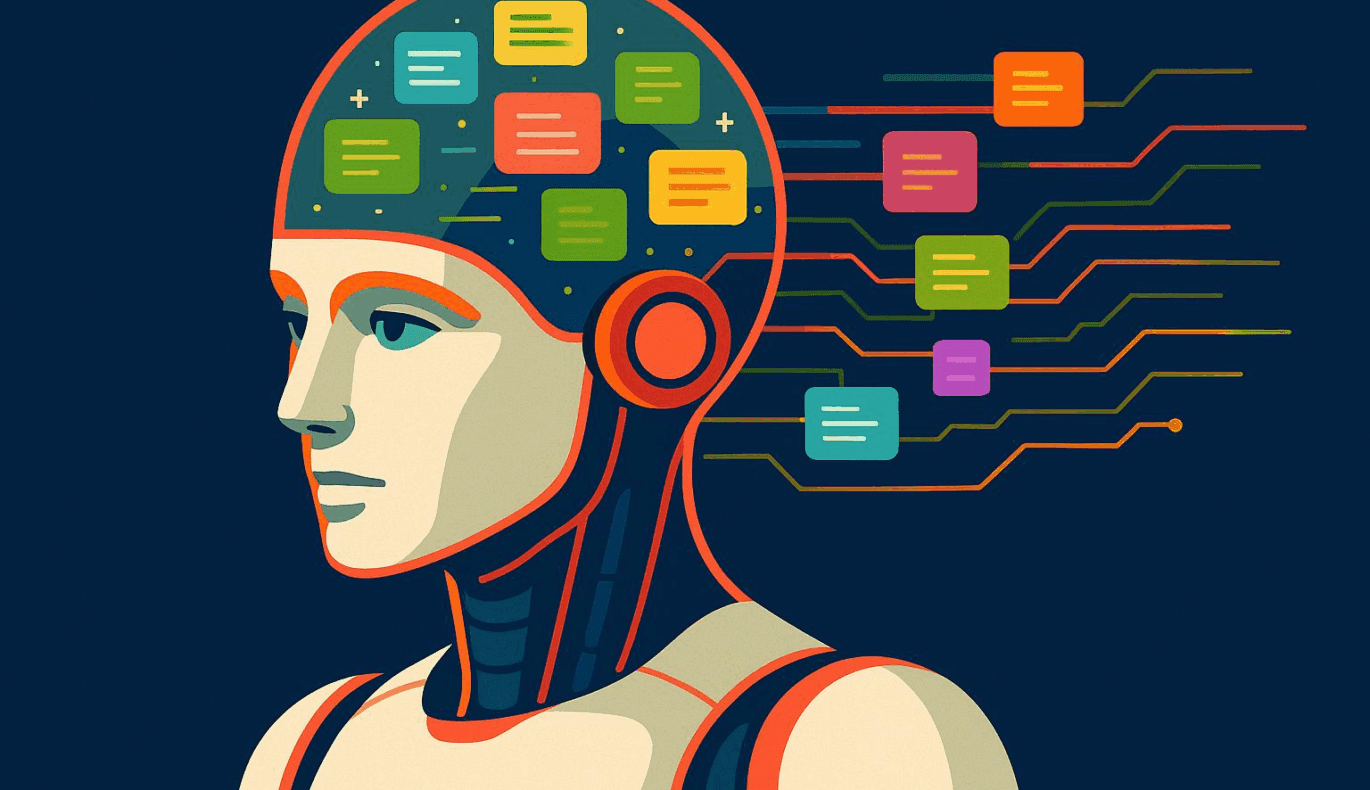
Within the rapidly evolving field of artificial intelligence (AI), language learning models (LLMs) have marked a noteworthy revolution. However, their efficiency and adaptability have often been questioned. An alluring solution to this problem draws on an unlikely muse: human cognition. Namely, a concept called “procedural memory”. Memp, an ambitious tech firm, has adopted this approach in an attempt to make LLM agents more adaptable to new tasks and environments.
Procedural memory, in humans, allows us to remember how to perform certain tasks without conscious thought — like riding a bike or typing. It’s the type of memory we use to remember complex tasks that become second-nature to us.
This behavioral psychology principle, when applied to AI models as carried out by Memp, establishes a “procedural memory” bridge. This bridge helps the AI to identify patterns, understand contexts, and automatically adapt to new tasks and unfamiliar environments. Rather than bombarding the system with redundant data, the AI unit can now make informed decisions based on procedural knowledge, leading to an increase in efficiency and a decrease in computational resources.
Memp’s introduction of “procedural memory” into LLM agents is a pioneering breakthrough in AI technology. It is this kind of cognitive learning and memory model that has the potential to push AI agents past their current limits and closer to understanding nuanced and adaptive communication.
This innovative implementation has substantial implications for the cost and complexity of AI agents. As we can glean from human learning processes, once we have learned a task fully, it requires less cognitive resources to carry it out in the future. Similarly, LLM agents equipped with procedural memory can perform tasks more efficiently, using less processing power and thus, reducing costs remarkably. Plus, the complexity of programming new tasks is significantly lessened as the agent has the capacity to adapt and cater to new scenarios autonomically.
AI has been envisioned to mimic human intelligence in its most complex sense, and adopting human memory models seems to be a giant leap towards this goal. With massive amounts of information flooding the digital sphere every day and the ever-increasing appetite for AI that can learn and adapt with human-like efficiency, Memp’s approach offers an intriguing possibility.
There is no denying that AI as a field is rapidly changing and growing. The introduction of procedural memory to LLM agents by Memp opens up a new horizon of possibilities and applications in the AI realm. It also asks vital questions around how we can continue to innovate within AI, and how much further we can push the envelope using human cognition as a model.
From the looks of it, AI might soon surpass being simply a tool we use. Powered by initiatives like Memp’s, AI seems destined to become a true partner capable of learning and growing alongside humans.
Article source: VentureBeat