

Description
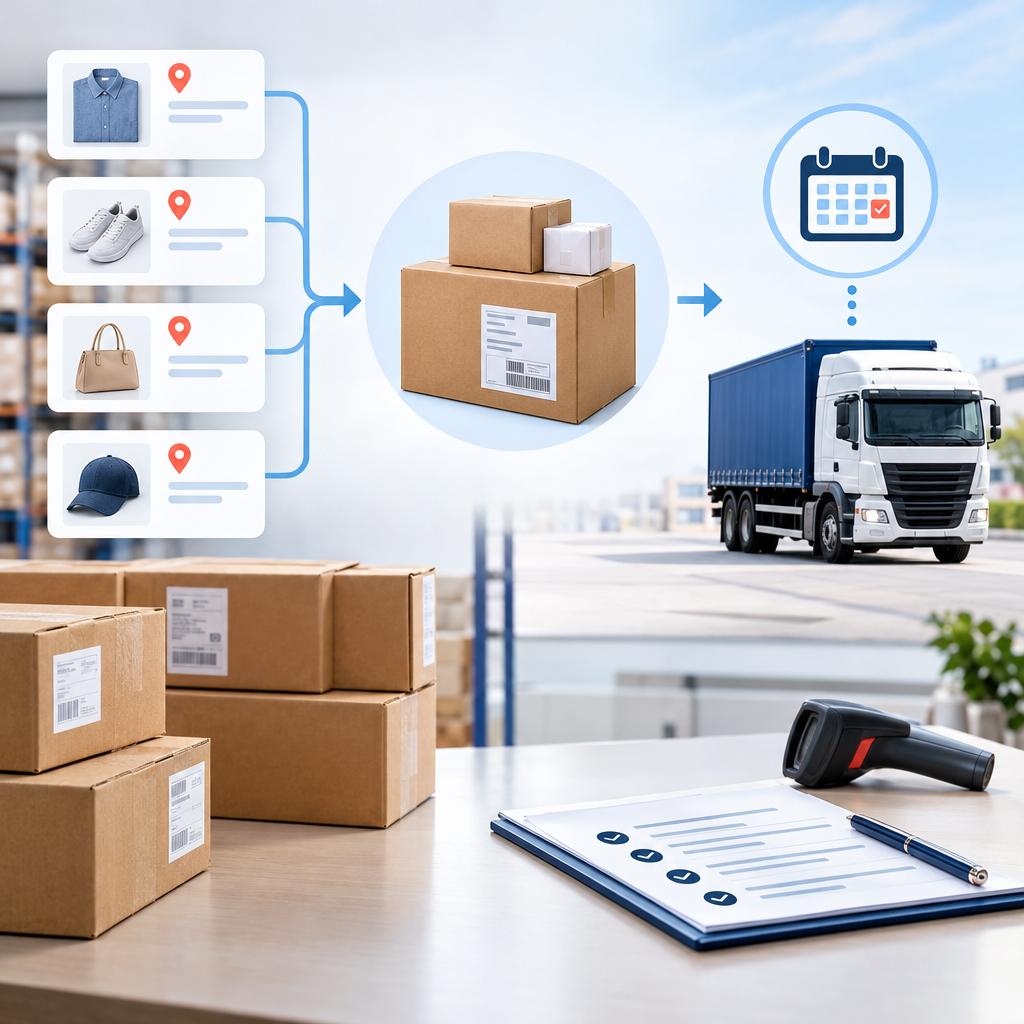
This managed service continuously watches incoming e-commerce orders and decides when orders for the same recipient should be combined into a single shipment. implementi.ai configures the consolidation rules to match your commercial and operational constraints (time windows, item compatibility, SLAs) and operates the automation as an ongoing, monitored service.
The product reduces repetitive manual checks, prevents avoidable separate parcel shipments and coordinates with your shipping provider and warehouse systems. We take responsibility for running, monitoring and updating the automation so the behaviour stays aligned with your business rules.
The problem
Without automation, teams must manually inspect new orders, spot opportunities to merge multiple purchases for the same customer (or address) that arrive within a short window and then adjust pick, pack and shipping requests. That manual work is inconsistent, error‑prone and gets harder as order volume grows. Unchecked, repeated shipments create higher carrier costs, extra packing labour, more return opportunities and fragmented customer communications. Keeping track of pending orders, open consolidation windows and carrier cutoffs becomes an operational overhead that distracts fulfilment staff from core tasks.

What this solution automates
This solution automates continuous detection, grouping and scheduling of orders that are eligible for consolidation. It applies configurable business rules, communicates consolidated shipment instructions to fulfilment systems and triggers carrier pickups or booking updates.
- Automatically cluster new orders by customer, shipping address and timing windows.
- Apply product/packaging compatibility checks and business rules (e.g. hold windows, priority SKUs).
- Update WMS/ERP or pick‑lists to reflect combined shipments and avoid duplicate picking.
- Send shipment instructions and label/manifest updates to carriers or shipping platforms.
- Notify customer-facing systems (CRM, email) with consolidated tracking info.
- Escalate exceptions (incompatible items, split shipments) for human review.
What your business gains
- Lower shipping cost. Consolidating multiple orders into fewer parcels reduces carrier charges and handling fees while simplifying inbound carrier reconciliation.
- Reduced packing labour. Combining fulfilment work for the same address reduces duplicate picking and packing steps, freeing operations staff for higher-value tasks.
- Fewer delivery exceptions. Consolidated shipments decrease the number of parcels that can be lost or delayed and make tracking and customer communication simpler.
- Better customer experience. Single consolidated tracking updates and fewer parcels improve clarity for customers and reduce delivery-related enquiries.
- Operational consistency. Automated rules enforce the same consolidation logic across shifts and sales channels, reducing mistakes from manual judgement calls.

A practical use case
For a mid‑size online retailer that receives many repeat or add‑on orders from the same households, the automation watches incoming orders and holds eligible orders for a short, configurable consolidation window (for example, up to several hours). When the window closes or a carrier cutoff is reached, the system merges those orders into a single pick/pack job, updates the warehouse system with combined carton contents, requests a single shipping label and sends the consolidated tracking details to the customer. Exceptions — such as one item requiring quarantine or a priority overnight item — are routed for human review so SLAs are preserved.
Who is it for?
- Mid-market e-commerce retailers who ship B2C orders and see frequent same‑address repeats — reduces parcel counts and shipping cost.
- Third‑party fulfilment centres (3PLs) looking to improve packing efficiency and reduce carrier bills for multiple clients.
- Brands running flash promotions or frequent add‑on offers that generate clustered orders within short time windows.
- Marketplaces coordinating multiple small seller orders to the same buyer address and needing automated consolidation rules.
What is included in the monthly service
The monthly subscription covers the managed automation service: we configure and run the consolidation logic, connect agreed systems, monitor operation, and maintain the solution. implementi.ai also handles routine fixes and reasonable configuration updates as your shipping rules change.
- Ongoing operation and monitoring of the consolidation automation
- Connections with the systems agreed before launch (platforms and carriers)
- Handling and fixing automation errors and routine maintenance
- Reasonable monthly configuration updates to consolidation windows, rules and carrier mappings
When this solution may not be necessary
- If you ship very low volumes (a few orders per day) where consolidation rarely applies, the service may be unnecessary.
- If your fulfilment process or agreements prohibit holding orders for any consolidation window (strict immediate dispatch), this product is not appropriate.
How it works
- Order ingestion. New orders arrive from your e-commerce platform(s) and are captured in the automation for immediate evaluation.
- Eligibility checks. Each order is scored against configured rules — matching address, payment confirmation, item compatibility, priority SKUs and delivery SLA constraints.
- Windowing and grouping. Orders that qualify are placed in a short consolidation window where additional incoming orders for the same recipient can be merged.
- Consolidation decision. At window close or carrier cutoff, the system decides whether to combine orders into a single shipment or route them separately if rules block consolidation.
- WMS/ERP update. For approved consolidations, pick/pack instructions and carton contents are sent to the warehouse system so physical fulfilment reflects the combined shipment.
- Carrier booking and labels. The automation requests a single label/manifest from your carrier or shipping platform and updates the order records with consolidated tracking information.
- Exception handling. If an order is incompatible (hazardous item, priority shipping) or a conflict appears, the system flags it and routes to a human operator for resolution.
Example workflow
For example, imagine a company that sells home goods on two sales channels. A customer places an order at 10:05 and then adds a second order at 11:10. The automation captures both orders, verifies payment and address, and checks product compatibility. Because the orders fall inside the configured two‑hour consolidation window and contain no priority items, the system groups them. It updates the warehouse with a single pick list, requests one carrier pickup and issues combined tracking information to the customer. If the second order included a rapid‑ship item, the automation would split that item into a separate fulfilment and flag the rest for consolidation, notifying staff to handle the exception.
Integrations
Typical systems
Typical systems we connect to include e-commerce platforms such as Shopify, WooCommerce and Magento; warehouse or fulfilment systems and WMS providers; shipping platforms and carrier APIs (for example ShipStation, DHL, UPS, FedEx integrations where available); and ERP systems that manage orders and inventory. Other systems can potentially be connected by agreement.
Connection methods
We use available platform APIs and webhooks for real‑time order capture, shipping/carrier APIs for bookings and label generation, and WMS or ERP integrations to update pick/pack instructions. Where APIs are not available we can work with CSV exports, SFTP uploads or secure email feeds and agree a reliable transfer method before launch.
What we need from your company
Before launch we agree the systems to connect, sample order data and the fields required for reliable matching (customer name, address lines, order items, timestamps, payment status and priority flags). We also need your consolidation policy (time window length, item compatibility rules, priority SKUs) and carrier cutoff times. Access method and exact compatibility are confirmed before implementation.
FAQ
How quickly can we start consolidating orders?
Launch time depends on the number and type of systems to integrate, data availability and your chosen consolidation rules. We confirm an implementation schedule after a short technical review.
Will consolidation delay delivery for customers?
Not if rules are configured correctly. You define allowable consolidation windows and priority SKUs that must ship immediately; the automation respects those constraints and only holds orders when permitted.
What happens to orders that cannot be consolidated?
Orders that fail eligibility checks (incompatible items, separate delivery instructions, priority shipping) are released for immediate fulfilment and flagged so staff can review if needed.
Can consolidation handle multi‑warehouse or split‑inventory situations?
The service can be configured to consider inventory location and warehouse rules. If items must ship from different fulfilment sites, the automation will not force a consolidation that violates operational constraints and will route accordingly.
How are customers notified about consolidated shipments?
The system updates order records with combined tracking and can push consolidated tracking to your CRM or email notification system so customers receive a single, clear update.
What drives the monthly price?
Pricing reflects the integrations required (platforms and carriers), frequency of processing, data volume and the effort to maintain rules and handle exceptions as your shipping patterns change.
Price
The activation fee covers the initial setup, implementation and launch of the agreed automation scope.
The monthly subscription covers the ongoing operation, maintenance and management of the automation service.
The exact scope and final monthly subscription are confirmed before launch.
Ready to automate this process?
Tell us which e-commerce platforms, warehouse/WMS systems and shipping carriers you use and the consolidation window you prefer.
We’ll confirm how this solution can be connected, its scope and the final monthly subscription.
| Email uscontact@implementi.ai | Call us+48 660 983 178 |