

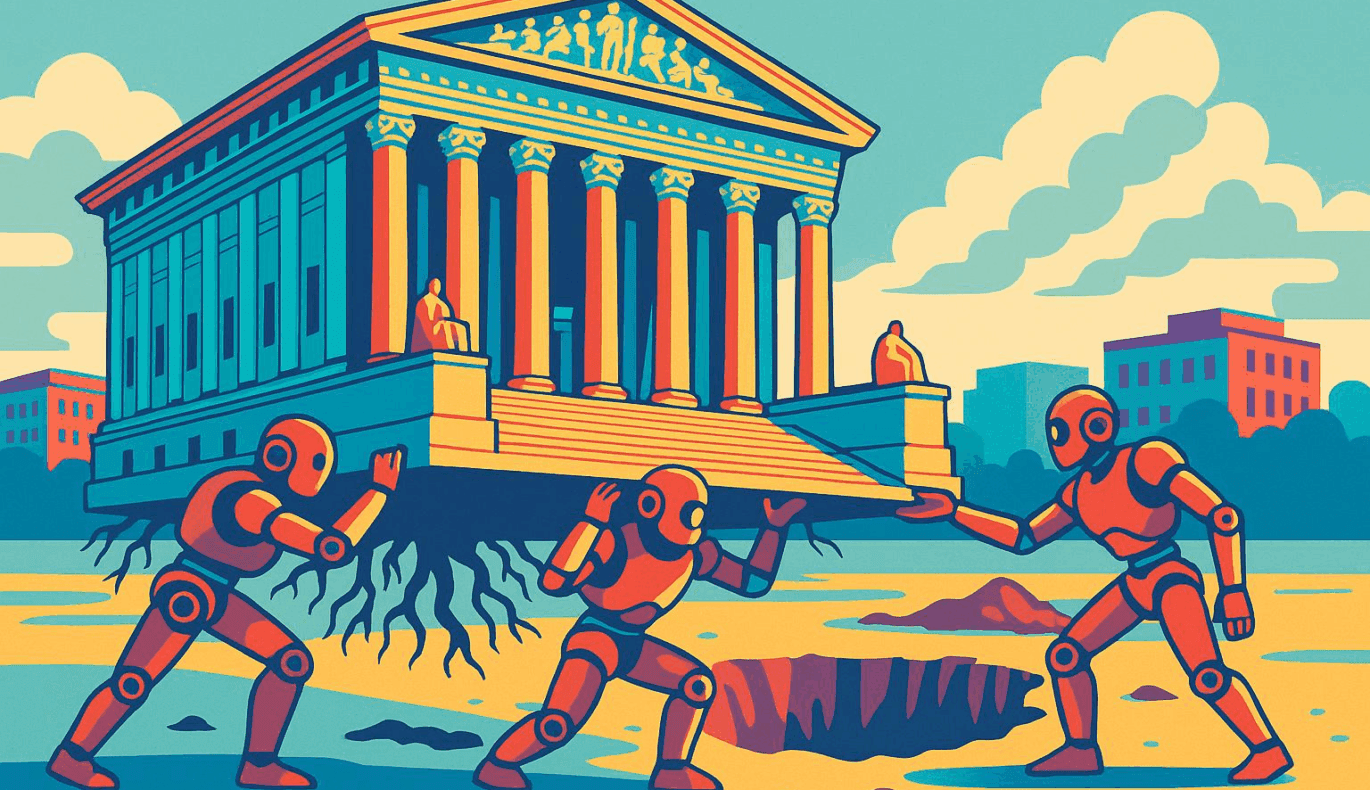
Perhaps you’ve heard of cognitive migration – a concept wherein individuals reassess, adapt, and evolve their thinking processes, based on the changing environment and experiences. Well, we are currently living in an era where not just people, but institutions too, are experiencing something akin to cognitive migration. Why? Because of the unprecedented rise and influence of artificial intelligence aka AI. How so? Let’s delve into that.
AI’s introduction into our lives was slow and subtle. It began with minor logistical tasks like setting reminders or recommending products online. Today, we find ourselves leaning on AI in areas that were once the sole province of human intelligence: from conversational bots resolving customer queries to intricate algorithms predicting financial market trends.
Thus, just as humans have had to undergo cognitive migration, adjusting their thought processes and acceptance of AI’s role in their daily lives, institutions too find themselves having to reassess their original purpose, structure, and functioning.
Let’s take the banking industry as an example. Traditional banking setup was composed of physical branches, in-person customer service, loads of paperwork, and a labyrinth of bureaucratic processes. Fast forward to the present time, digital banking – powered by AI – offers a completely different experience. There are virtual assistance for customer service queries, Robo-advisors for investment strategies, and algorithms to detect fraudulent transactions in real-time. All without the need for human intervention. Hence, banks are reevaluating their old operational strategies and are gradually shifting to AI-centric systems.
Schools and universities have also felt the impact of AI. Traditional educational institutions, which primarily focused on face-to-face learning and standardized testing, now use AI tools for up-to-date learning resources, personalized teaching, and fairer, more comprehensive forms of assessment.
The point is not that AI is attempting to replace these institutions but that it’s compelling them to redefine their purposes and ways of operation. It is just a tool, like any other technological invention before it, created to make lives easier. However, given its complexity and potential, it is perhaps the first tool that is necessitating a deep, organizational rethink.
Although adjusting to these changes can be a huge challenge, institutions need to remember that the primary goal remains the same: serving people’s needs. For this, institutions might need to reshape their structures, redesign their services, and rethink their strategies not just for survival, but for continued relevance and effectiveness in the Rise of the Age of AI.
This cognitive migration is inevitable and necessary for institutions in all sectors. Those that adapt will not only survive the AI revolution but will also ultimately thrive, while those resisting change might struggle to maintain relevancy.
But, the process of adaptation must be approached with caution. AI is undeniably a powerful tool, but it must be harnessed responsibly. Institutions must be cognizant of the ethical and social implications brought about by the adoption of AI, ensuring it does not lead to job displacement, infringement of privacy, or exploitation of data.
So yes, institutional cognitive migration, much like its human counterpart, is challenging, unnerving but also exciting. Because it could lead to improved services, unprecedented growth levels, and benefits we can’t even begin to anticipate. Much like all significant changes, it carries a unique brand of uncertainty, but also profound promise. And isn’t that the nature of any true evolution?
Read the original article.