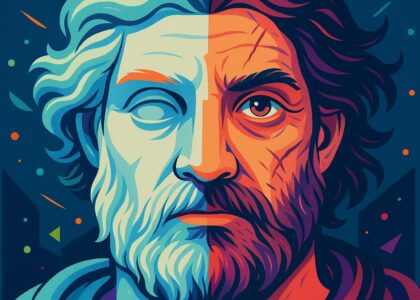


Just last week, Google found itself in a bit of an awkward situation. On Thursday, the tech giant had released a new feature on Google Earth that allowed users to add text prompts to satellite images using artificial intelligence. This tool, essentially, gave users the ability to create deepfakes of the real-world one pixel at a time. Critics and observers voiced concern over the potential misuse of such a tool, sparking a stir within the tech and AI communities.
Reiterating the scope of the tool’s powerful capabilities, Henk van Ess, at Digital Digging, made headlines by intentionally generating some thought-provoking imagery. He added depictions of refugees near the Mexican border and a bomb crater close to a hospital in Gaza, reminding the world of constant humanitarian crises we currently face.
Google, meanwhile, was ready with their arguments to safeguard the transparency and integrity of the tool. They were quick to point out that all images generated using this new feature named Nano Banana 2 in Google Earth, would carry a digital watermark. Furthermore, they assured the public that they had measures in place to prevent image creation on sensitive or harmful topics.
Simultaneously, the new tool’s potential misuse reignited the ongoing discussions about deepfakes and the inherent risk they pose in distorting reality. The addition of such capabilities can fundamentally alter how we perceive and interact with the digital world, particularly in the context of satellite imagery. Given the increasing reliance on such images in various fields, from meteorological studies to military intelligence, the implications could be profound.
The uproarious responses to Nano Banana 2’s launch demonstrate the public’s rising awareness of AI technologies and their ethical implications. There is an ongoing demand for greater control and vigilance over AI and augmented reality applications, especially where the possibility of misinformation or misrepresentation is high. This release underscores the thin line between an innocuous AI application and a tool that could potentially distort perceptions.
Google, one day later, made a fresh statement addressing the issue. However, the event acts as another milestone in the larger narrative surrounding AI ethics and the extensive debates over the applications and implications of deepfake technologies. As technology develops, how we regulate its use becomes more complex and urgent.
For more detailed insights into Google’s new AI-enabled Google Earth tool and the ensuing arguments, you can read the full story at The Verge.