

Description
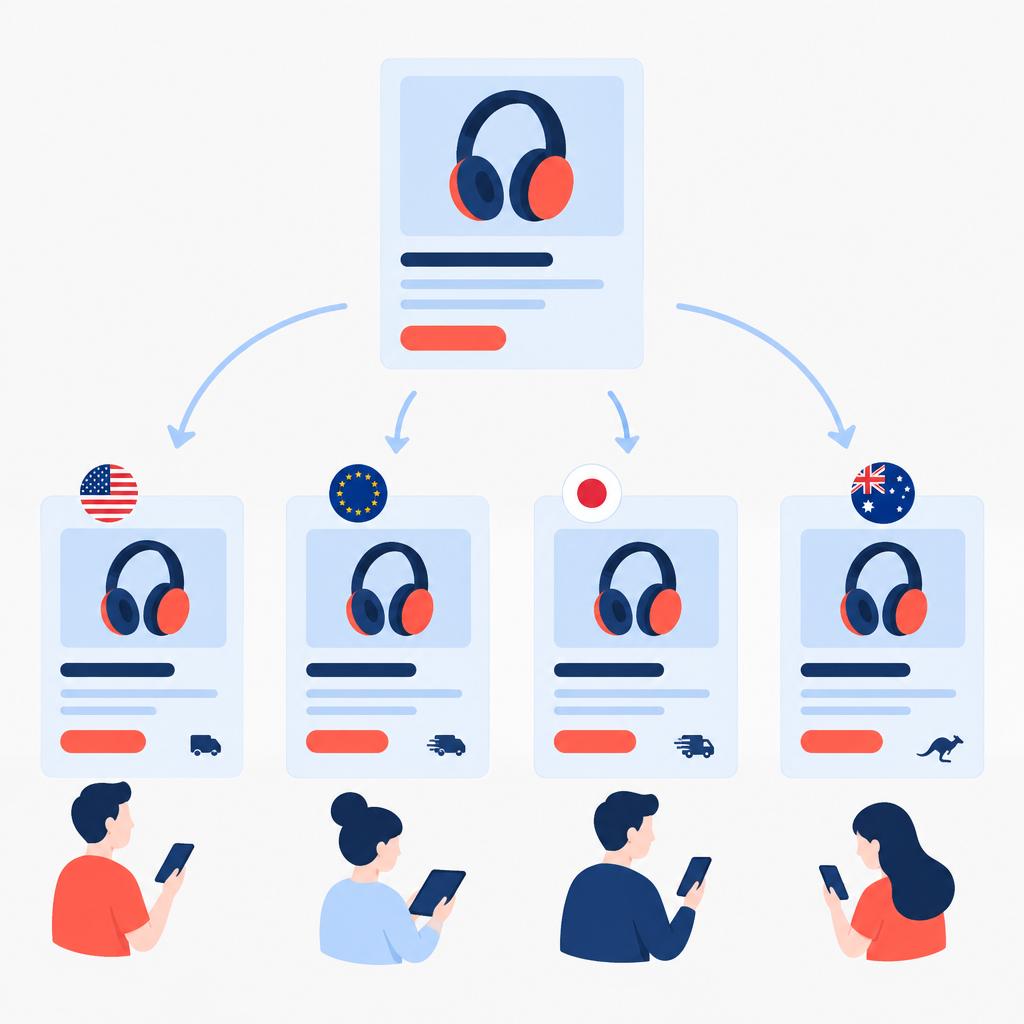
This service continuously localises and formats product content so titles, descriptions, bullets and attributes read naturally for each target market and comply with channel requirements. Implementi.ai configures the content rules, manages the AI generation and operates the automation each month so your team receives ready-to-review or publishable content across platforms.
The managed subscription suits businesses with sizeable catalogs or frequent product updates who want predictable, consistent content in multiple languages and marketplace formats without building and running internal localisation pipelines.
The problem
Most companies localise product copy manually or rely on ad‑hoc spreadsheets and freelancers. Teams wrestle with inconsistent translations, different marketplace title limits, missing attributes and fragmented brand tone across regions. As a catalog grows, manual processes create bottlenecks: new SKUs pile up, marketplace listings stay out of date, and marketing or operations staff spend time rewriting rather than focusing on launch planning and optimisation.

What this solution automates
This product automates the detection, generation, formatting and distribution of locale‑specific product content and helps maintain language accuracy and brand voice.
- Detects new or updated SKUs and content changes in your PIM or e‑commerce platform.
- Generates translated and channel‑formatted titles, bullets and long descriptions using configurable tone and glossary rules.
- Produces marketplace‑specific attribute mappings and templates (e.g., category attributes, size/colour formats).
- Creates draft updates in target systems or exports reviewed CSVs; flags items that require human approval.
- Maintains translation memory and a brand glossary to ensure consistent terminology.
- Monitors the automation, handles errors and applies routine fixes as part of the managed service.
What your business gains
- Faster time-to-list. Reduce the editorial backlog by delivering ready-to-publish or reviewable, locale-specific product content so new SKUs and updates reach stores and marketplaces sooner.
- Consistent brand voice. Enforce a central glossary and tone rules across languages and channels, reducing rework and preserving product positioning in each market.
- Channel compliance. Automatically apply marketplace and platform formatting rules so listings meet title length, bullet count and attribute requirements without manual corrections.
- Lower ongoing editorial load. Shift repetitive translation and formatting tasks to the managed automation so product managers and copywriters focus on optimisation and strategy.
- Traceable history and reuse. Maintain translation memory and versioned outputs to reuse high‑quality content and speed future updates.
A practical use case
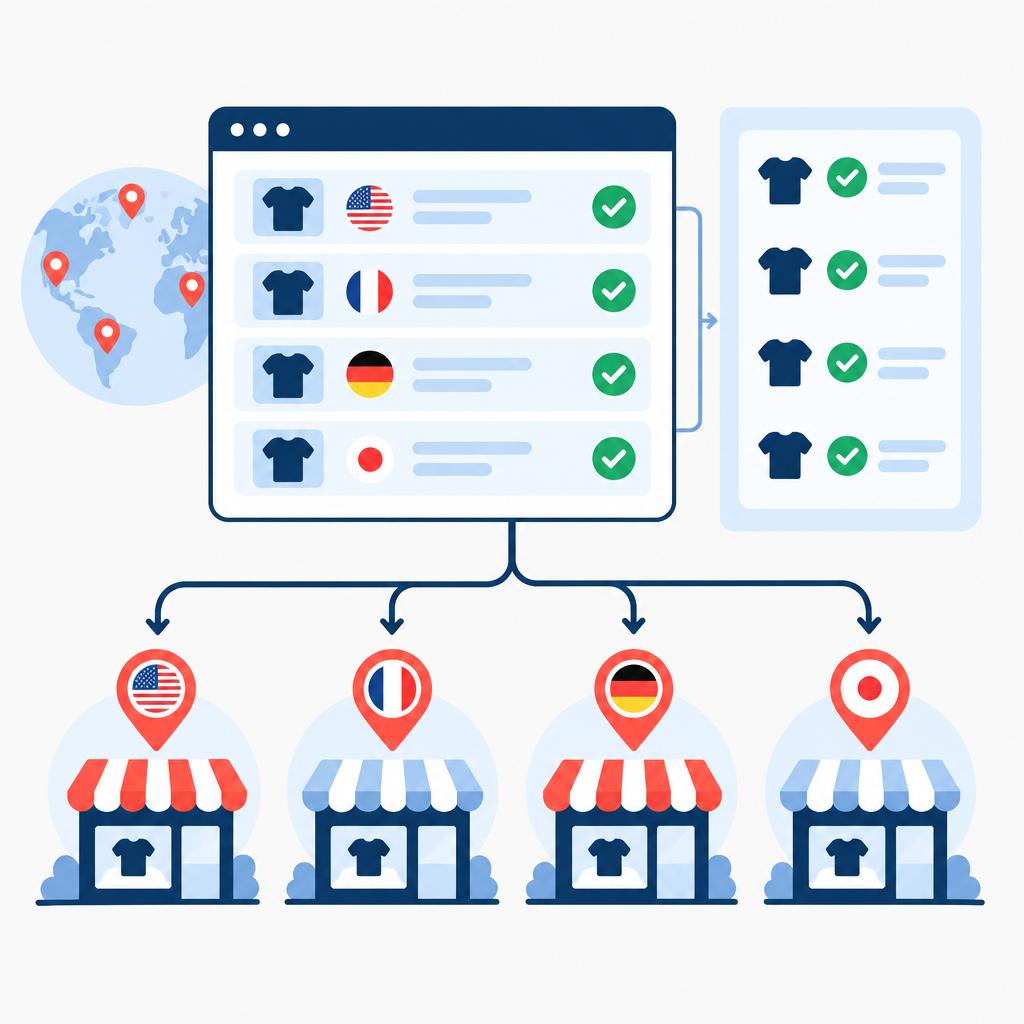
A mid‑sized retailer sells hundreds of SKUs across several EU markets and on multiple marketplaces. Each new product requires translated titles, a localized long description, and several required marketplace attributes. Previously the e‑commerce team exported spreadsheets, contracted translators and spent days massaging content to fit each platform. With this managed service, SKU changes are detected automatically, localised copy is generated to the retailer’s glossary and templates, and channel-ready drafts are created in the PIM or exported for a quick review. Exceptional or ambiguous SKUs are flagged for human approval, reducing bottlenecks while keeping control over sensitive product claims.
Who is it for?
- Multi‑market e‑commerce teams: need repeatable localisation for growing catalogs across several languages and channels.
- Marketplaces sellers and brand owners: require channel‑specific formatting and attribute mapping for Amazon, eBay or local marketplaces.
- Retailers with a PIM: want automation layered on their PIM to reduce manual copy updates and speed publication.
- Small merchandising teams: need managed operations to remove the day-to-day translation and formatting burden without hiring additional editors.
What is included in the monthly service
The monthly subscription covers the operated automation and all ongoing tasks required to keep it running and useful.
- Initial configuration and monthly operation of the automation connecting agreed systems.
- AI content generation for the agreed languages, glossary maintenance and translation memory updates.
- Monitoring of the automation, handling and fixing routine errors, and applying reasonable configuration updates as product lines and channel rules change.
- Ongoing maintenance to keep the agreed solution working and to adapt templates or mappings where required.
When this solution may not be necessary
- Businesses that require fully bespoke creative translations for brand campaigns rather than systematic product copy localisation.
- Companies with very small catalogs (under a few dozen SKUs) where manual editing is already efficient and low-cost.
How it works
- Onboarding & rules setup. We map your product data sources, agree target languages, tone guidelines and a brand glossary, and define marketplace templates and attribute mappings for each channel.
- Catalog change detection. The automation watches your PIM/webstore for new or updated SKUs and content fields based on the agreed triggers and schedule.
- Content generation. For detected items the AI generates translated titles, bullets and long descriptions according to glossary, tone and channel limits; attribute values are normalised to channel schemas.
- Quality checks & policy filters. Generated copy is run through configured checks—length, forbidden terms, required attributes—and items that fail are flagged for human review.
- Draft publishing or export. Approved or auto‑passed content is pushed as drafts or updates to the agreed systems (PIM, webstore, marketplace feed) or exported for internal review per your workflow.
- Monitoring & maintenance. The implementi.ai team monitors run health, addresses integration errors, updates templates and refines rules and glossary entries as part of the monthly managed service.
Example workflow
For example, imagine a company that launches kitchen appliances across three European markets. A product manager adds a new SKU in the PIM with a source English title, description and attributes. The automation detects the new SKU, generates German and French titles and descriptions using the agreed brand glossary, and maps attributes into the marketplace schemas. Short titles are trimmed to meet marketplace length limits while essential qualifiers (colour, capacity) are preserved. Items that trigger policy filters—for instance that reference technical claims—are sent as review tasks to a product specialist. Approved drafts are posted to each marketplace feed, and the translation memory is updated so future similar SKUs reuse consistent phrasing.
Integrations
Typical systems
Typical systems we connect include PIMs (Akeneo, Salsify, or other PIMs), e‑commerce platforms (Shopify, WooCommerce, Magento), marketplace feeds (Amazon, eBay, Google Merchant) and the CMS or ERP that holds product master data. Other systems can potentially be connected by API, CSV or agreed export when required; final compatibility is confirmed before launch.
Connection methods
We work with available platform APIs and native integrations where possible, and can also use webhooks, scheduled CSV/SFTP exports, or Google Sheets for datasets without an API. Connection methods are agreed during onboarding and depend on the systems you use and the access you can provide.
What we need from your company
Before launch we need a list of the systems to connect, sample product records (including attributes and existing localisations), access credentials or export mechanisms, and defined approval rules (which items may auto‑publish and which require human sign‑off). We also request an initial brand glossary and tone guidelines. Compatibility and exact access method are agreed before implementation.
FAQ
Which platforms can you connect to?
We typically integrate with PIMs, major e‑commerce platforms and marketplace feeds via API, CSV or SFTP. Exact platform compatibility is confirmed during onboarding.
How much manual review is required?
You choose the approval policy. We can auto‑publish low‑risk items and route flagged or sensitive SKUs for human approval. The monthly service includes monitoring and routine fixes.
Can you preserve our technical terminology?
Yes. We maintain a central glossary and translation memory so product names, part numbers and brand terms remain consistent across languages and updates.
How do you handle marketplace formatting rules?
We apply marketplace‑specific templates and length rules during generation. Items that cannot be conformed automatically are flagged for review with suggested edits.
What drives the monthly price?
Price reflects the number and type of integrations, catalog size and update frequency, languages required, and the level of human approval and customised templates you need.
How does implementation start?
We begin with a scoping phase to confirm systems, sample data and rules. Once scope is agreed we configure connections, set up templates and commence a controlled pilot before broader rollout.
Price
The activation fee covers the initial setup, implementation and launch of the agreed automation scope.
The monthly subscription covers the ongoing operation, maintenance and management of the automation service.
The exact scope and final monthly subscription are confirmed before launch.
Ready to automate this process?
Tell us which PIM, e‑commerce and marketplaces your team currently uses and how many SKUs you manage.
We’ll confirm how this solution can be connected, its scope and the final monthly subscription.
| Email uscontact@implementi.ai | Call us+48 660 983 178 |