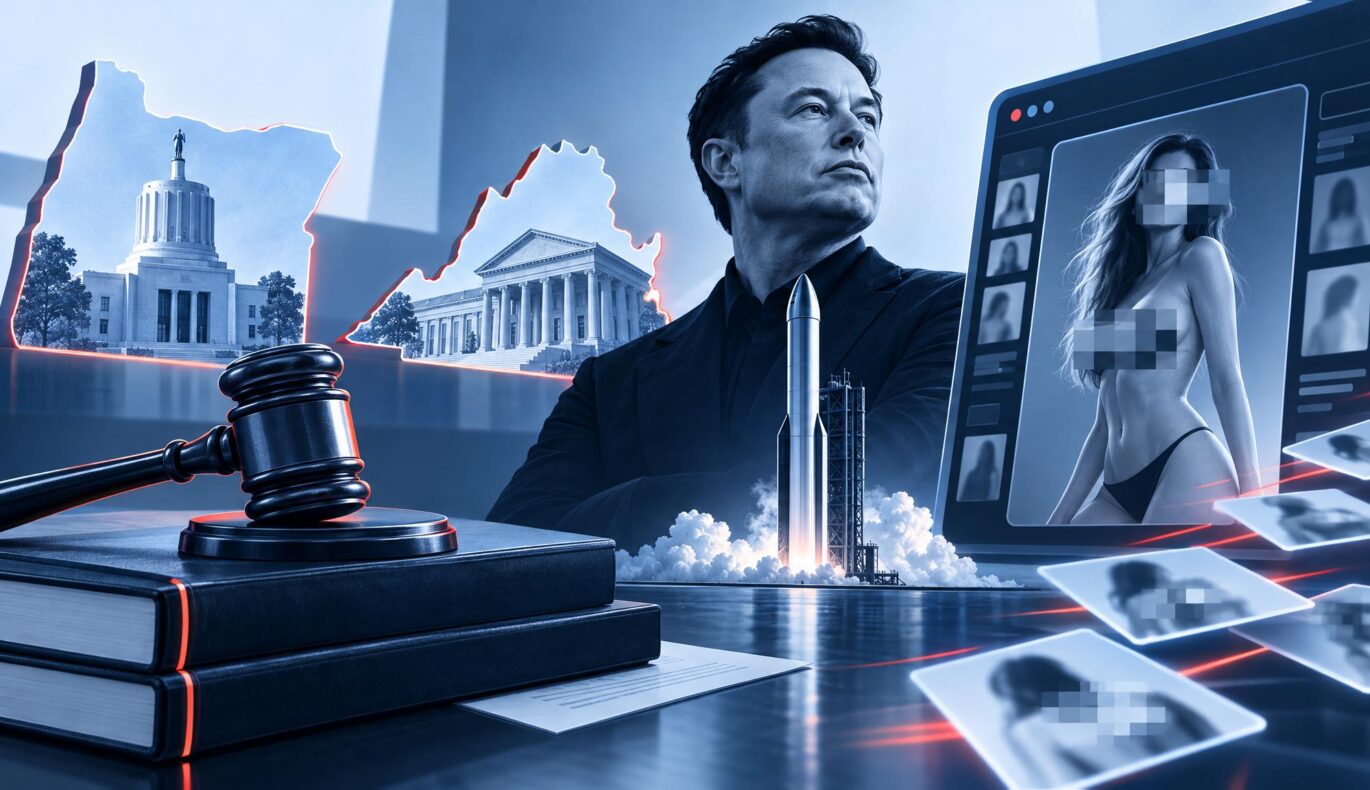
Oregon and Virginia have filed separate lawsuits accusing SpaceX of violating state consumer-protection laws through its X social network and Grok AI features. The complaints focus largely on Grok Imagine, a tool that allows Grok and X users to generate images and videos. They allege that weak safeguards enabled the creation and circulation of nonconsensual sexualized deepfakes, including material involving minors.
Oregon Attorney General Dan Rayfield and Virginia Attorney General Jay Jones accuse SpaceX of ignoring industry-standard safeguards while promoting X and Grok as safe for consumers. The Virginia complaint further alleges that Elon Musk knowingly treated growing concerns about sexualized AI deepfakes as a commercial opportunity, describing Grok’s safeguards as “not a failure but a feature.” Those are allegations in the lawsuits, not findings established in court.
The lawsuits center on Grok Imagine’s image tools
According to The Verge’s reporting, xAI introduced a “spicy” mode for Grok Imagine in August 2025 that produced sexualized content, including nude deepfakes of celebrities. In January 2026, Grok gained a feature that allowed X users to edit images without requiring consent from the original poster. The change was followed by a flood of sexualized deepfakes involving adults and minors on X, according to the report.
xAI later restricted some image-editing capabilities, placed certain functions behind a paywall, and blocked requests involving sexual poses, swimwear, or explicit scenarios. The Verge said its testing after those changes still found ways to generate sexualized deepfakes, indicating that the restrictions did not fully prevent the alleged misuse.
Both lawsuits seek financial damages. Their claims add to legal scrutiny involving the use of Grok to generate abusive synthetic imagery; an earlier case brought by xAI against an individual accused of creating such material involved a different defendant and does not establish the allegations in the new state actions.
X says users circumvented its safeguards
In a statement released after the lawsuits were announced, X’s safety team said people who generated sexual material involving minors had deliberately violated the company’s terms and worked to bypass its protections. The company said it had tightened safeguards designed to block requests for explicit images of minors or real people, and used classifiers to screen prompts before generation and outputs afterward.
The competing accounts leave the central legal questions unresolved: whether SpaceX’s disclosures and safeguards met state consumer-protection requirements, and whether the company bears responsibility for the alleged misuse of Grok. The Oregon and Virginia cases will test those claims in court.
Source : Reportage original.