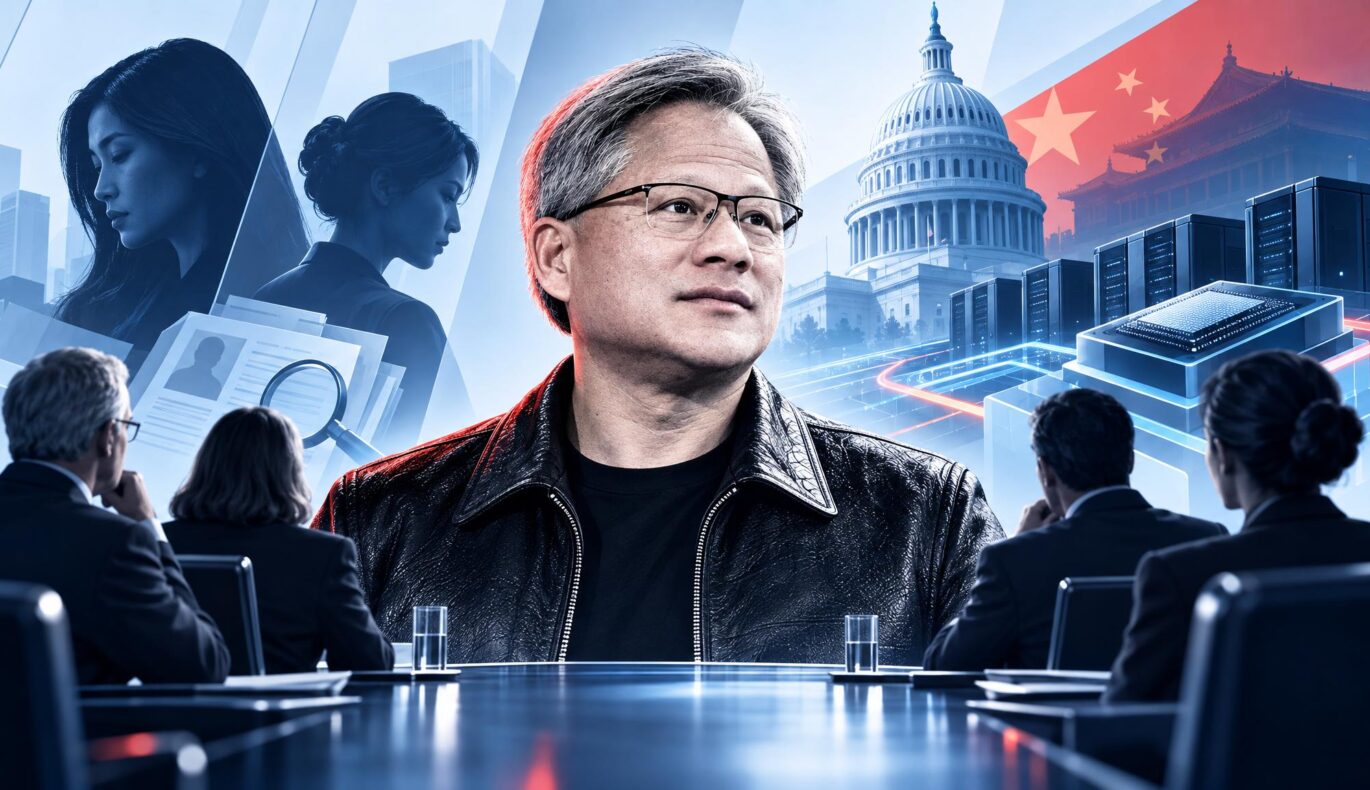
Jensen Huang is Nvidia’s CEO again, less than two weeks after resigning amid reports about personal relationships and a suspected Chinese intelligence connection involving a former Megaspeed executive. Nvidia’s board said on November 23 that it had voted unanimously to reinstate its co-founder after receiving input from senior levels of the US government, returning the leader of a company central to AI hardware and US-China technology policy to the center of the story.
Huang’s resignation followed his acknowledgment that he had been unfaithful to his wife and had created problems for Nvidia’s board. The company initially announced an investigation after reports about his relationship with Alice Huang, a Megaspeed executive. The New York Times later reported evidence of another relationship involving an Nvidia executive who reported directly to Huang. After that report, Nvidia’s board accepted his resignation and installed CFO Colette Kress as interim CEO.
Nvidia’s board said it was satisfied with Huang’s candor and ability to lead the company after a series of discussions and meetings. It also said that his reinstatement posed no national security risk. Those are the board’s stated conclusions; they do not resolve separate questions raised by lawmakers, regulators and reporting about Nvidia’s relationships with Megaspeed or the handling of advanced AI hardware.
Why Huang’s return has become a government issue
Nvidia is not just a chip designer. Its products are central to the US-China dispute over advanced computing, while the company’s market value — described in the source as more than $4 trillion — has made it a major force in the wider AI industry. The board’s decision therefore arrived alongside questions about how much influence the Trump administration had over the outcome.
President Donald Trump publicly said he had urged the board to bring Huang back, and White House officials said the president was involved in the reinstatement. Huang reportedly later told Nvidia employees that claims that politics directly secured his return were untrue. The precise role of the administration remains disputed in the supplied reporting, although Nvidia acknowledged receiving input from senior government levels.
Lawmakers expected to lead key House committees asked Trump to explain what he knew about the allegations and when he knew it. They also sought communications between the White House and Nvidia’s board, indicating that scrutiny of the reinstatement may continue beyond the company’s internal decision.
The episode also intersects with US export-control enforcement. The Commerce Department added Megaspeed and affiliates in Malaysia and Thailand to its Entity List, citing a significant risk that the entities could help divert advanced computing products to unauthorized users or uses. The department has investigated Megaspeed since 2024 over allegations that advanced AI chips were being smuggled to China. Those allegations remain allegations and are not a finding of wrongdoing by Huang.
What comes next for Nvidia
Huang returns to a company that has faced questions about leadership, national security and its dealings with China. His earlier willingness to return if Nvidia’s board asked now has a direct outcome, while the board’s reversal from accepting his resignation to reinstating him leaves its governance decisions under particular scrutiny.
The immediate challenge is separating the company’s operational leadership from the unresolved investigations and political controversy surrounding it. Nvidia must continue navigating export restrictions and scrutiny of Megaspeed, while Huang’s reinstatement leaves lawmakers and the public to assess whether the board’s conclusions withstand further examination.
Source : Reportage original.