Description
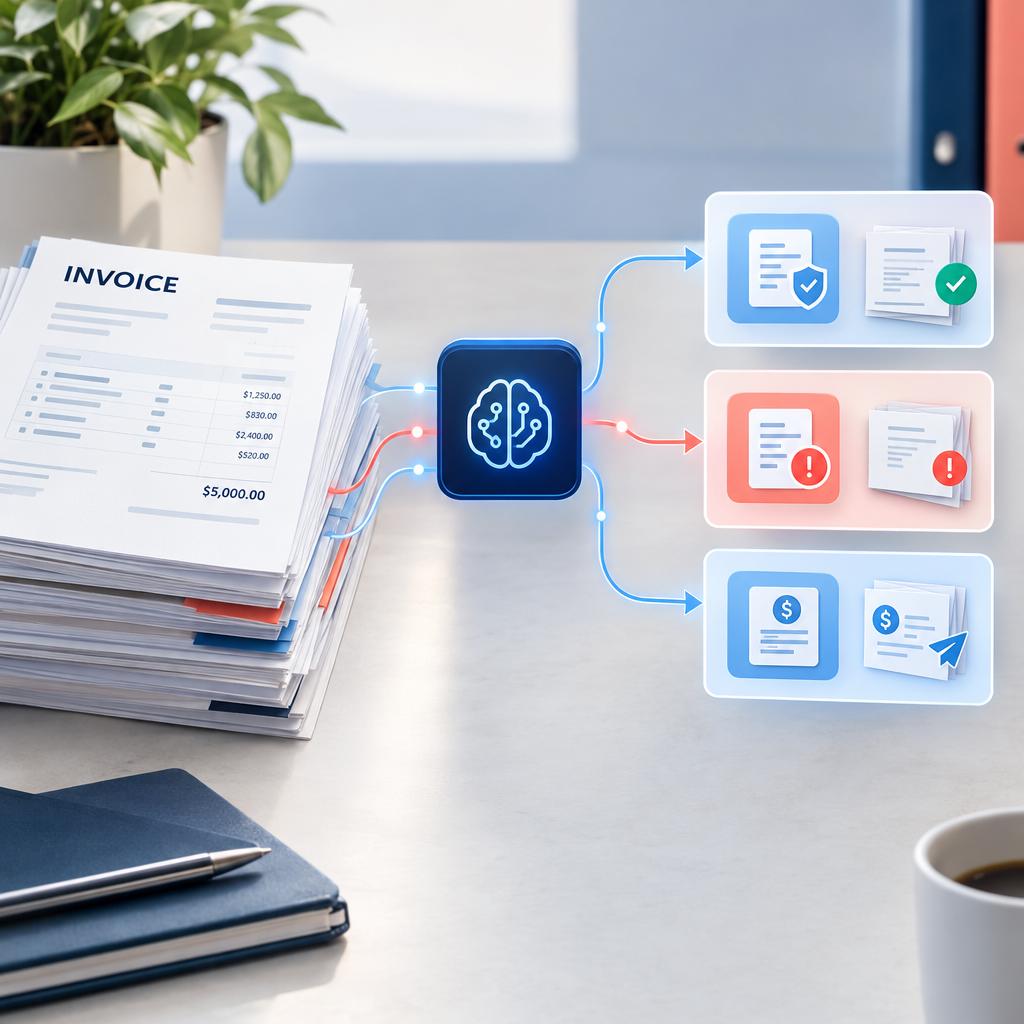
This service continuously monitors invoices, incoming customer messages and support tickets to detect disputed items, extract dispute reasons and surface suggested resolutions for fast action. Implementi.ai configures and operates the end-to-end automation so your team receives consistent, approved proposals and escalation paths instead of scattered, manual notes.
The managed service handles AI classification, connection monitoring and routine maintenance. We confirm required systems and scope before launch and take ongoing responsibility for operating, monitoring and fixing the automation under the agreed monthly subscription.
Le problème
When invoice disputes arrive they are often fragmented across email, CRM cases and accounting notes. Staff manually read messages, hunt for the invoice and payment history, ask customers for missing attachments and forward items for approval. This creates long resolution cycles, duplicated work, missed collection opportunities and inconsistent customer responses. As invoice volumes grow and teams scale, manual triage becomes a bottleneck: disputed items slip through, approvals lag and teams lose a single source of truth about outstanding exceptions.

Ce que cette solution automatise
This solution automates continuous monitoring, classification and routing of invoice disputes and implements an approved set of resolution actions. It does not replace human approval when required, but reduces repetitive work and speeds consistent responses.
- Automatically detect incoming dispute signals from email, ticketing systems and accounting notes.
- Extract invoice numbers, disputed amounts, dispute reasons and attachments using AI.
- Classify disputes (billing error, service issue, duplicate invoice, credit requested) and assign priority.
- Generate an approved payment proposal or remediation recommendation for each case.
- Route proposals and exceptions to AR, collections or customer-success workflows with required context and attachments.
- Log dispute status and maintain a searchable history of resolutions.
Les avantages pour votre entreprise
- Faster triage. AI extracts invoice details and dispute reasons so teams spend less time searching for context and can prioritise genuine collection work.
- Consistent customer responses. Proposed resolutions are derived from agreed rules and templates so customers get predictable, brand-safe communication.
- Reduced manual handoffs. Automated routing sends the right cases to AR, collections or CS with required evidence, reducing email chains and lost requests.
- Clear exception visibility. Disputes are tracked centrally with status history so managers can spot recurring issues and process bottlenecks.
- Lower operational noise. Routine disputes are handled to policy automatically while complex exceptions are escalated with full context, reducing rework.
Un cas d'utilisation concret
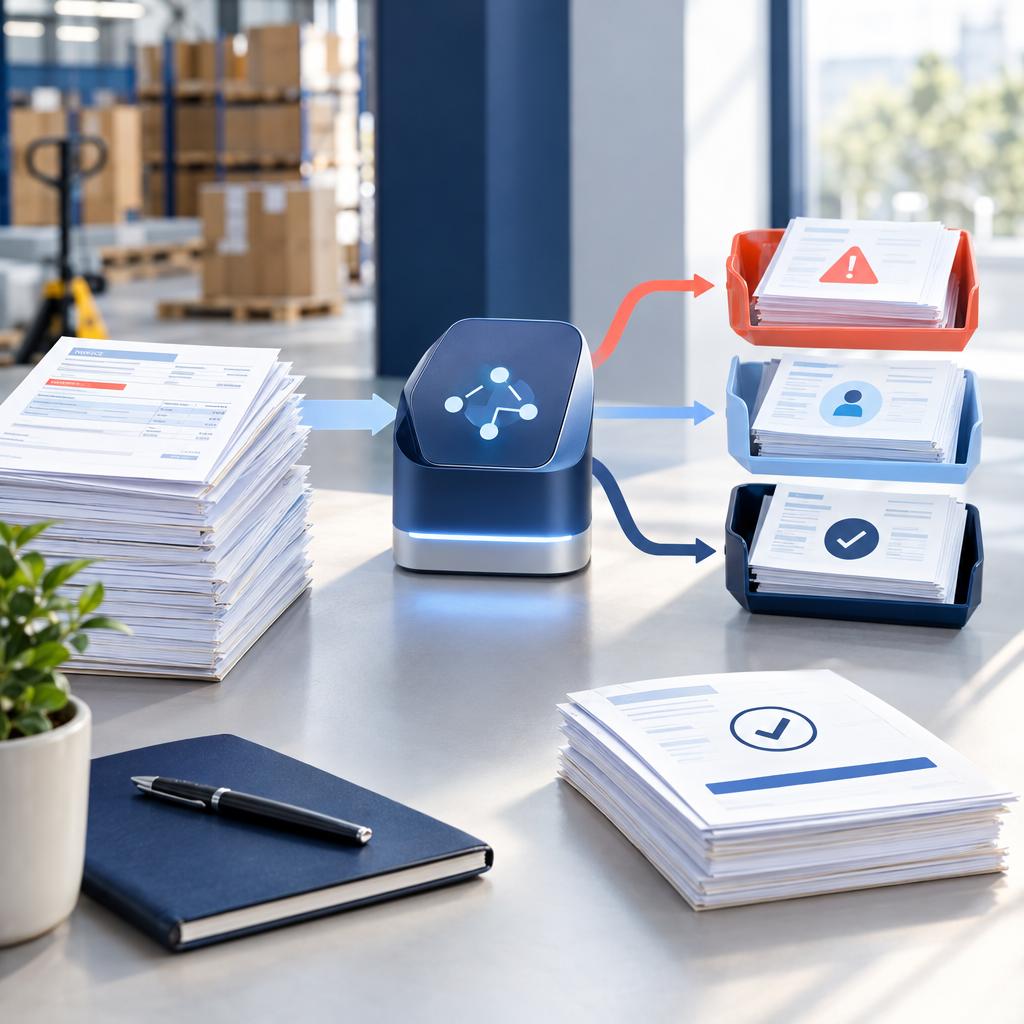
For a mid-market software vendor issuing monthly invoices, customer support and accounting teams repeatedly receive dispute emails stating missing features, wrong billing periods or claimed duplicate charges. Each email requires locating the invoice, checking contract terms and deciding whether to issue a credit or propose a payment plan. With this product in place, incoming messages are automatically matched to invoices, classified by reason, and a policy-compliant proposal (refund, partial credit, or payment schedule) is prepared and routed to the appropriate approver. The result: fewer manual lookups, clearer approvals and faster returns to normal cashflow.
À qui s'adresse-t-il ?
- Mid-market B2B companies with recurring invoices and a steady stream of customer billing queries — to reduce AR friction.
- Accounts receivable and collections teams that want clearer prioritisation and fewer manual searches across systems.
- Customer-success organisations that need consistent, approved responses to billing-related customer contacts.
Qu'est-ce qui est inclus dans l'abonnement mensuel ?
The subscription covers the operated automation and ongoing AI processing, with monitoring and maintenance to keep the agreed solution running. Implementi.ai configures the required connections during launch and continues to monitor the automation’s health, fixes failures and applies reasonable configuration updates as needed.
- Operating the automation and AI classification that runs against your agreed systems.
- Connections to systems agreed before launch (ERP/billing, CRM, ticketing, email).
- Monitoring and handling automation errors, routine maintenance and agreed configuration updates.
Dans quels cas cette solution n'est-elle pas nécessaire ?
- Very small businesses issuing only a handful of invoices per month — manual handling may be cheaper than automation overhead.
- Organisations that require custom legal approval workflows or bespoke dispute adjudication that cannot be standardised into configured rules may need a larger customised implementation.
Comment ça marche
- Approvisionnement continu. The service monitors configured channels (inbound accounting notes, support tickets, designated inboxes) and captures messages that reference invoices or payments.
- Invoice matching. AI extracts invoice numbers, customer IDs and amounts, then reconciles the message to the invoice and payment history held in the billing system.
- Classification. Natural-language models classify the dispute reason (e.g. billing error, missing service, duplicate charge) and tag urgency and evidence level.
- Proposal generation. For routine cases, the system generates a policy-aligned payment or credit proposal with suggested next steps and required approvals.
- Acheminement et actions. The automation routes the case and proposal to the correct team or approver (AR, collections, CS) and creates a task or ticket with all evidence attached.
- Remontée des problèmes et examen par une personne. Exceptions that don’t match policy or require negotiation are flagged for manual review and given a clear summary and recommended actions to speed decision-making.
- Logging and state updates. The system records status changes back to the accounting or CRM system so dispute history and resolution outcomes are maintained for reporting.
Exemple de flux de travail
For example, imagine a company that issues hundreds of monthly invoices. A customer emails claiming an invoice is incorrect and includes a screenshot. The automation ingests the email, extracts the invoice number and matches it to the billing record. The AI classifies the reason as a duplicate charge and checks previous payments; it prepares a recommended proposal to apply a credit and sends this to the AR approver with the original message and payment history. The approver accepts the proposal from a single review screen and the system applies the credit in the accounting system, updates the ticket and notifies the customer — all while logging the full history for managers.
Intégrations
Systèmes types
Typical systems that can be connected include ERP and billing platforms (for example: Oracle NetSuite, SAP, Microsoft Dynamics), accounting platforms (Xero, Sage), CRM systems (Salesforce, HubSpot), support/ticketing systems (Zendesk, Freshdesk) and payment platforms (Stripe, Adyen). Other systems can potentially be connected where APIs, webhooks or file exports are available. Final compatibility is confirmed during scoping.
Méthodes de connexion
Connections are implemented using available APIs and webhooks where possible. Alternative methods include secure CSV/SFTP imports, monitored mailbox parsing for dispute emails, or database/ETL access agreed during scoping. The exact method for each system is confirmed before launch to match your security and operational constraints.
Ce que nous attendons de votre entreprise
Before launch we agree which systems will be connected, sample dispute messages and a dataset of invoices for matching tests. We need your dispute handling rules (approval thresholds, who can issue credits), names of approvers, and access methods for each system (API keys, scoped user accounts, or export locations). We confirm the final compatibility and required access during the scoping phase before implementation begins.
FAQ
À quels systèmes pouvez-vous vous connecter ?
We commonly connect to ERP/billing, CRM and ticketing systems that provide APIs or support file exports. During scoping we confirm whether your specific platforms can be integrated and the best connection method.
Can the system issue credits or only suggest them?
The product can be configured to create draft credit notes or to present approved proposals for manual sign-off, depending on your risk and approval rules. The exact action flow is agreed before launch.
How are unusual disputes handled?
Cases that don’t match configured policies are automatically flagged and routed to human reviewers with a concise summary and evidence, so complex issues get direct attention without blocking routine processing.
What controls exist to keep responses consistent?
We implement template-based proposals and enforce approval thresholds so suggested resolutions follow your agreed policies. Templates and decision rules can be updated as part of the managed service.
Comment la mise en œuvre commence-t-elle ?
Implementation begins with a scoping phase where we confirm systems, sample data and dispute rules. We then configure integrations, train classification models on your data and run parallel validation before the automation goes live.
Prix
Les frais d'activation couvrent la configuration initiale, la mise en œuvre et le lancement du périmètre d'automatisation convenu.
L'abonnement mensuel couvre l'exploitation, la maintenance et la gestion courantes du service d'automatisation.
L'étendue exacte de l'offre et le montant définitif de l'abonnement mensuel sont confirmés avant le lancement.
Prêt à automatiser ce processus ?
Tell us which billing, CRM and support systems your company uses and how you currently manage invoice disputes.
Nous vous confirmerons les modalités de mise en place de cette solution, son champ d'application et le montant final de l'abonnement mensuel.
Réservez un appel de 30 minutes
| Envoyez-nous un e-mailcontact@implementi.ai | Appelez-nous+48 660 983 178 |