Description
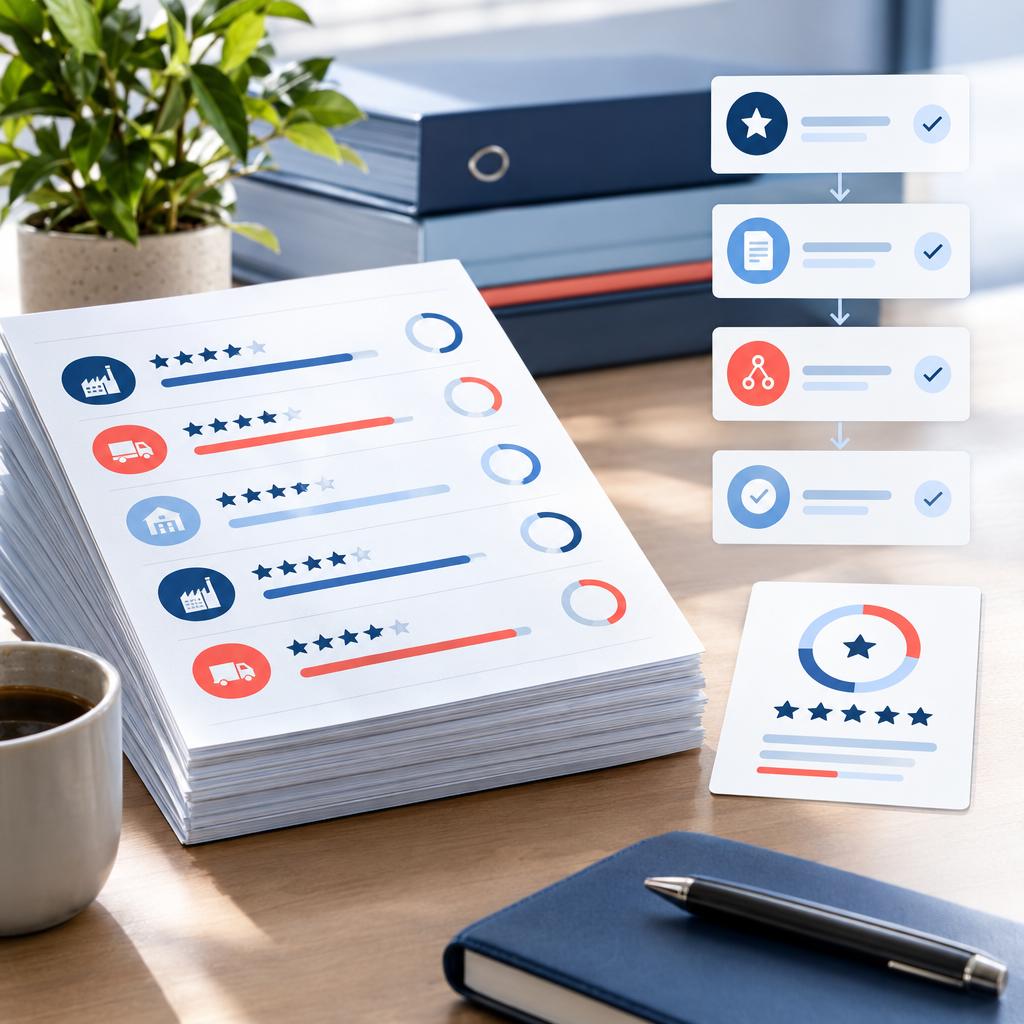
This managed automation continuously collects supplier-related data, scores supplier performance and produces concise review briefs for category managers and procurement leaders. It removes the effort of manual data consolidation, reduces meeting prep time and makes supplier reviews repeatable and evidence-based.
Implementi.ai configures the scorecard rules, connects the agreed systems, operates the data pipelines and delivers a monthly package of dashboards, trend notes and suggested actions. We also monitor and maintain the automation so the scorecards remain reliable as systems and business rules change.
Le problème
Most procurement teams assemble supplier performance reports by hand: downloading delivery logs from an ERP, extracting delivery times from a carrier system, pulling quality inspection notes from a separate tool, and checking invoice accuracy in accounting. This manual process is slow, inconsistent between buyers and error-prone—critical trends and small but important problems are easy to miss. As supplier portfolios and transaction volumes grow, getting reliable, comparable performance metrics for quarterly reviews becomes increasingly expensive and late.

Ce que cette solution automatise
The solution automates continuous aggregation, normalization and scoring of supplier delivery, quality and commercial performance and produces meeting-ready briefs and dashboards. It also routes exceptions or priority issues to the right stakeholders for review.
- Collect delivery, invoice, quality and acknowledgement data from agreed systems.
- Normalise dates, SKU/PO identifiers and quantity fields for consistent scoring.
- Compute supplier KPIs (on-time delivery, lead-time variance, defective rate, invoice accuracy, responsiveness).
- Maintain historical trends and month-on-month scorecards.
- Generate a monthly review brief with highlights, top risks and suggested discussion points.
- Send alerts for major regressions or SLA breaches and route for human review.
Les avantages pour votre entreprise
- Faster supplier reviews. Meeting-ready scorecards and briefs are produced automatically, reducing manual prep and allowing procurement teams to focus on decisions rather than data assembly.
- Consistent performance measurement. Normalised KPIs and repeatable scoring rules ensure suppliers are compared fairly across categories and time periods.
- Early risk detection. Continuous trend tracking surfaces deteriorations in delivery or quality before they become business disruptions.
- Actionable briefs. Each report highlights suggested discussion points and potential next steps so review meetings produce clear follow-ups.
- Réduction des frais généraux d'exploitation. Ongoing monitoring and maintenance by implementi.ai reduce the internal effort required to sustain accurate reporting as systems or processes change.
Un cas d'utilisation concret
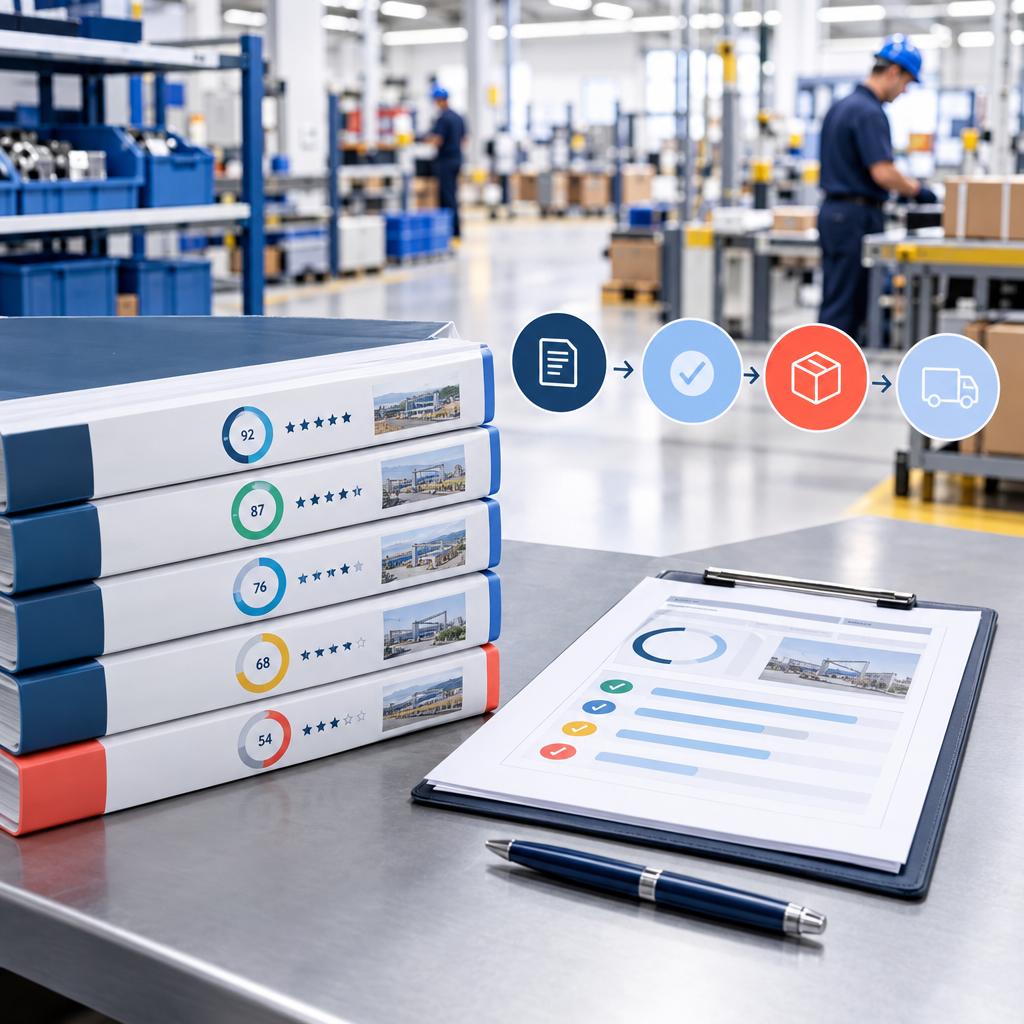
For example, a distributor with dozens of suppliers across multiple product categories needs to prepare monthly supplier reviews. Historically, category managers spent a day each month collecting delivery confirmations, inspecting late-delivery notes from the carrier system, extracting inspection fail rates and reconciling invoice disputes. With this solution, data flows into a single scorecard, trend lines highlight suppliers with worsening lead times, and a one-page brief flags top items for the next review meeting. Managers spend review time on supplier strategy and corrective actions rather than reconciling spreadsheets.
À qui s'adresse-t-il ?
- Procurement teams in mid-market distributors — need repeatable supplier reviews across many SKUs and locations.
- Category managers at manufacturers — require consolidated delivery and quality trends to run supplier performance meetings.
- Operations leads with multiple logistics and quality systems — benefit from one consistent view and automated alerts.
- Sourcing departments preparing supplier scorecards for executive governance — need standardised, auditable briefs.
Qu'est-ce qui est inclus dans l'abonnement mensuel ?
The monthly subscription covers the managed automation and ongoing operational activities required to keep supplier scorecards accurate and useful. Implementi.ai configures and operates the data connectors, runs the AI-assisted scoring and reporting processes, monitors automation health and fixes errors as they arise. Reasonable configuration updates to scoring rules and report contents are included to keep the agreed solution working as your business changes.
- Operation of the automation and scheduled reporting.
- Connexions aux systèmes convenues avant le lancement.
- AI processing for data normalisation, KPI calculation and trend summaries.
- Surveillance, gestion des erreurs et maintenance de la solution.
Dans quels cas cette solution n'est-elle pas nécessaire ?
- Companies without structured supplier or transaction data (no ERP, TMS, quality or invoice records) — the solution needs source data to generate scorecards.
- Organisations that only need very occasional, ad-hoc supplier snapshots — a full managed cadence may be excessive for one-off reports.
Comment ça marche
- Découverte et conception de règles. We work with your procurement and operations stakeholders to define the KPI set (on-time, lead-time variance, defect rate, invoice accuracy) and scoring rules that match your review process.
- Connecter les sources de données. Implementi.ai configures the agreed connections to ERP, transport/WMS, quality inspection records and invoicing systems or files to pull the required data feeds.
- Data normalisation. Incoming records are cleaned and normalised (PO/SKU matching, date alignment, quantity reconciliation) so metrics are comparable across systems and suppliers.
- Score computation and trend storage. The automation computes KPIs, applies scoring rules and appends results to a maintained history for trend analysis and month-on-month comparisons.
- Report and brief generation. A concise review brief and dashboard are generated with highlights, top regressions and recommended discussion points for supplier meetings.
- Alerting and routing. Significant regressions or SLA breaches trigger alerts routed to the responsible buyer or category manager for immediate review and action.
- Optimisation et assistance continues. Implementi.ai monitors the automation, handles errors and applies agreed scorecard updates and configuration changes as needed.
Exemple de flux de travail
For example, imagine a company that receives delivery confirmations in its ERP, carrier scan data in a transport system and inspection outcomes in a quality tool. The automation pulls daily feeds, matches records by PO and SKU, and calculates a weekly on-time delivery KPI. A supplier whose average lead time increases and whose defect rate rises is automatically flagged; the system posts a summary into the category manager’s inbox and updates the supplier’s monthly scorecard. The monthly brief compiles the top three suppliers with deteriorating scores and suggests agenda items; large regressions generate an immediate alert for human review and routing to the procurement owner.
Intégrations
Systèmes types
Typical systems we connect to include ERP systems (for PO and invoice records) such as SAP or NetSuite, transport or TMS platforms, WMS or logistics platforms, quality-inspection or lab systems, and accounting systems. Other sources may include CSV exports, Google Sheets or legacy databases where supplier or inspection data is stored. Exact integrations are confirmed before implementation.
Méthodes de connexion
Connections are implemented using available APIs, secure file transfer (SFTP) for scheduled CSV uploads, inbound webhooks, or agreed database/Google Sheets access. We can also ingest email-based acknowledgements when no API exists, subject to agreed parsing rules. The chosen method depends on your systems and will be confirmed during discovery.
Ce que nous attendons de votre entreprise
Before launch we agree the systems to connect, sample data extracts, and the primary fields needed for matching (PO number, SKU/part number, delivery and invoice dates, quantities, inspection results). We also need your scoring preferences and the desired cadence for briefs and alerts. Access method, data format and final scope are confirmed before implementation so compatibility and security requirements are clear.
FAQ
À quels systèmes pouvez-vous vous connecter pour obtenir les données des fournisseurs ?
We typically connect to ERPs, transport/WMS platforms, quality/inspection systems, accounting systems or to scheduled CSV/Sheets exports. Exact compatibility is confirmed in discovery and agreed before work starts.
How customisable are the scoring rules?
Scoring rules are customer-configurable. During discovery we capture the KPIs and thresholds you use; implementi.ai implements and maintains those rules and can update them as your needs evolve.
What happens when the automation finds a major supplier regression?
Major regressions generate an automated alert routed to the nominated procurement owner with supporting evidence. The supplier remains on the watchlist until corrective actions are recorded or scores recover.
Do I need to provide historical data?
Historical data improves trend accuracy. We can start from available history and the automation will build trend lines over time. If only recent data is available, the system will still produce meaningful short-term scorecards.
How often are scorecards and briefs produced?
Scorecards are produced on the agreed cadence—typically weekly for dashboards and a consolidated monthly brief for reviews. The cadence can be adjusted during configuration to match your meeting rhythm.
Que comprend l'abonnement mensuel ?
The subscription covers operation of the automation, the agreed system connections, AI-assisted processing for normalisation and brief generation, monitoring of automation health, error handling and reasonable configuration updates to scoring rules and reports.
Prix
Les frais d'activation couvrent la configuration initiale, la mise en œuvre et le lancement du périmètre d'automatisation convenu.
L'abonnement mensuel couvre l'exploitation, la maintenance et la gestion courantes du service d'automatisation.
L'étendue exacte de l'offre et le montant définitif de l'abonnement mensuel sont confirmés avant le lancement.
Prêt à automatiser ce processus ?
Tell us which ERP, transport/WMS and quality/inspection systems you currently use and your preferred review cadence.
Nous vous confirmerons les modalités de mise en place de cette solution, son champ d'application et le montant final de l'abonnement mensuel.
Réservez un appel de 30 minutes
| Envoyez-nous un e-mailcontact@implementi.ai | Appelez-nous+48 660 983 178 |