

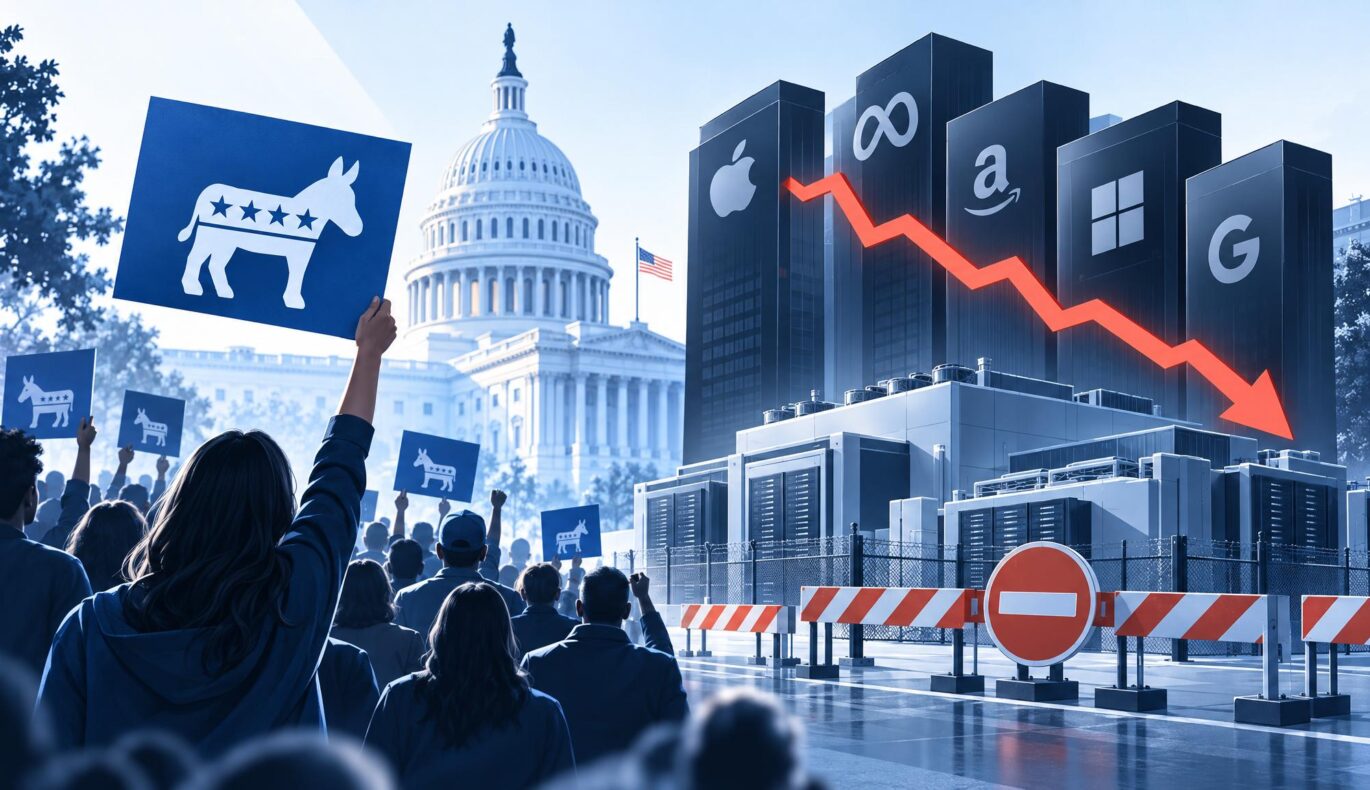
Big Tech emerged politically weakened from the 2026 US midterm elections, according to The Verge’s account of the vote, which says millions of Americans backed Democrats and opposed AI-related priorities. The result matters to technology companies, data-center developers, AI teams and policymakers because congressional attention is expected to turn toward tech CEOs, AI regulation and the local impact of new data centers.
What “Big Tech lost” means after the 2026 election
The headline describes a political setback, not a confirmed product change or company shutdown. The source links the outcome to a likely revival of efforts to hold Big Tech accountable, increased congressional scrutiny of AI, and a more difficult environment for companies seeking to build data centers.
It also identifies X as a political factor, describing the platform as a self-contained echo chamber during the campaign. However, the supplied material does not provide detailed vote totals, identify every affected company, or establish that voters rejected every form of AI. It characterizes the result broadly as a vote against AI and for Democrats.
What could change for AI and data centers
The immediate implication is political pressure rather than a confirmed regulatory rule. The Verge says Democratic control of Congress is likely to direct energy toward tech policy, technology executives and AI regulation, while the data-center debate may become harder for developers. The source does not confirm which bills will advance, what requirements might be proposed, or whether any specific project has been delayed.
For businesses, the relevant risks are therefore still unresolved: compliance obligations could change, public opposition may affect infrastructure planning, and project timelines may become less predictable. No new privacy, security or AI-safety measure is specified in the supplied report, so those details should not be treated as settled.
What the result means for technology teams
AI developers and smaller companies should treat this as a signal to monitor policy, not as evidence that current tools are unavailable. A practical response would be to keep records of model use, data handling, energy requirements and human oversight so that teams can respond quickly if lawmakers or local authorities introduce new expectations.
For example, a hypothetical software company planning to add an AI assistant could document what customer data reaches the system and how outputs are reviewed before deployment. That preparation may reduce disruption later, but it cannot substitute for rules that have not yet been written.
The central unanswered question is whether the election produces legislation within the next two years. The Verge’s discussion raises that possibility while explicitly questioning whether Congress will get anything done. Until the policy direction becomes clearer, companies should separate confirmed requirements from political forecasts and avoid assuming that either AI regulation or data-center restrictions are already in force.
Źródło: Oryginalne relacje. Artykuł ten zawiera niezależny kontekst redakcyjny oraz praktyczną analizę.
Więcej informacji na temat sztucznej inteligencji: Zapoznaj się z naszą ofertą najnowsze artykuły dotyczące automatyzacji i technologii opartych na sztucznej inteligencji, albo zapoznaj się z gotowe do użycia rozwiązania automatyzacyjne.