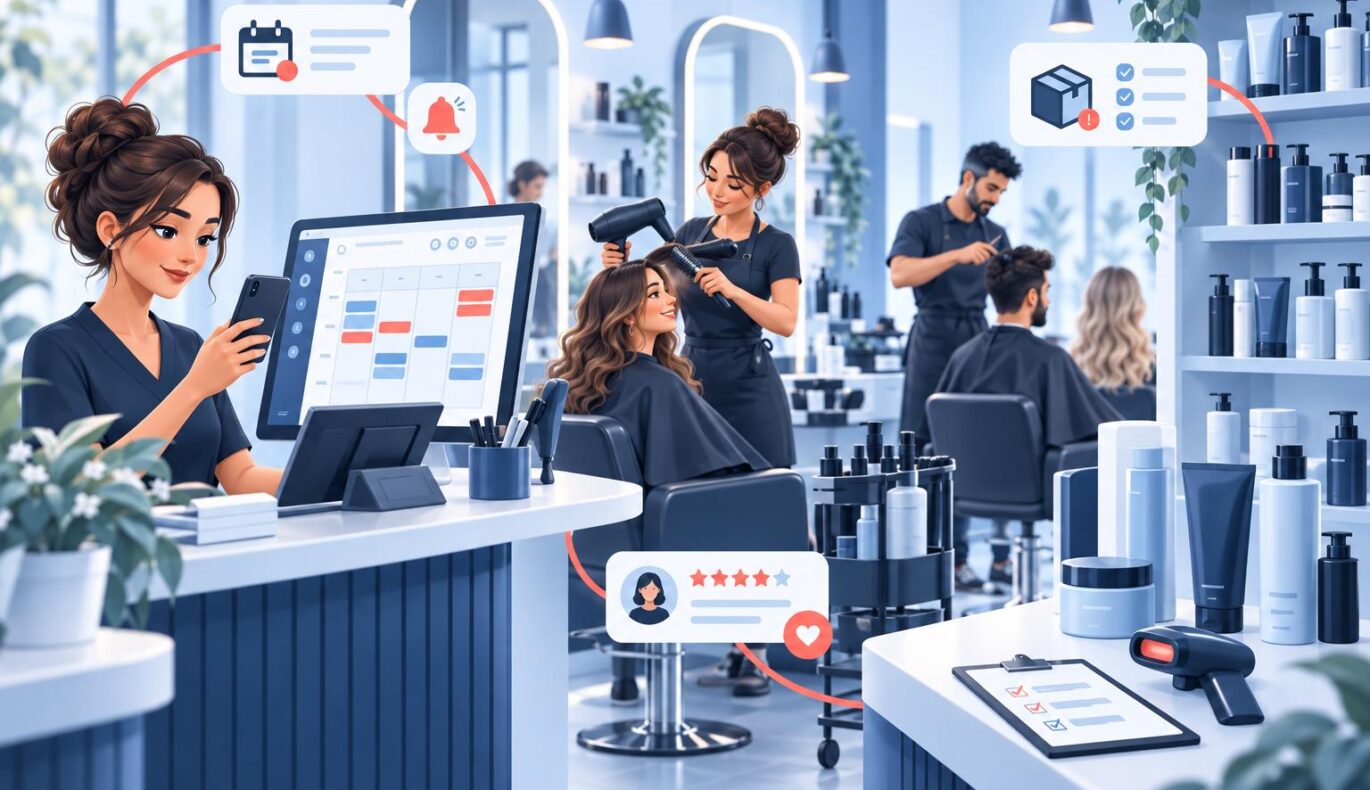
At 6:45 p.m., the last client leaves a hair salon just as three new booking requests arrive. One asks for a colour correction, another wants a Saturday balayage, and the third simply asks, “Do you have anything after work?” The owner is cleaning a station, a stylist is finishing a blow-dry, and nobody can respond immediately. By morning, a prospective client may have booked elsewhere.
This is the kind of operational pressure that automation can help address in beauty and hair businesses. The aim is not to replace personal service, but to keep routine communication, appointment administration, feedback and stock checks from competing with work that requires a professional’s judgement and attention.
Where salon workflows lose time
Appointment scheduling is rarely a single step. A client may ask about availability, specify a service, request a particular stylist and then need to move the appointment. Each exchange can create additional work for the salon team.
A carefully designed workflow could acknowledge a booking request, collect basic information and send a reminder or rescheduling message. The salon team should still review requests that require consultation, specialised knowledge or a timetable that does not fit the available appointments.
According to Implementi.ai’s industry listing, Lucas helps hair salon owners manage bookings, reminders, client feedback and stock through smart automation. The industry page also describes Lucas as a Customer Success Manager who helps beauty and hair professionals streamline appointment scheduling and client communication.
Three practical opportunities for beauty businesses
Booking conversations. A salon can separate straightforward requests from conversations that need human attention. A request for a familiar service may follow a simple scheduling path, while a first-time colour appointment could be flagged for consultation before a time is confirmed. Filling the calendar is useful only when the booking reflects the right service, duration and staff availability.
Reminders and feedback. Reminders can be timed around the appointment and written in the salon’s own voice, using relevant details such as the client’s name, service and appointment timing where appropriate. After the visit, a feedback request can help the owner identify recurring concerns, such as delays or unclear aftercare advice. Feedback that signals a complaint or a health-related concern should be reviewed by a person rather than answered with a generic message.
Stock checks. Product shortages can become visible only when a stylist reaches for a toner, treatment, foil or retail item and finds the shelf empty. A workflow can help the team keep a clearer record of stock and highlight items that need checking. It should not automatically place an order without review: product substitutions, supplier changes, expiry dates, storage conditions and differences between professional-use and retail stock require salon-specific decisions.
Hypothetical example: a busy salon could use an automated process to collect booking enquiries after closing, send appropriate reminders and flag colour-related requests for the next morning’s front-desk review. This illustrates a possible workflow, not a documented Implementi.ai deployment or customer result.
What to check before automating
Start with the salon’s actual operating rules. Define which services can be booked without approval, how much time each service needs, when consultations apply, and who handles cancellations, late arrivals and no-shows. A workflow that does not account for these exceptions can create double bookings or suggest appointments the team cannot deliver.
Review privacy carefully. Client names, contact details, appointment history, photographs and service-related information should be accessed only when necessary, with clear permissions and sensible retention practices. Staff should be able to review automated messages, correct errors, pause a workflow and take over a conversation. Human review is especially important when a request involves a complaint, a health-related concern or a service that needs professional assessment.
Finally, evaluate the process rather than assuming automation is working as intended. Check unanswered enquiries, incorrect service durations, rescheduling errors, feedback responses and stock discrepancies. The strongest salon workflow is not the one that sends the most messages, but the one that gives clients timely answers while preserving the judgement, discretion and human welcome that encourage them to return.
For a closer look at automation options for Beauty & Hair Professionals, see Implementi.ai solutions.