

Description
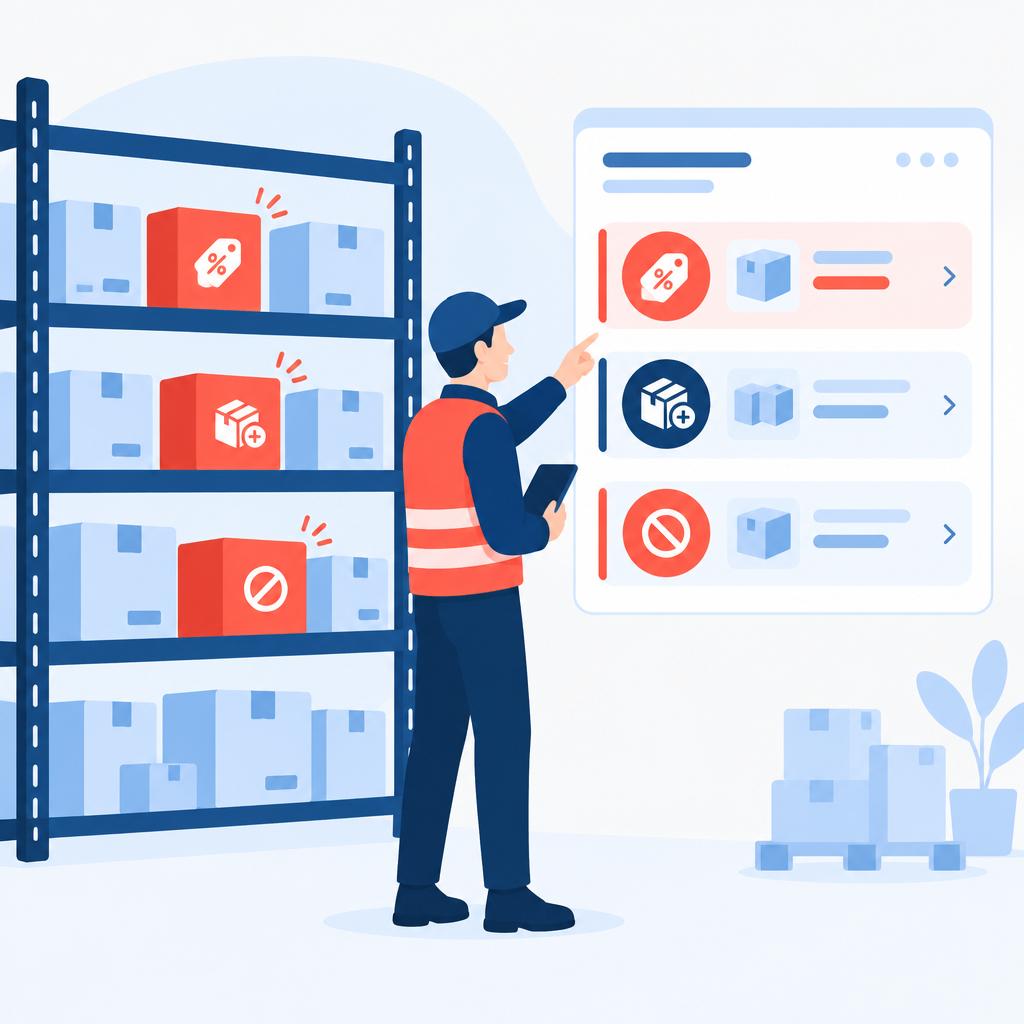
This managed service monitors SKU-level sales, inventory age and demand signals to surface and prioritise slow-moving items. implementi.ai configures the data feeds, runs AI analysis to recommend concrete remediation actions and operates the automation that triggers tasks or marketing actions you approve.
The product is for retailers, distributors and brands who struggle to spot ageing stock early and execute coordinated remediation across ecommerce, POS, inventory and marketing systems. We operate and maintain the automation as an ongoing service so your team receives timely, curated recommendations and automated actions without building or running the pipelines internally.
The problem
Without automation, teams rely on periodic manual reports or spreadsheets to find slow-selling SKUs. Merchants must stitch together sales history, inventory age, promotions and channel performance to decide whether to discount, bundle or remove items. That process is slow, inconsistent and often reactive — items sit in warehouses too long, taking up cash and space while staff debate priorities. As SKUs, channels and promotions scale, manual triage becomes unsustainable and opportunities to clear stock at acceptable margins are missed.

What this solution automates
This service automates the continuous detection, prioritisation and actioning of slow‑moving SKUs across your sales channels and back-office systems. It runs scheduled analyses, generates ranked recommendations and can trigger approved operational or marketing workflows.
- Detect slow-moving and ageing SKUs using sales velocity, inventory days‑on‑hand and seasonality signals.
- Prioritise SKUs by risk (margin impact, storage cost, replenishment likelihood).
- Generate specific remediation recommendations: markdowns, bundles, channel delist, or targeted promotions.
- Open tasks in your ticketing/ops system or create marketing triggers for approved campaigns.
- Produce weekly summary reports and a prioritized action queue for merchandising teams.
What your business gains
- Faster decision-making. The system translates raw sales and inventory data into a ranked action list, reducing time spent analysing spreadsheets and aligning stakeholders.
- Consistent prioritisation. Decisions use the same objective criteria across channels so the highest-risk SKUs are handled first rather than being overlooked.
- Coordinated actions across teams. Recommendations can automatically create operational tasks or trigger marketing sequences, ensuring promotions and fulfilment actions are executed in sync.
- Reduced manual workload. Automation reduces routine investigation and follow-up work so merchandisers and operations staff focus on exceptions and strategy.
- Maintained historical context. The managed service retains SKU history and trend signals so recommendations improve over time and reflect past remediation outcomes.

A practical use case
A mid-sized retailer sells seasonal apparel across an online store, several marketplaces and two physical locations. After a busy season, dozens of SKUs slow to a trickle of sales while taking up warehouse space. The AI Slow‑Moving SKU Recommender ingests sales history, current inventory and promotion records, ranks the worst offenders by expected carrying cost and margin risk, and issues recommended actions: push a low-risk SKU to an end-of-season bundle, schedule a limited-time discount for another, and flag a third for marketplace delisting. Operations receive created tasks and marketing receives approved promo triggers, reducing manual coordination and accelerating stock clearance.
Who is it for?
- Multi-channel retailers with growing SKU counts — need continuous SKU triage without adding headcount.
- Distributors with seasonal inventory — require faster clearance decisions to free working capital.
- Merchandising teams at brands — want prioritized, data-driven recommendations for promotions and bundling.
- Operations teams managing warehouse capacity — benefit from early flags for slow SKUs to plan space and labour.
What is included in the monthly service
The monthly subscription covers the live managed automation and ongoing upkeep required to keep recommendations accurate and integrations working. implementi.ai operates, monitors and maintains the automation, handles errors and applies reasonable configuration updates as business needs change.
- Continuous AI processing and daily analysis of SKU performance.
- Connections and data synchronisation with agreed systems.
- Operational monitoring, error handling and remedial fixes for the automation.
- Periodic configuration updates to thresholds, prioritisation rules and action mappings.
When this solution may not be necessary
- Very small single-channel sellers with fewer than a dozen SKUs — manual review may be sufficient and this service could be excessive.
- Businesses that do not control pricing, promotions or channels centrally — the service needs the ability to trigger or recommend actions to be effective.
How it works
- Gather data sources. We connect to your agreed systems (ecommerce, POS, ERP, marketplace reports) and ingest SKU sales history, inventory levels, cost and current promotions on a scheduled basis.
- Normalize and enrich. Sales and inventory records are normalised by SKU, location and channel; optional enrichments like seasonality and supplier lead times are added to provide context for prioritisation.
- Detect slow movers. The AI evaluates sales velocity, days‑on‑hand and trend signals to tag SKUs with slow‑moving scores and risk categories.
- Prioritise actions. The service ranks items using configurable rules (margin impact, storage cost, replenishment likelihood) and produces specific remediation suggestions for each SKU.
- Trigger actions or tasks. Approved actions can open tasks in your ops/ticketing system, queue items for a marketing promotion, or mark SKUs for delist/markdown in agreed systems.
- Human review and exceptions. Merchandisers review the top recommendations, approve or adjust them via a simple review queue, and the automation executes approved workflows.
- Monitor and refine. implementi.ai monitors automation performance, handles errors and refines prioritisation rules and thresholds over time based on results and feedback.
Example workflow
For example, imagine a company that sells home accessories across an online store and two marketplaces. Daily sales are ingested and the AI flags a decorative lamp SKU with consistently low velocity and six weeks of unsold stock. The system assigns a high risk score because the item has low replenishment likelihood and occupies slow-turning space. It recommends a bundled offer with complementary items and a modest markdown. A task is created in the operations queue to adjust inventory tags and a marketing trigger is queued to send a targeted promotion to past buyers. If the merchandiser approves, the automation executes the approved price change and schedules the campaign; if not, the item stays in a watch list for re-evaluation.
Integrations
Typical systems
Typical systems we connect to include ecommerce platforms (Shopify, WooCommerce, BigCommerce, Magento), marketplace feeds (Amazon, eBay), POS systems and ERPs (NetSuite, Microsoft Dynamics, SAP) as well as marketing platforms and inventory management tools. Accounting systems such as Xero or QuickBooks Online can provide cost and margin context. These are examples — exact compatibility is agreed before implementation.
Connection methods
We connect via available APIs and webhooks where possible, or by scheduled CSV/SFTP exports, Google Sheets and secure database access when APIs aren’t available. For marketplaces we can ingest regular reports. The chosen method depends on each system’s capabilities and is confirmed during scoping.
What we need from your company
Before launch we agree the systems to connect, a SKU master list, historical sales (typically several months), current inventory by location, cost/margin data and any business rules for prioritisation (minimum margin thresholds, cannot-discount SKUs, channel preferences). We also confirm which actions the automation is allowed to perform and which require human approval. Compatibility and access method are confirmed before implementation.
FAQ
What data history do you need to detect slow-moving SKUs?
We typically start with several months of historical sales and current inventory snapshots. More history improves trend detection and seasonality adjustments; the exact requirement is agreed during scoping.
Can the system automatically apply discounts or only recommend them?
By default the service produces ranked recommendations and creates execution tasks. You can opt to allow automated price updates and marketing triggers for pre-approved rules, or require manual approval for each action.
How does the solution handle multiple warehouses or channels?
The AI keeps inventory and sales by location and channel, so recommendations reflect local stocking and channel performance. You can configure channel‑specific rules (e.g., keep some SKUs available online but remove from physical stores).
What happens with false positives or items you don’t want changed?
Items can be marked as excluded from automation or given special handling rules. The review queue highlights exceptions so merchandisers can override recommendations before actions run.
How long until we see useful recommendations?
Launch time depends on the systems and data access agreed during scoping. Once feeds are connected and initial history is processed, the system produces actionable recommendations; we confirm timelines before implementation.
How is ongoing tuning handled?
implementi.ai monitors the automation, handles errors and applies reasonable configuration updates to thresholds, prioritisation rules and action mappings as part of the monthly service.
Price
The activation fee covers the initial setup, implementation and launch of the agreed automation scope.
The monthly subscription covers the ongoing operation, maintenance and management of the automation service.
The exact scope and final monthly subscription are confirmed before launch.
Ready to automate this process?
Tell us which ecommerce, POS and inventory systems you currently use and how many SKUs you manage.
We’ll confirm how this solution can be connected, its scope and the final monthly subscription.
| Email uscontact@implementi.ai | Call us+48 660 983 178 |