

Description
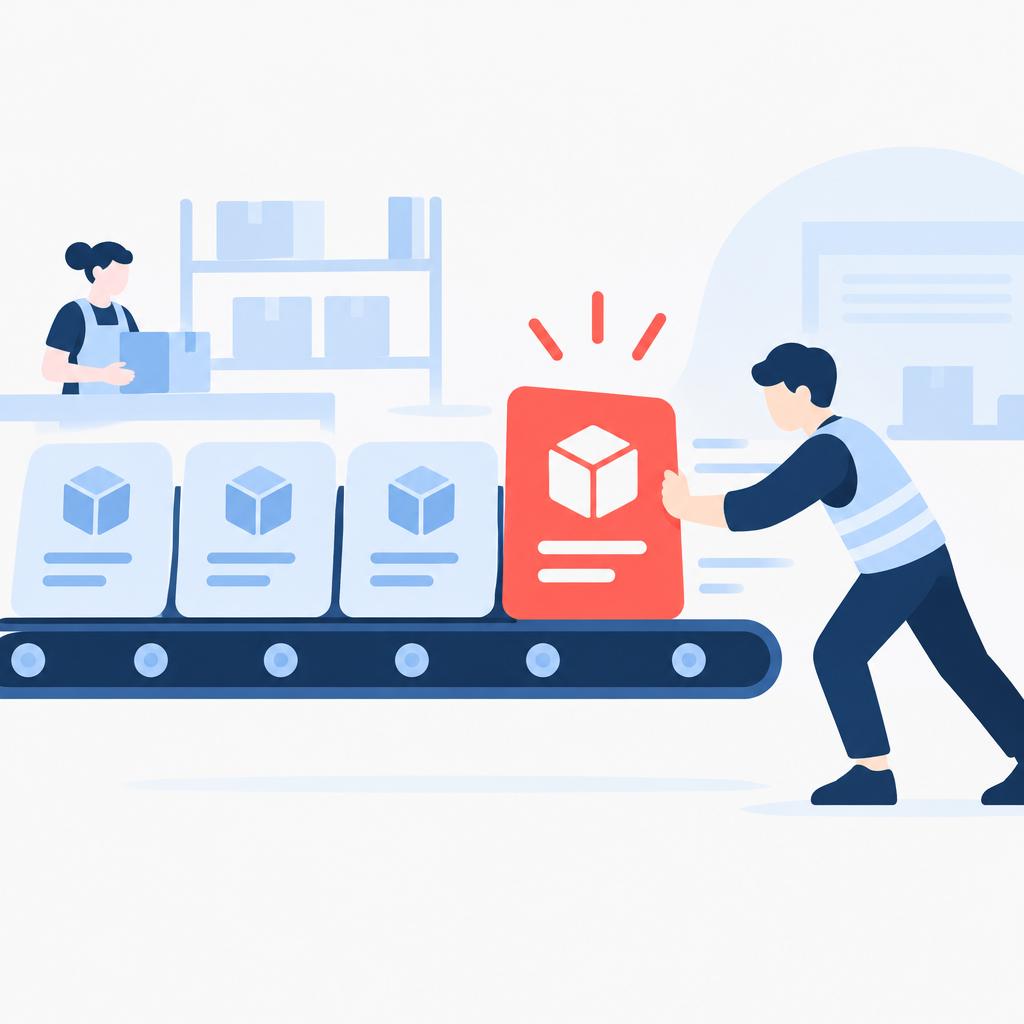
The AI Rush Order Prioritiser & Fulfilment Accelerator continuously monitors incoming orders, inventory levels and carrier constraints to identify time‑sensitive or at‑risk shipments and move them to the front of the fulfilment queue. It applies configurable business rules and AI‑assisted triage to recommend or enact priority routing, packing, carrier selection and notifications.
implementi.ai configures the solution for your systems, operates and maintains the automation, monitors its operation and handles fixes and configuration updates as part of the monthly managed service. The goal is to reduce manual triage, speed fulfilment of urgent orders and keep customers informed without adding headcount.
The problem
Without automation, rush and expedited orders are identified inconsistently: support tickets, manual flags in multiple systems or urgent phone calls drive ad‑hoc responses. Warehouse teams receive late notices, picklists aren’t re‑prioritised, and carriers are booked reactively, causing overtime, missed SLAs and unhappy customers. As order volumes, channels and fulfilment locations grow, the manual process becomes slower and error prone. Valuable exceptions are scattered across order notes, inventory records and carrier ETA data, making it hard to form a single, actionable view of which orders truly need urgent handling.

What this solution automates
This managed automation continuously watches order streams, inventory and carrier status to detect, prioritise and route urgent fulfilment tasks. It can automatically elevate orders in WMS pick/pack queues, select faster carrier options when justified, trigger procurement or stock transfer suggestions, and send targeted customer notifications. implementi.ai operates and maintains the flow, tuning rules and AI logic as your business evolves.
- Detect urgent orders from order attributes, customer tags, SLA requirements or manual flags.
- Score and rank orders by urgency using AI and business rules.
- Reorder WMS/warehouse pick‑lists or create priority pick tasks.
- Recommend or trigger faster carrier bookings and print priority labels.
- Notify customers with status and expected delivery changes.
- Raise procurement or inter‑warehouse transfer suggestions for low stock.
What your business gains
- Faster fulfilment of critical orders. Automated detection and queue reprioritisation get time‑sensitive shipments into the warehouse process sooner, reducing manual paging and reactive work.
- Consistent decisioning across teams. Centralised rules and AI scoring ensure every rush order is evaluated the same way, reducing disputes and ad‑hoc exceptions.
- Reduced manual coordination load. The system automates carrier selection recommendations, label creation and customer updates, freeing operations and support staff for higher‑value tasks.
- Improved customer communication. Timely, templated notifications reduce inbound support contacts by keeping buyers informed when fulfilment or delivery changes occur.
- Scalable handling of volume spikes. Continuous monitoring and automated routing prevent urgent orders from being missed when order volume grows or during promos.

A practical use case
A mid‑market distributor receives orders from an online store, a B2B portal and phone sales; some contain express shipping codes, others are manually flagged by account managers. Spikes during promotions and occasional stock transfers between warehouses make it hard to fill urgent requests consistently. The AI Rush Order Prioritiser ingests the order streams, inventory state and carrier constraints, scores each order for urgency and either pushes high‑score orders into a priority pick list in the WMS or recommends a faster carrier and prints a priority label. Support and account teams receive alerts and customers get a clear expected delivery update, reducing follow‑ups and late shipments.
Who is it for?
- Online retailers with mixed shipping options — need consistent handling of express and same‑day orders.
- Distributors with multi‑channel sales — want a single process to prioritise B2B and B2C rush orders.
- Operations teams running one or more warehouses — need automatic queue changes and carrier coordination to meet delivery promises.
- Companies that rely on manual urgent order escalation — seeking to reduce ad‑hoc phone calls and spreadsheet tracking.
What is included in the monthly service
The monthly subscription covers operation and maintenance of the configured automation, continuous monitoring of the automation’s function, AI processing required for scoring and prioritisation, handling and fixing automation errors, and reasonable configuration updates to keep the agreed solution working as your business changes.
- Connections to the agreed systems (configured before launch)
- Ongoing monitoring, error handling and corrective fixes
- Periodic tuning of rules and AI thresholds as order patterns change
When this solution may not be necessary
- Companies that process only a handful of orders per week and manage exceptions manually may not benefit from a continuous prioritisation service.
- Businesses without any sortable digital order stream (only paper orders or fully manual fulfilment) — integration is required for meaningful automation.
How it works
- Continuous order intake. The service ingests orders from connected sales channels and the order management system as they arrive, capturing attributes such as shipping method, customer priority, order value and any manual flags.
- Context enrichment. For each order the system fetches inventory on hand, incoming stock, warehouse workloads and carrier transit times to form a complete decision context.
- AI‑assisted urgency scoring. A configurable AI model and business rules evaluate and score orders for urgency and fulfilability; scores reflect SLA risk, customer priority and operational constraints.
- Decision and action routing. High‑score orders trigger actions: reordering pick lists in the WMS, creating priority packing tasks, booking expedited carriers or opening procurement transfers when stock is insufficient.
- Notifications and handoffs. The automation sends templated notifications to customers and alerts internal teams for any required manual approvals or exceptions.
- Exception handling. Orders that cannot be auto‑resolved (e.g., no inventory and no transfer options) are routed to a human queue with a consolidated context to speed manual resolution.
- Monitoring and tuning. implementi.ai monitors outcomes and adjusts scoring thresholds, rules and actions as part of the managed service to improve accuracy and reduce false positives.
Example workflow
For example, imagine a company that sells both consumer goods and time‑sensitive replacement parts. An order arrives from the web with an express shipping selection, while inventory shows low stock at the nearest fulfilment centre but available stock at a secondary site. The automation scores the order as high urgency because of the shipping method and customer priority, then triggers a priority pick task in the primary WMS. If the primary site cannot fulfil, the system recommends an inter‑warehouse transfer and—when transfer would miss the delivery window—suggests an expedited carrier from the carrier pool and creates the carrier booking. Support receives a brief alert with next steps and the buyer gets a notification with the new expected delivery. If a human decision is needed (costly expedited carrier), the system pauses and routes the request to the appropriate operations lead for approval.
Integrations
Typical systems
Typical systems we connect include e‑commerce platforms and carts (Shopify, WooCommerce, Magento), order management/OMS systems, warehouse management systems (WMS), ERPs such as NetSuite or SAP, and carrier or shipping platforms (ShipStation, carrier APIs like DHL/FedEx). Other systems can potentially be connected where APIs, webhooks or agreed export methods exist.
Connection methods
Connections are implemented using available APIs and webhooks where supported, or scheduled CSV/SFTP exports and imports when APIs are not available. For some systems we can integrate via middleware platforms (e.g., iPaaS) or by monitoring order emails/notifications if agreed. Exact methods are confirmed during scoping.
What we need from your company
Before launch we agree the systems to be connected, access methods (API keys, webhook endpoints or export locations), examples of order and inventory data, your definition of rush/priority orders and any approval thresholds. We also need to confirm which actions the automation is permitted to perform (e.g., auto‑book carriers, reorder WMS queues, or only recommend actions for human approval). Compatibility and precise access requirements are confirmed before implementation.
FAQ
Which order and warehouse systems can you connect to?
We commonly connect to e‑commerce platforms, OMS/ERP systems and WMS via APIs or scheduled exports. Specific compatibility is confirmed during scoping; if a native API isn’t available we can often use CSV/SFTP or middleware connections.
Can the system auto‑book carriers or does it only suggest actions?
That is configurable. For lower‑risk scenarios we can automate carrier bookings and label creation. For high‑cost escalations you can require human approval; we implement the approval flow as part of the setup.
How are rush orders identified and can I customise the rules?
Identification uses a mix of configurable business rules (shipping method, customer flags, product tags) and AI scoring that learns from historical patterns. You can customise rules and thresholds during scoping and we adjust them as part of the managed service.
What happens when inventory is insufficient to meet a rush order?
The automation suggests the best corrective action: inter‑warehouse transfer, expedited procurement, fulfilment from an alternative location or expedited carrier options, and routes unresolved cases to a human queue with the relevant context.
How do you handle exceptions and errors?
implementi.ai monitors the automation, handles and fixes errors, and escalates unresolved exceptions into a human review queue. Ongoing tuning is part of the subscription to reduce repetitive exceptions over time.
What determines the monthly price?
Price is driven by the number and complexity of integrations, required frequency of monitoring, data volume, the degree of automation (auto‑actions versus recommendations) and ongoing support needs. We confirm scope and the final subscription before launch.
Price
The activation fee covers the initial setup, implementation and launch of the agreed automation scope.
The monthly subscription covers the ongoing operation, maintenance and management of the automation service.
The exact scope and final monthly subscription are confirmed before launch.
Ready to automate this process?
Tell us which order, warehouse and shipping systems you use and how you currently flag urgent orders.
We’ll confirm how this solution can be connected, its scope and the final monthly subscription.
| Email uscontact@implementi.ai | Call us+48 660 983 178 |