

Description
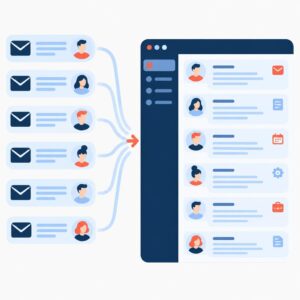
This managed service continuously ingests customer feedback from reviews, support tickets, surveys and analytics, and turns scattered signals into concise, prioritised briefs for product and operations teams. implementi.ai operates the pipeline: we connect the agreed sources, run regular AI analysis, and deliver structured insights and action items on a schedule you choose.
The service removes the manual effort of hunting feedback, reduces the risk that recurring issues stay hidden, and gives product managers a steady stream of ranked improvement opportunities and sample evidence they can act on.
The problem
Many businesses keep feedback in separate places: review sites, CRM notes, support systems, NPS surveys and product analytics all hold valuable signals. Without continuous consolidation, teams miss recurring complaints, duplicate work appears across squads, and prioritisation is inconsistent. Manual triage is labour-intensive and becomes impractical as volume grows—teams either react to the loudest complaints or fall behind. That fragmentation makes it hard to spot systemic product issues, measure trends, or supply product teams with the clear, evidence-backed briefs they need to prioritise work.

What this solution automates
This product automates the continuous collection, enrichment and prioritisation of customer feedback and delivers clear improvement briefs and trackable insights to your teams.
- Automated ingestion from multiple feedback sources on a scheduled cadence.
- AI classification of feedback into themes, feature requests, bugs and sentiment.
- Priority scoring based on frequency, user value and business impact signals.
- Generation of concise product-improvement briefs with representative quotes and analytics snippets.
- Flagging and routing of urgent issues to support or engineering channels.
- Maintained history and trend reports to monitor whether issues recur or decline.
What your business gains
- Consolidated intelligence. Turn dispersed feedback into a single, searchable source of truth so product teams stop chasing siloed inputs and start making evidence-led decisions.
- Faster prioritisation. AI scoring and thematic grouping reduce the time required to identify which issues deserve immediate attention versus longer-term backlog items.
- Clear handoffs. Automated briefs include context, representative quotes and suggested next steps, reducing friction between support, product and engineering.
- Trend visibility. Ongoing history and weekly or monthly briefs reveal whether interventions reduce complaints or expose recurrence that needs deeper fixes.
- Operational savings. By automating the triage and brief creation, support and product staff spend less time collecting evidence and more time resolving the root causes.

A practical use case
A mid-market SaaS company receives user feedback across its in-app feedback widget, Zendesk tickets and public review sites. Product managers struggle to prioritise feature requests because evidence is scattered and duplicate. With this service, feedback is gathered daily, AI groups similar requests and bugs, and the product team receives a ranked brief every week showing top issues, sample user quotes and suggested owners. The result: the team can plan sprints using consolidated evidence and measure whether customer sentiment improves after releases.
Who is it for?
- Product teams at SaaS or digital product companies — need prioritized, evidence-backed improvement briefs from dispersed feedback.
- Customer support leaders — want recurring triage that filters urgent issues and reduces manual escalation work.
- Operations or CX teams for e-commerce or services — require consolidated voice-of-customer signals to guide process or training changes.
- Smaller product-focused companies without a dedicated insight analyst — need an ongoing managed service to surface actionable feedback.
What is included in the monthly service
The monthly subscription covers the managed automation and ongoing operation of the feedback pipeline. implementi.ai configures and maintains the agreed connections, runs scheduled AI analysis, monitors the automation, handles and fixes errors, and applies reasonable configuration updates to keep the solution delivering the agreed briefs.
- Continuous operation and monitoring of the pipeline.
- AI processing and brief generation on the agreed cadence.
- Error handling, maintenance and routine configuration updates.
When this solution may not be necessary
- Companies that only need a one-off sentiment report rather than an ongoing service—this product is designed for continuous monitoring.
- Teams with very low feedback volume (fewer than a few dozen items per month) may find a lighter manual process sufficient.
How it works
- Connect agreed sources. We map and connect your selected feedback channels—reviews, support tickets, surveys and analytics events—using the connection methods you approve.
- Normalize incoming data. Incoming items are standardised so text, metadata and event signals (e.g., user plan, device, session data) are comparable across sources.
- AI classification and enrichment. Machine learning groups feedback into themes (bugs, feature requests, usability, pricing) and extracts representative quotes and relevant metadata for context.
- Priority scoring. Each theme is scored for recurrence, affected user value and operational impact to produce a ranked list of issues and opportunities.
- Brief generation. The system generates a concise product-improvement brief with summary, evidence, suggested owners and recommended next steps, delivered on the agreed cadence.
- Routing and alerts. Urgent or high-severity items are flagged and routed to the agreed channels (support, Slack, ticketing) for immediate action.
- Trend tracking and archive. Briefs and all classified items are stored for trend analysis, enabling monthly or quarterly reports on whether interventions succeed.
Example workflow
For example, imagine a company that receives complaints about a slow onboarding flow across three channels: in-app feedback, support tickets and low NPS survey comments. The automation ingests each item, tags them as onboarding-performance, extracts sample comments and correlates them with user plan data from CRM. AI groups 120 similar reports into a single theme and assigns a high priority because reports are concentrated among new trial users. The service generates a brief with representative quotes, a suggested debug owner in engineering, and a recommendation to measure time-to-first-success after a patch. Critical tickets are routed to support for immediate customer follow-up while the product team schedules the fix and tracks whether feedback declines in subsequent briefs.
Integrations
Typical systems
Typical systems may include support platforms such as Zendesk or Freshdesk, review sites and aggregators (Google Reviews, Trustpilot), survey tools like Typeform or SurveyMonkey, product analytics platforms (Amplitude, Mixpanel), CRM systems (Salesforce, HubSpot) and e-commerce or SaaS platforms that capture in-app feedback. These are examples—actual integrations are confirmed during scoping.
Connection methods
Common connection methods include APIs and webhooks for live feeds, scheduled CSV or JSON exports, email forwarding for support threads, and shared Google Sheets for legacy systems. implementi.ai confirms which method is available for each source and agrees the access approach before implementation.
What we need from your company
Before launch we agree the list of feedback sources, desired cadence for briefs, destination channels for alerts and any business rules for prioritisation. You will need to provide access credentials or export arrangements for the chosen systems, point us to relevant metadata fields (user plan, region, product area) and define who should receive and own generated briefs. Compatibility and the exact connection method are confirmed and documented before we start work.
FAQ
Which feedback sources can you connect to?
We typically connect to support platforms, review sites, survey tools, product analytics and CRMs via API/webhook or scheduled exports. We confirm support for your specific systems during scoping.
How customisable are the priority rules and themes?
Priority rules, theme labels and routing logic are configurable during setup. implementi.ai will apply reasonable updates during the subscription to keep the rules aligned with your evolving needs.
What happens with urgent issues the AI detects?
High-severity or safety-related items are flagged and routed immediately to the agreed channels (ticketing or notification endpoints). The brief cadence continues for non-urgent grouped items.
How do you handle data volume and history?
We maintain a history of classified feedback and trend summaries so teams can measure whether interventions reduce issues. Storage and retention details are agreed before implementation.
How do we start implementation?
We begin with a scoping conversation to list sources, approvals and delivery cadence. implementi.ai then confirms the required access methods and the launch plan—exact timelines are agreed before work begins.
Can the briefs be delivered to Slack, email or a ticketing queue?
Yes. Delivery can be configured to Slack channels, email distribution, or as tickets in your chosen system. Final delivery methods are agreed during setup.
Price
The activation fee covers the initial setup, implementation and launch of the agreed automation scope.
The monthly subscription covers the ongoing operation, maintenance and management of the automation service.
The exact scope and final monthly subscription are confirmed before launch.
Ready to automate this process?
Tell us which feedback sources (support, reviews, surveys, analytics) you want combined and who should receive the briefs.
We’ll confirm how this solution can be connected, its scope and the final monthly subscription.
| Email uscontact@implementi.ai | Call us+48 660 983 178 |