

Description
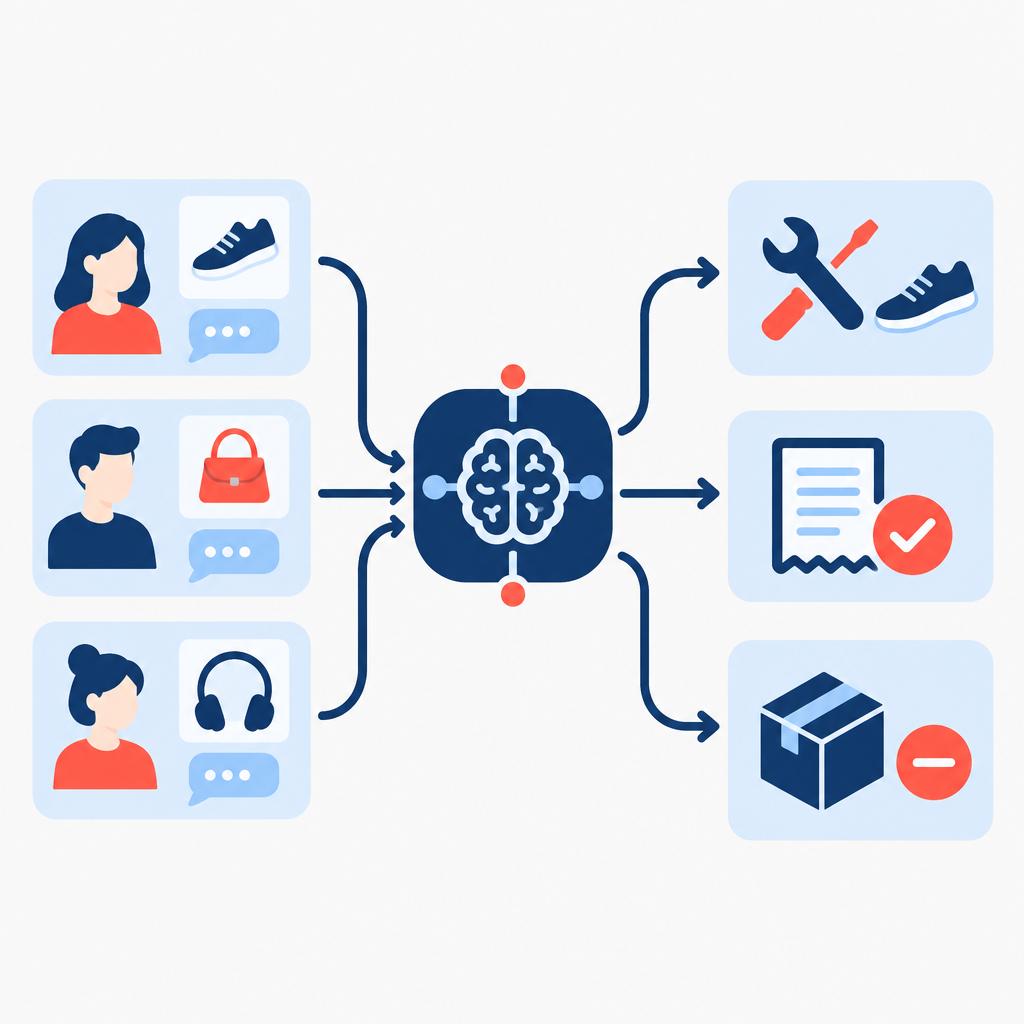
This managed service analyzes incoming returns (text, structured return fields and optional photos), decides whether each case should be routed for repair, replacement, or refund, and then triggers the downstream actions you need. It removes slow, inconsistent manual review and centralises decision logic so outcomes are auditable and repeatable.
implementi.ai configures the solution for your systems, operates the automated flows, monitors performance and handles fixes and updates as part of the monthly service so your teams focus on exceptions and customer communication.
The problem
Without automation, returns are handled by manual review across email, RMA portals and customer messages. Staff read notes, inspect attachments, check warranty rules, consult inventory and decide on an outcome. That process is slow, inconsistent between agents, hard to audit and scales poorly as return volumes grow. Missing context (e.g. purchase date, SKU condition, warranty terms) and delayed decisions cause extra replacements, unnecessary refunds, manual corrections in inventory and frustrated customers.

What this solution automates
This product automates classification, decisioning and routing for product returns and RMAs. It uses available return metadata and optional images to determine the appropriate outcome, executes the agreed downstream actions and maintains a searchable history of decisions for review.
- Automatically classify return reason from free-text fields and uploaded images.
- Apply configurable business rules (warranty, age, SKU, price thresholds) to choose repair, replacement or refund.
- Create or update RMA records and notify customers with templated messages.
- Trigger inventory actions: quarantine, restock or mark as scrap in warehouse systems.
- Open accounting entries or flags for refunds and record cost codes for repair work.
- Escalate ambiguous or high-value cases to human review with context and suggested actions.
What your business gains
- Faster decisions. Automated classification and rule-based routing reduce manual review time, letting teams process returns more quickly and consistently.
- Consistent outcomes. Centralised decision logic enforces warranty and pricing policies so similar cases receive the same treatment and disputes shrink.
- Reduced manual corrections. Automated updates to RMA, inventory and accounting systems lower downstream reconciliation work and errors.
- Better customer experience. Faster, clearer communications and predictable outcomes reduce follow-up queries and manual status checks.
- Actionable history. Maintained decision records and return trends make it easier to spot product issues, repeat defects or supplier problems over time.
A practical use case
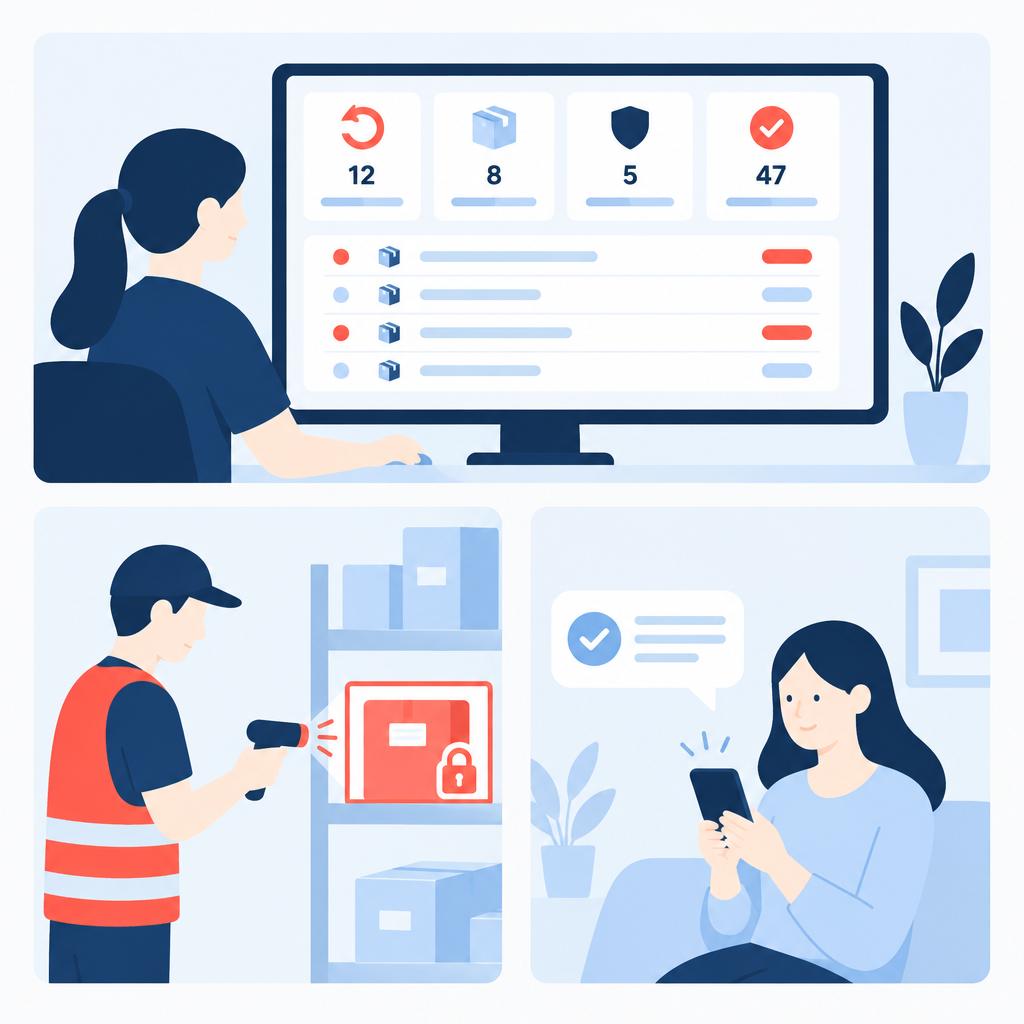
Imagine a mid‑sized online retailer receiving several hundred returns per month across multiple SKUs. Each return includes a short reason, an uploaded photo and the original order data. The automation classifies each case (e.g. “damaged in transit”, “wrong item”, “buyer remorse”), applies warranty and price rules, and routes damaged items to the repair team while instructing the warehouse to quarantine and inspect stock. High-value or unclear cases are escalated to a human agent with context, and refunds are recorded in the accounting system without manual double‑entry.
Who is it for?
- Mid-market e‑commerce retailers — who need consistent returns decisions and integration with OMS/WMS and accounting.
- Companies with in-house repair or refurbishment operations — that want to route suitable returns to repair vs refund automatically.
- Customer-service teams — looking to reduce manual case handling and speed up response times.
- Distributors handling multi-SKU returns — who need auditable routing rules and inventory reconciliation.
What is included in the monthly service
The monthly subscription covers the managed automation and its ongoing operation. implementi.ai configures the agreed integrations and decision rules before launch, runs the automated classification and routing, monitors operation, fixes errors that occur, and maintains the solution with reasonable updates to rules and templates.
- Operational automation and AI processing for returns.
- Connections to systems agreed before launch (RMA portal, e‑commerce, WMS, CRM/accounting where applicable).
- Monitoring, incident handling and routine configuration updates.
When this solution may not be necessary
- Very low-volume sellers with fewer than a handful of returns per month — manual handling may be simpler and more cost‑effective.
- Businesses that need bespoke legal or regulatory compliance handling embedded in every decision — this service automates operational routing but does not provide legal advice.
How it works
- Ingest return data. The system receives return requests from your RMA portal, e‑commerce platform or CSV feed and captures order metadata, customer notes and any uploaded images.
- Context enrichment. The automation retrieves order, warranty and SKU data from connected systems so each return is evaluated with purchase date, product serials and prior returns history in context.
- AI classification. An AI model classifies the return reason and, when images are provided, detects visible damage types or condition cues to support the decision.
- Rule evaluation. Configurable business rules combine the classification, SKU rules and financial thresholds to decide repair, replacement or refund and whether to quarantine stock.
- Action execution. The service updates the RMA record, sends the chosen customer notification template, flags inventory for inspection or restock, and posts a refund request or accounting tag where required.
- Escalation and human review. Cases that fail confidence thresholds or exceed value limits are routed to staff with a prepared summary and suggested actions for quick resolution.
- History and reporting. Every decision and action is stored for audit and trend analysis; weekly exception summaries can be produced on request.
Example workflow
For example, imagine a company that sells home electronics and receives a return with the note “screen cracked on arrival” and two photos. The automation pulls the order date and warranty terms, runs image analysis to confirm visible screen damage, and classifies the reason as “damaged in transit”. The rules engine detects the product is eligible for repair and the item value is below the escalation threshold, so the flow creates an RMA repair job, notifies the customer with repair instructions, flags the warehouse to quarantine the unit for repair intake, and opens an accounting tag for repair cost. If the images are unclear or the item value were higher, the case would be escalated to a human agent with the AI findings and recommended next steps.
Integrations
Typical systems
Typical systems may include e‑commerce platforms (Shopify, WooCommerce, Magento), RMA/returns portals, warehouse management or OMS platforms, CRM systems (e.g. HubSpot, Salesforce) and accounting systems or ERPs. Other systems can potentially be connected by API, webhook, CSV export or agreed methods; final compatibility is confirmed before launch.
Connection methods
Integrations use available APIs and webhooks where supported, or secure CSV/data exports, email-in RMA feeds and Google Sheets as alternative methods. For some warehouses or legacy systems we use agreed data exchange patterns to keep the automation continuous. The exact connection methods are agreed during scoping.
What we need from your company
Before launch we agree which systems hold returns, order and inventory data, sample return records and a representative set of returned-item images (if used). We need your decision rules (warranty windows, value thresholds, repair eligibility), templates for customer messages and the list of users who will receive escalations. Compatibility, access method and exact integration scope are confirmed before implementation.
FAQ
Which systems can you connect to for returns?
We commonly connect to e‑commerce platforms, RMA portals, WMS/OMS and accounting or ERP systems using APIs, webhooks or agreed CSV feeds. Exact compatibility is confirmed during scoping.
How are repair vs refund decisions controlled?
Decisions combine AI classification of reason and media with your configurable business rules (warranty, SKU lists, monetary thresholds). Rules are tuned during onboarding and can be updated as part of the monthly service.
What happens to ambiguous or high‑value returns?
Cases below an agreed confidence level or above value thresholds are automatically escalated to human agents with a summary and suggested actions; agents complete the final decision and the automation proceeds.
Can the system use photos to support decisions?
Yes — optional image analysis can detect visible damage types and condition cues to improve classification and routing; image usage and storage are agreed before launch.
How does implementi.ai support ongoing changes?
The monthly service includes monitoring, error handling, routine maintenance and reasonable updates to decision rules and templates to keep the agreed solution working as your needs evolve.
How does implementation start?
We start by confirming systems, sample data and decision rules; exact timelines depend on the integrations and scope and are confirmed before implementation.
Price
The activation fee covers the initial setup, implementation and launch of the agreed automation scope.
The monthly subscription covers the ongoing operation, maintenance and management of the automation service.
The exact scope and final monthly subscription are confirmed before launch.
Ready to automate this process?
Tell us which e‑commerce, RMA and warehouse systems you use and your typical monthly returns volume.
We’ll confirm how this solution can be connected, its scope and the final monthly subscription.
| Email uscontact@implementi.ai | Call us+48 660 983 178 |