

الوصف
This managed service automates how limited stock is allocated across open orders, converts backorder data into clear fulfilment promises, and keeps customers informed. It reduces manual allocation decisions, lowers repetitive customer enquiries and standardises how your team handles stock shortages.
implementi.ai configures and operates the automation, connects agreed systems, monitors its operation and handles fixes and routine updates each month so your team can rely on continuous prioritisation without building or running the integration internally.
المشكلة
Without automation, backorders are often handled with manual spreadsheets, ad-hoc rules and individual staff judgement. That leads to inconsistent prioritisation, late shipments for high-value customers, duplicate work when customers call for updates, and pressure on fulfilment staff to reallocate stock during peak periods. As order volume and SKU counts increase, the manual work grows non-linearly: more exceptions, more customer messages and more urgent rework. Companies need a consistent, scalable way to decide who receives limited items first and how to communicate realistic delivery promises.

ما الذي تقوم هذه الحلول بأتمتته
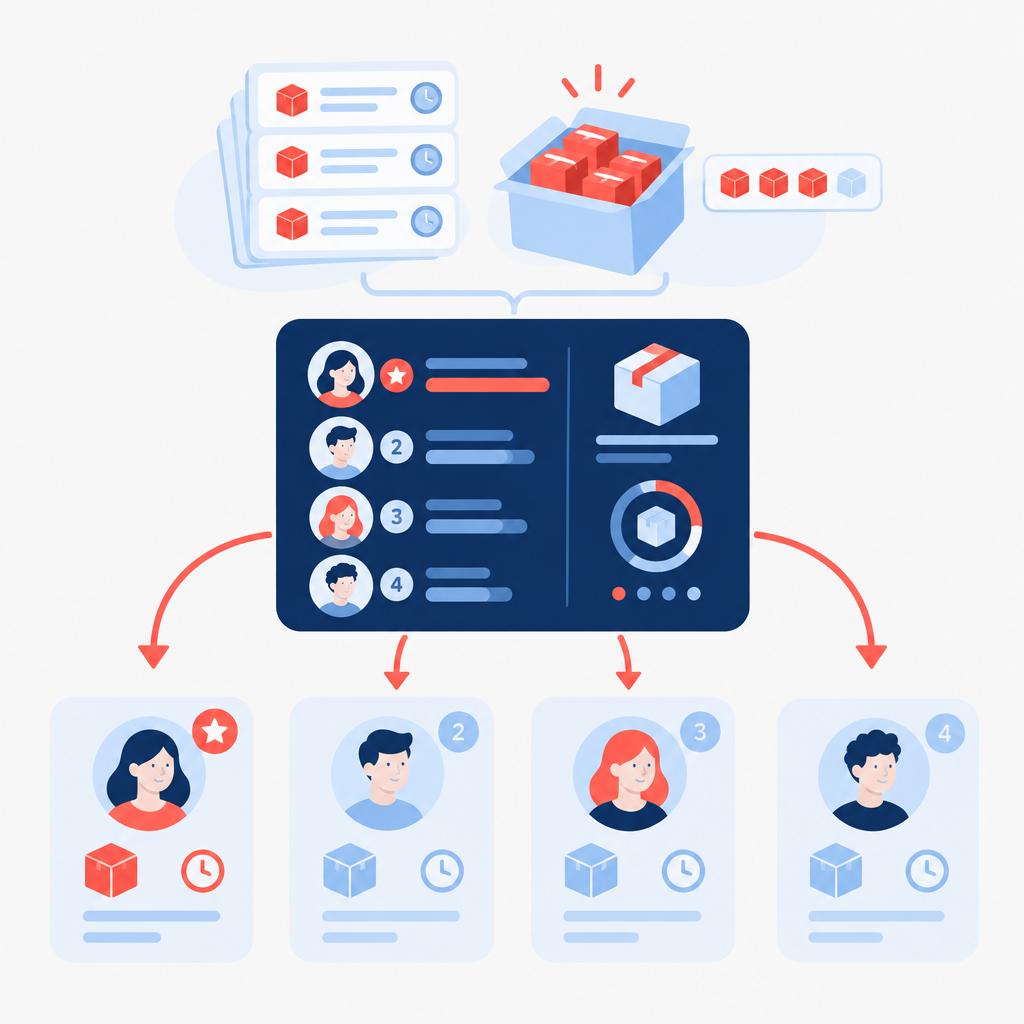
This product automates continuous backorder prioritisation, customer promise generation and exception routing based on your agreed business rules. The service evaluates open orders and available inventory, proposes allocations, sends customer-facing updates and alerts staff when manual decisions are required.
- Continuous scanning of open orders, allocated stock and incoming receipts to identify backorders and allocation opportunities.
- Automated scoring of orders by priority rules (customer value, SLA, order age, subscription status, shipping method).
- Suggested allocations that reserve stock and update order status in connected systems.
- Automated customer messages: estimated delivery windows, backorder explanations and optional rebooking or cancellation prompts.
- Escalation workflows for complex exceptions routed to fulfilment or sales teams.
ما الذي ستجنيه شركتك
- قرارات أسرع وأكثر اتساقًا. Automated prioritisation applies the same rules to every backorder so allocations follow agreed business logic rather than individual judgement.
- Reduced customer contacts. Proactive, automated notifications remove most routine backorder queries and set clear expectations for delivery.
- Better revenue protection. By prioritising high-value or strategic customers, teams reduce the risk of losing important orders when stock is constrained.
- Operational efficiency. Staff spend less time on email and phone follow-ups and focus on exceptions that truly need human attention.
- Maintained record and audit trail. The service keeps allocation history and decision rationale to simplify later analysis or dispute handling.

حالة استخدام عملية
For a mid-sized retailer that frequently sells popular items that run out before restock, the automation continuously evaluates new receipts and current allocations. When a partial replenishment arrives, the system applies pre-agreed rules to allocate incoming units to outstanding orders—prioritising express shipments and VIP customers—then updates the order management system and sends estimated delivery windows to impacted shoppers. If unusual constraints or conflicting priorities appear, an exception task is created and sent to the fulfilment manager for a quick decision. This keeps promises consistent and reduces repetitive customer service work.
لمن هذا البرنامج؟
- Online retailers with frequent SKUs that go out of stock — need consistent allocation and fewer customer inquiry tickets.
- Distributors fulfilling multi-channel orders — require clear prioritisation across B2B and B2C channels.
- Subscription-box businesses with allocation rules — must decide how limited items are distributed across subscribers.
- Operations or fulfilment teams at mid-market companies — want to reduce manual spreadsheets and phone calls.
ما الذي تشمله الخدمة الشهرية؟
The monthly subscription covers running and monitoring the automation, maintaining agreed connections, and handling routine fixes and configuration updates so the agreed prioritisation logic continues to work as systems or business rules change.
- Ongoing operation of the prioritisation and notification automation.
- Connections with systems agreed before launch (ERP/WMS, e-commerce, CRM, email/SMS providers).
- AI processing for scoring and customer message generation where included in scope.
- Monitoring of the automation, handling errors and routine maintenance and updates to keep the solution working.
الحالات التي قد لا يكون فيها هذا الحل ضروريًا
- Very small sellers with only a handful of SKUs and infrequent stockouts — manual handling may be sufficient.
- Companies that require advanced replenishment forecasting and multi-location optimization beyond simple allocation rules — that scope is better served by inventory-forecasting products.
كيف يعمل
- ربط الأنظمة. We link to your agreed e-commerce, order management or ERP/WMS systems and your chosen notification channels so the automation can read orders, inventory and incoming receipts.
- Define prioritisation rules. We configure the business logic you want (for example: priority by customer tier, order age, shipping method and SKU allocations) and codify fallback rules for ties and partial allocations.
- Continuous scanning. The automation monitors open orders, reserved stock and new receipts on a frequent schedule to detect allocation opportunities and changes in inventory status.
- Score and allocate. Each backorder is scored against the configured rules; the system proposes allocations and, when configured as automatic, applies reservations or updates order lines in the connected systems.
- Generate customer promises. For affected customers the service generates clear delivery estimates and sends notifications via email/SMS or your CRM channel templates, using agreed wording and options for rebooking or cancellation.
- تصعيد الاستثناءات. Any ambiguous or high-impact conflicts create an exception task for human review, including the decision context and recommended actions.
- Maintain history and reporting. The service records allocation decisions, message history and exception outcomes for later review, audit and periodic tuning.
مثال على مسار العمل
For example, imagine a company that sells home appliances across an online store and a wholesale portal. A popular blender sells out, creating 200 open backorders across channels. When a partial replenishment of 50 units arrives, the automation reads incoming receipts and open orders, scores each order by priority rules (express shipping, wholesale contract tier, order date) and allocates the 50 units automatically to the top-scoring orders. Customers who keep their order receive an automated message with a new estimated delivery window; lower-priority customers are offered an opt-in waitlist or refund choice. Two wholesale orders present a contractual constraint, so the system flags them as exceptions for a quick manual decision. The result: faster allocation, fewer support tickets and consistent customer communication.
التكاملات
الأنظمة النموذجية
Typical systems we connect include e-commerce platforms such as Shopify, Magento or WooCommerce; order management and ERP systems (for example NetSuite, SAP or other ERP platforms); warehouse management systems or WMS modules; and customer channels like Salesforce, HubSpot or an email/SMS provider. We present these as common examples — final compatibility and the exact systems to be used are agreed before launch.
طرق الاتصال
Connections are implemented via available APIs and webhooks where possible. We can also work with CSV or SFTP exports, scheduled database reads, or Google Sheets where API access is not available. Notification channels typically use your existing email provider, SMS gateway or CRM integration agreed during scoping.
ما نحتاجه من شركتكم
Before launch we agree which systems to connect, sample order and inventory data, your prioritisation and escalation rules, the notification templates and the target actions the automation may take (reserve stock, update order status, send messages). We also need account access or a technical contact for each system and sample transactions to validate end-to-end flows. Exact compatibility and access method are confirmed during scoping.
الأسئلة الشائعة
ما هي الأنظمة التي يمكنك الاتصال بها؟
We commonly connect to e-commerce platforms, ERPs, WMS and CRM/email providers. During scoping we confirm whether your specific platforms have the APIs or export methods we require and define the best connection method.
How much customisation is possible for prioritisation rules?
Prioritisation logic is configurable during setup and can be updated over time. We implement agreed rules such as customer tier, order age, shipping method and contractual constraints; monthly updates are included in the subscription for reasonable changes.
What happens when there is a conflict or exception?
Conflicts that cannot be resolved automatically create an exception task in your chosen workflow. The exception includes context and a recommended action so staff can decide quickly; the automation learns from rule updates but does not override manual decisions.
Who manages the customer messages and content?
We generate messages based on templates you approve. The automation can send notifications directly through your existing email/SMS provider or create drafts in your CRM for review, depending on the chosen configuration.
How does implementation start and what inputs are required?
Implementation begins with a scoping session where we agree systems, sample data, prioritisation rules and notification templates. Launch time depends on the integrations and scope; we confirm timing after scoping.
السعر
تغطي رسوم التفعيل الإعداد الأولي والتنفيذ وإطلاق نطاق الأتمتة المتفق عليه.
يغطي الاشتراك الشهري تكاليف التشغيل والصيانة والإدارة المستمرة لخدمة الأتمتة.
يتم تأكيد النطاق الدقيق ومبلغ الاشتراك الشهري النهائي قبل الإطلاق.
هل أنت مستعد لأتمتة هذه العملية؟
Tell us which e-commerce, ERP/WMS and notification systems you use and typical weekly backorder volumes.
سنقوم بتوضيح كيفية توصيل هذا الحل، ونطاقه، ومبلغ الاشتراك الشهري النهائي.
| راسلنا عبر البريد الإلكترونيcontact@implementi.ai | اتصل بنا+48 660 983 178 |