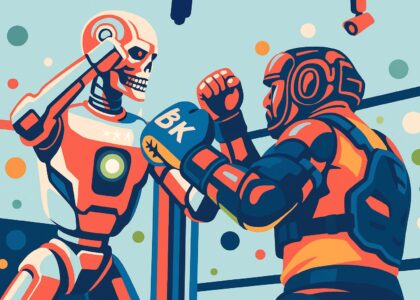


Ford’s Journey: From Automation to Quality Control
Ford, the iconic automotive company, has faced quite a journey in recent years. Recently, the company celebrated its new status as No. 1 in JD Power’s initial quality ranking among mainstream automakers. While this is certainly cause for celebration, the journey to this point sheds light on the company’s navigation through the challenges and opportunities linked to the increased utilization of automated systems in production and design.
As it turns out, Ford’s reliance on automated systems, specifically those revolving around Artificial Intelligence (AI), hasn’t always been as smooth-sailing as one might assume. According to the company’s observations, there’s a clear dichotomy when it comes to AI implementation. On the one hand, AI’s power is genuinely transformative, providing innovative methods to streamline and optimize processes. On the other hand, its effectiveness can be prone to pitfalls that can sometimes have significant consequences.
One of the main challenges Ford had to confront was the fact that the effectiveness of AI largely depends on the quality of the data used. If the input data is flawed or inadequate in some way, the resultant product could not meet the high standards of quality expected of such a storied brand. In some instances, this has led to errors necessitating intervention from experienced technicians. In some cases, former employees had to be brought back to rectify the issues.
While this might seem counterproductive, given the automation’s aim to reduce the need for human intervention, it demonstrates an important reality of the AI-dependent era. According to Ford, machines aren’t infallible, and the human element remains crucial in the manufacturing process – for quality control, correction of errors, and ensuring the production of reliable, sound vehicles.
The journey that Ford embarked on serves as an essential case study for many companies navigating through the inevitable digital transformation. It prominently illustrates that while automated systems and AI may promise an era of superior accuracy and productivity, it comes with its own set of challenges that businesses must be prepared to tackle.
Ford’s recent achievement is a testament to not only their resilience but also their adaptability. The lessons gained from the challenges navigated, the insights gleaned from AI’s implementation, and the ability to maintain human involvement as an integral aspect of their operations all contributed to this success— a distinctive journey worth examining for any industry stepping into the future underpinned by AI and automation.
For more on Ford’s AI and automated breakthroughs and challenges, you can visit the original article at The Verge.