
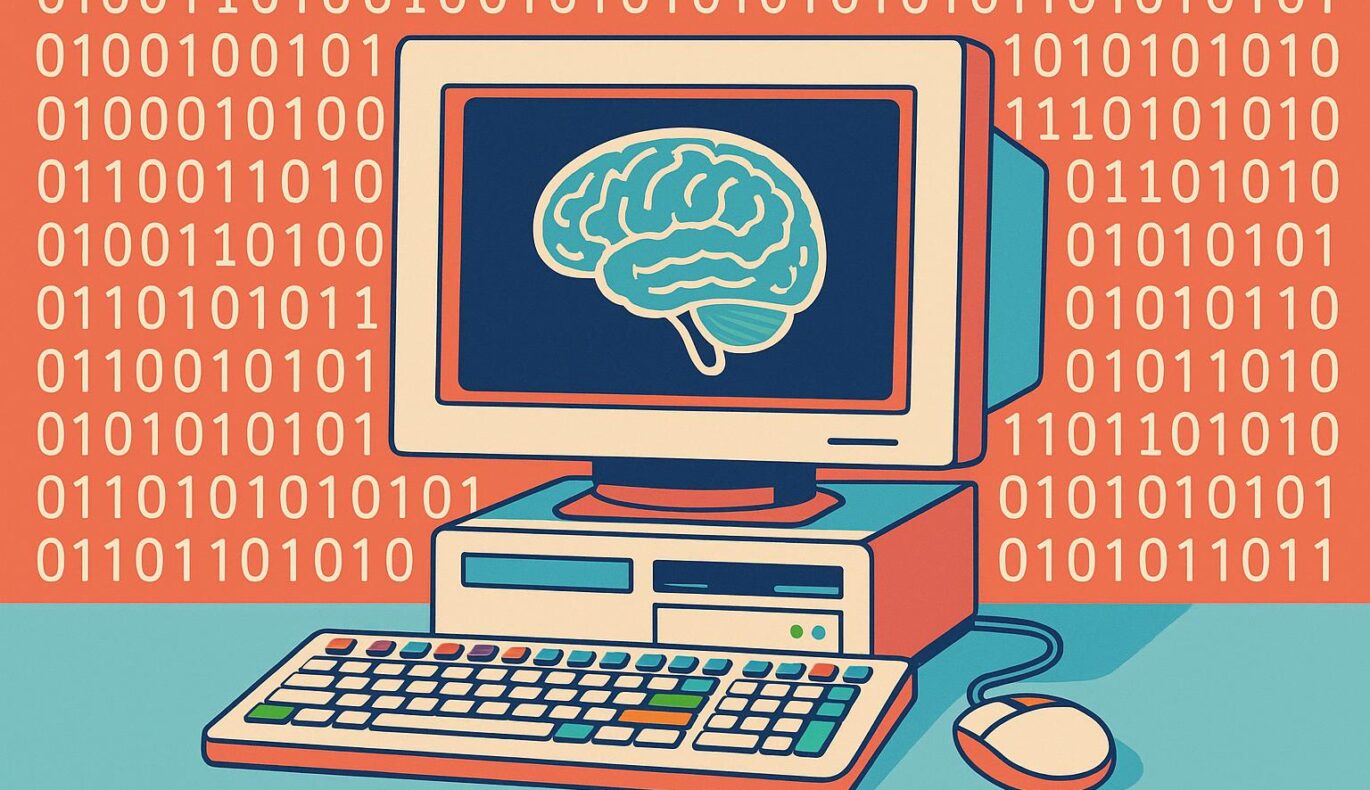
Computer screens often reflect our ambitions. In the case of a recent illustration that showed a brain on the screen of a computer, that ambition is Artificial Intelligence (AI) – the dream of creating machines that can think, learn, and perhaps even outthink us. But the latter possibility also harbors risks along with the obvious potential rewards, and it has recently led to some surprisingly frank discussions among leading lights in the world of AI.
In a remarkable development, employees of prominent AI labs such as OpenAI, Anthropic, Google, Meta, Thinking Machines, Microsoft, Mistral, and others, have penned a statement to the US government. Their proposition? A potential “slowdown” of cutting-edge AI development – or at the very least, a hastening of globally coordinated governance efforts.
Can AI Create a Dramatically Better Future?
“AI could help create a dramatically better future, but that outcome is not guaranteed,” the employees candidly wrote in their statement. They underscore the potential of AI as a tool for good, yet simultaneously lay bare the inherent uncertainties involved in its realization. Nothing is a given with AI – it’s a field that thrives on constant, agile innovation, but the outcomes of those innovations are less predictable than we might hope.
The reason for this unpredictability lies at the heart of the technology itself: AI, at its core, is about automating cognitive processes. Tasks that were once the sole domain of human beings – making decisions, learning from experiences, recognizing patterns – are now within the realm of machines. And the result, however impressive, is also potentially disconcerting.
Moving Towards Automating AI Research
Moving one step further from familiar territory, the pioneers of AI research suggest we may be on the brink of automating the very process of AI research itself. Imagine machines conducting their own experiments, formulating their own hypotheses, and drawing their own conclusions. It’s an exciting prospect, but it’s hardly one without its risks. Indeed, the employees express a very real concern that such rapid advances might accelerate AI capabilities beyond our control.
Interestingly, the idea of a “slowdown” in AI development isn’t about stifling innovation—in fact, it’s quite the opposite. It’s about ensuring that we, as a global community, have the necessary structures and strategies in place to navigate whatever this fast-evolving field throws our way. Whether those strategies involve new laws, regulations, ethical guidelines, or even an unprecedented form of digital diplomacy, remains to be seen.
Doubtless, such monumental decisions demand international cooperation. But before that can happen, it seems, those at the forefront of AI innovation are urging for a pause—a collective breath, if you will—to recalibrate and reassess how to proceed in a way that serves us all. They are not asking to halt progress, but to guard it vigilantly, to ensure that it is beneficial and controlled, rather than anarchic and potentially detrimental.
We stand at an exciting, albeit challenging, precipice, one where our own creations could outstrip our ability to fully comprehend them. It’s a time for hope, excitement, and perhaps a touch of apprehension. But it’s also a time when we’re reminded that, in our rush to innovate, we need to do so thoughtfully, tactfully, and most importantly, collaboratively.