

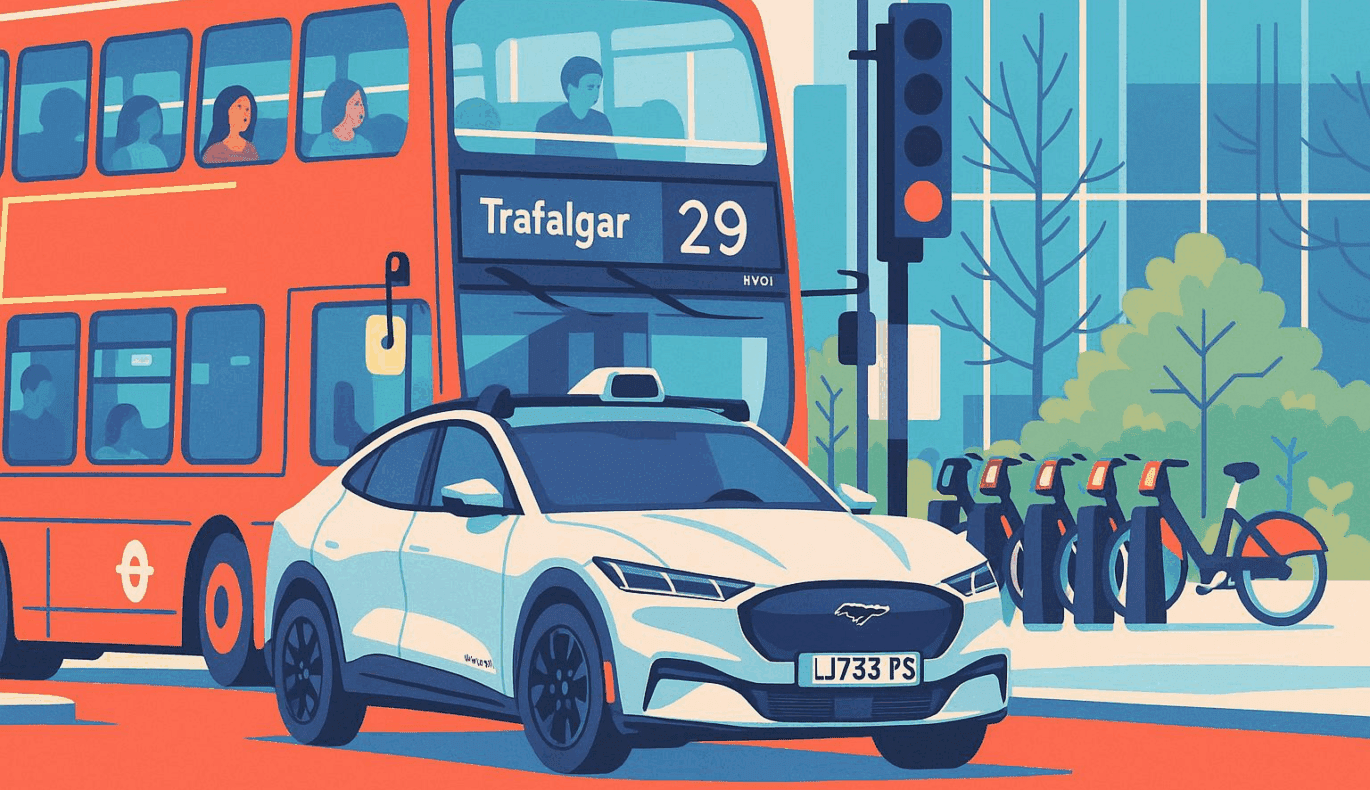
There’s a certain thrill in stepping into the unknown, and that thrilling feeling washed over me a few weeks ago as I found myself stepping into one of Wayve’s self-driving cars in north London. To be honest, I never truly imagined that autonomous vehicles would become commonplace on UK streets, but I should remind myself: reality often surpasses the wildest of imaginations.
Wayve, a pioneer in the world of autonomous driving, had made a notable announcement in June. The company joined forces with Uber to unveil plans for launching Level 4 fully autonomous robotaxis in London, aiming to have these on the roads as early as 2026. This move is part of a broader initiative headed by the UK government to fast-track the testing of self-driving cars, ahead of a potential mass deployment across the country come 2027.
Level 4 autonomous cars represent a significant leap into the future. For those unfamiliar with the jargon, the term refers to vehicles that are capable of handling all aspects of driving in most conditions, without human intervention. Safe to say, my ride around the block was dramatically different from any I had before!
This initiative is not exclusive to Wayve and Uber. Waymo, a subsidiary of Alphabet and a renowned heavyweight in the self-driving arena, has also set its sights on the UK’s capital. Like Wayve, Waymo has an ambitious plan in the pipeline for an autonomous robotaxi service of its own.
The burgeoning self-driving car industry is on the crest of a wave that’s about to sweep across the globe. Wayve, Uber, and Waymo are just a few of the players riding that wave. The technology is no longer futuristic; it’s very much part of our present. Cities around the world, including San Francisco, Los Angeles, and Phoenix, have already embraced the vehicles of the future.
I must admit, the experience of relinquishing control to a machine, allowing it to steer me through the sprawling urban tapestry of London, was both disconcerting and exhilarating. As we turned corners and navigated traffic, I could not help but marvel at the precision, the intuitiveness, and the safety protocols embedded within the vehicle.
It dawned on me that the move to self-driving cars spells profound implications not just for transport, but for society as a whole. It promises to revolutionize how we perceive transport and mobility. But beyond that, it represents a significant step forwards in technology’s ability to augment human life and reshape the norms of the everyday.
As I stepped out of the autonomous vehicle after a memorable ride, I was left contemplating the dawn of a new era. A world of self-driving cars isn’t decades away – it’s arriving now. The stories we’ve fit into the realm of science fiction are quickly becoming the narratives of today.
For more details and a deep dive into Wayve’s autonomous cars and the ongoing trials, check out The Verge’s full story.