

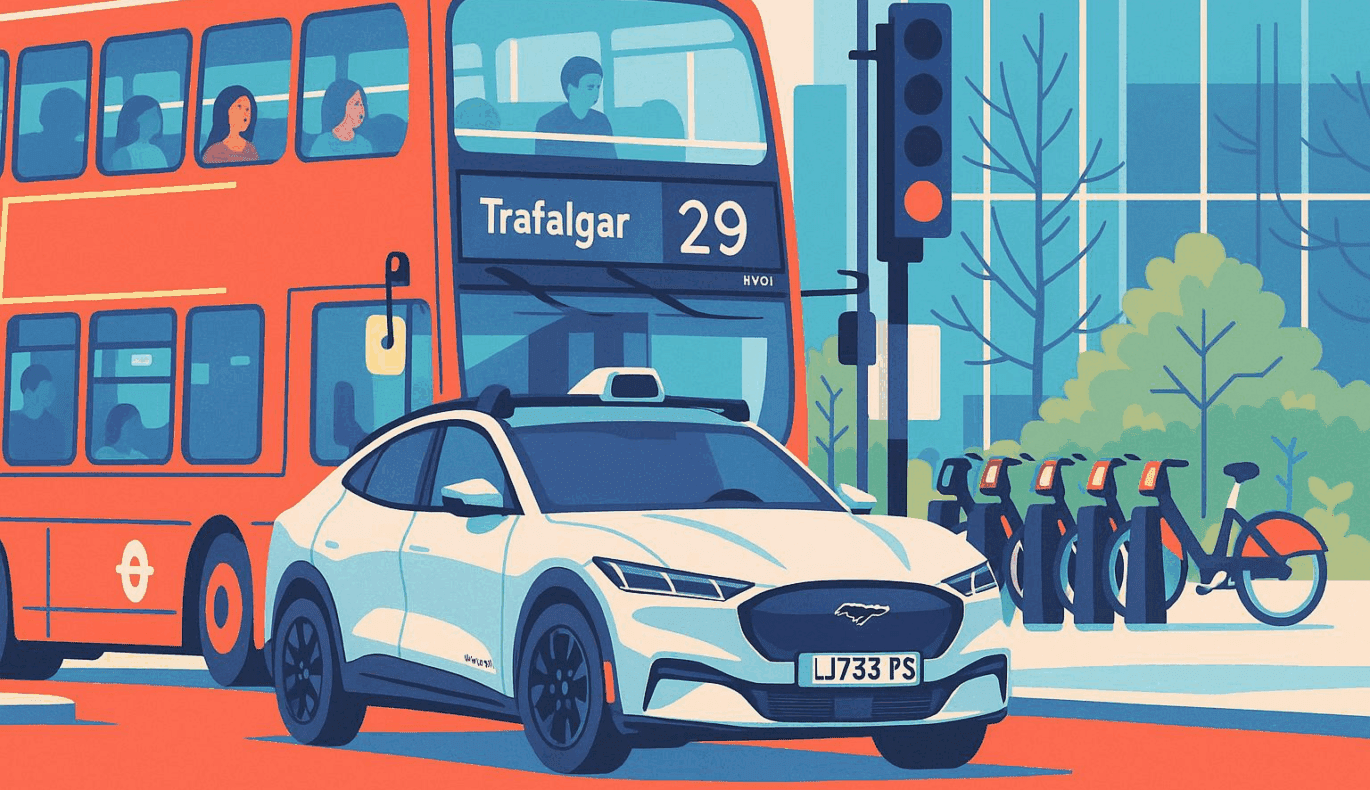
Il y a un certain frisson dans l'inconnu, et ce sentiment m'a envahi il y a quelques semaines lorsque j'ai pris place dans l'une des voitures autonomes de Wayve dans le nord de Londres. Pour être honnête, je n'ai jamais vraiment imaginé que les véhicules autonomes deviendraient monnaie courante dans les rues du Royaume-Uni, mais je dois me rappeler que la réalité dépasse souvent les imaginations les plus folles.
Wayve, pionnier dans le monde de la conduite autonome, a fait une annonce remarquée en juin. L'entreprise s'est associée à Uber pour dévoiler ses projets de lancement de robotsaxis entièrement autonomes de niveau 4 à Londres, avec l'objectif de les voir circuler sur les routes dès 2026. Cette initiative s'inscrit dans le cadre d'un projet plus vaste mené par le gouvernement britannique pour accélérer les essais de voitures autonomes, en vue d'un déploiement potentiel de masse dans tout le pays en 2027.
Les voitures autonomes de niveau 4 représentent un saut important dans l'avenir. Pour ceux qui ne sont pas familiers avec le jargon, ce terme désigne des véhicules capables de gérer tous les aspects de la conduite dans la plupart des conditions, sans intervention humaine. On peut dire sans risque de se tromper que mon tour du pâté de maisons a été radicalement différent de tous ceux que j'ai connus auparavant !
Cette initiative n'est pas l'apanage de Wayve et d'Uber. Waymo, filiale d'Alphabet et poids lourd réputé dans le domaine de la conduite autonome, a également jeté son dévolu sur la capitale britannique. Comme Wayve, Waymo a un projet ambitieux de service de taxi-robot autonome.
L'industrie florissante des voitures autonomes est sur la crête d'une vague qui est sur le point de déferler sur le monde entier. Wayve, Uber et Waymo ne sont que quelques-uns des acteurs qui surfent sur cette vague. La technologie n'est plus futuriste ; elle fait partie intégrante de notre présent. Des villes du monde entier, dont San Francisco, Los Angeles et Phoenix, ont déjà adopté les véhicules du futur.
Je dois admettre que le fait d'abandonner le contrôle à une machine, de la laisser me diriger à travers la tapisserie urbaine tentaculaire de Londres, était à la fois déconcertant et exaltant. Au fil des virages et de la circulation, je n'ai pu m'empêcher de m'émerveiller de la précision, de l'intuitivité et des protocoles de sécurité intégrés au véhicule.
Il m'est apparu que le passage aux voitures autonomes avait de profondes implications non seulement pour les transports, mais aussi pour la société dans son ensemble. Elle promet de révolutionner notre perception du transport et de la mobilité. Mais au-delà de cela, elle représente une avancée significative dans la capacité de la technologie à augmenter la vie humaine et à remodeler les normes de la vie quotidienne.
En sortant du véhicule autonome après un trajet mémorable, je me suis mis à contempler l'aube d'une nouvelle ère. Le monde des voitures autonomes n'est pas dans des décennies, il arrive maintenant. Les histoires que nous avons rangées dans le domaine de la science-fiction deviennent rapidement les récits d'aujourd'hui.
Pour plus de détails et une plongée en profondeur dans les voitures autonomes de Wayve et les essais en cours, consultez le site suivant L'article complet de The Verge.