

Description
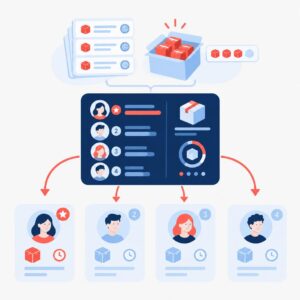
The AI Bundle Margin Monitor watches the real profitability of product bundles, kits and mixed-SKU offers by combining sales, cost and promotion data from your systems. It surface at‑risk bundles, recommends price or cost adjustments and can trigger an automated approval or repricing workflow so you avoid margin erosion.
implementi.ai operates and maintains the automation: we connect agreed systems, keep the monitoring running, handle exceptions and update rules as your product mix or pricing policies change.
The problem
Teams selling bundles often calculate prices once and then let them run. Costs behind bundles—component purchase price, packaging, fulfilment and promotion stacking—change continuously. Manual checks are spreadsheet-heavy, delayed and error-prone. When a component goes on promotion, or a supplier raises cost, bundles can suddenly become loss-making or unprofitable to fulfill. The problem grows with SKU count, multiple channels and regional price variations, causing reactive firefighting, margin leakage and slow approval cycles.

What this solution automates
This managed solution automates continuous margin monitoring for bundled SKUs and executes agreed triggers when profitability falls outside rules. The service combines sales and cost feeds, evaluates bundle-level margin, and then performs actions according to your policy.
- Daily aggregation of sales, discounts, shipping and component costs to compute live bundle margin.
- Automated scoring that flags bundles with margin risk or negative contribution.
- Conditional actions: create repricing proposals, update channel prices (via API) or open approval tasks for pricing managers.
- Exception routing for bundles with complex constraints (contract prices, minimum advertised price rules).
- Historical trend tracking to inform manual pricing decisions and supplier renegotiations.
What your business gains
- Protect margins. Continuous monitoring reduces the chance of selling bundles at a loss by surfacing at‑risk offers before revenue is affected.
- Faster corrective action. Automated repricing proposals and approval routing speed decision-making and reduce manual coordination across pricing, merchandising and operations teams.
- Clear audit trail. Historical margin calculations and action logs make it easier to review pricing decisions and to adjust policies over time.
- Reduced spreadsheet work. Teams spend less time reconciling costs and sales across systems and more time on strategic pricing decisions.
- Channel-safe adjustments. Actions respect channel rules and approval gates to avoid accidental MAP or contract violations.

A practical use case
A mid-sized online retailer sells pre-configured electronics bundles composed of multiple SKUs, each with different supplier costs and promotional schedules. After a supplier increases component cost and a site-wide discount applies, the retailer’s popular bundle falls below acceptable margin. The monitoring service detects the margin drop during the nightly consolidation, creates a repricing proposal and routes it to pricing managers. When the manager approves, the solution either updates marketplace listings via API or schedules a future price change, ensuring the bundle remains profitable or is temporarily withdrawn until costs are renegotiated.
Who is it for?
- Omnichannel retailers with product bundles — need continuous margin visibility across marketplaces and web storefronts.
- Merchandising teams managing promotional bundles — benefit from automated alerts and repricing proposals during campaigns.
- Operations or finance teams tracking cost changes — need historical margin data and exception routing for audits.
- Marketplaces sellers with complex channel rules — require approval gates and channel‑specific pricing actions.
What is included in the monthly service
The monthly subscription covers the configured monitoring automation and the ongoing managed service to keep it operating. implementi.ai handles the automation operation, connections agreed before launch, AI processing required for scoring, monitoring of the automation, handling and fixing automation errors, and reasonable configuration updates needed to keep the agreed solution working.
- Daily monitoring and margin calculation across connected data sources.
- Alerting, repricing proposals and configured action routing.
- Ongoing tuning, monitoring and corrective maintenance of the automation.
When this solution may not be necessary
- Businesses with only a handful of static bundles and low SKU churn — a manual process may remain sufficient.
- Sellers without accessible cost or sales feeds — the product requires reliable data to compute margins and trigger actions.
How it works
- Data collection. The automation pulls sales, discounts, shipping, promotion and component-cost data from the connected systems at an agreed cadence.
- Bundle composition resolution. For each bundle, the service calculates component-level costs, allocation rules and applied discounts to derive true cost‑of‑goods for the bundle.
- Margin calculation & scoring. The system computes live margin, applies your pricing rules and scores bundles by risk level (e.g., safe, monitor, at‑risk, negative).
- Action decisioning. Based on score and policy, the automation either creates a repricing proposal, queues an automated price update to a channel, or opens an approval task for a pricing manager.
- Exception handling. Bundles with contract constraints, MAP or multi‑region complexities are routed to a human reviewer with contextual data and suggested actions.
- Execution & audit log. Approved actions are executed through agreed channels and all calculations and changes are logged for review and historical analysis.
- Continuous learning. The solution maintains trend history and accepts policy tweaks so alerts and thresholds improve over time with ongoing tuning.
Example workflow
For example, imagine a company that sells a three‑item home-office kit across its website and two marketplaces. Each item has a different supplier cost and one is on a promotional purchase price for a week. The monitor ingests yesterday’s sales and current supplier costs, calculates bundle COGS and finds the net margin below the configured threshold. It generates a repricing proposal and routes it to the merchandiser with a comparison of current and suggested prices. The merchandiser approves; the automation updates the marketplace price via API and leaves a log entry. If a marketplace MAP rule prevents the change, the item is flagged and an exception ticket is created for follow-up.
Integrations
Typical systems
Typical systems that customers connect include e‑commerce platforms (Shopify, WooCommerce, Magento), ERP or inventory systems (SAP, Oracle NetSuite, Microsoft Dynamics or other ERP/POS systems), marketplace connectors (Amazon, eBay), and accounting or purchasing systems for component cost feeds. Other systems can potentially be connected by agreement before launch.
Connection methods
We use available APIs and native integrations where possible. Where APIs are unavailable, data can be provided via secure CSV exports, scheduled feeds, or a connector to Google Sheets. Marketplace updates typically use marketplace APIs or a validated channel integration. Exact methods are confirmed during scoping.
What we need from your company
Before launch we agree the systems to connect, how bundle composition is defined, where component costs are sourced (ERP, purchasing, vendor price lists), trigger events and the approval rules for repricing. We also need to know channel constraints (MAP, contract pricing) and which actions are automated versus routed for approval. Compatibility and access method are confirmed before implementation.
FAQ
Which systems does this integrate with?
We can integrate with common e‑commerce platforms, ERPs and marketplaces via APIs, or ingest exported data (CSV, Google Sheets) when API access is not available. Specific compatibility is confirmed during scoping.
How customizable are the repricing rules?
Pricing rules and margin thresholds are fully configurable per bundle, channel and region. implementi.ai configures and updates these rules as part of the managed service agreed before launch.
Will the automation change live prices without human approval?
Actions follow the policy you set: you can allow automatic price updates for low‑risk changes, require approvals for risky bundles, or run automated proposals that require manager confirmation before execution.
What happens with complex exceptions (MAP, contract prices)?
Exceptions are flagged and routed to a designated reviewer with contextual data and suggested actions. The automation will not override contractual constraints without explicit approval rules.
How quickly will I see results?
Launch time and initial value depend on the number of integrations, data quality and rule complexity. We confirm the timeline and scope before implementation; ongoing benefit accrues as the system runs and historical trends build up.
What level of ongoing support is included?
The monthly service includes monitoring, error handling, maintenance and reasonable configuration updates to ensure the agreed solution continues to operate. We also handle fixes and tuning as needed under the managed service model.
Price
The activation fee covers the initial setup, implementation and launch of the agreed automation scope.
The monthly subscription covers the ongoing operation, maintenance and management of the automation service.
The exact scope and final monthly subscription are confirmed before launch.
Ready to automate this process?
Tell us which e‑commerce, ERP or POS systems you use and how you currently track bundle costs.
We’ll confirm how this solution can be connected, its scope and the final monthly subscription.
| Email uscontact@implementi.ai | Call us+48 660 983 178 |