
Description
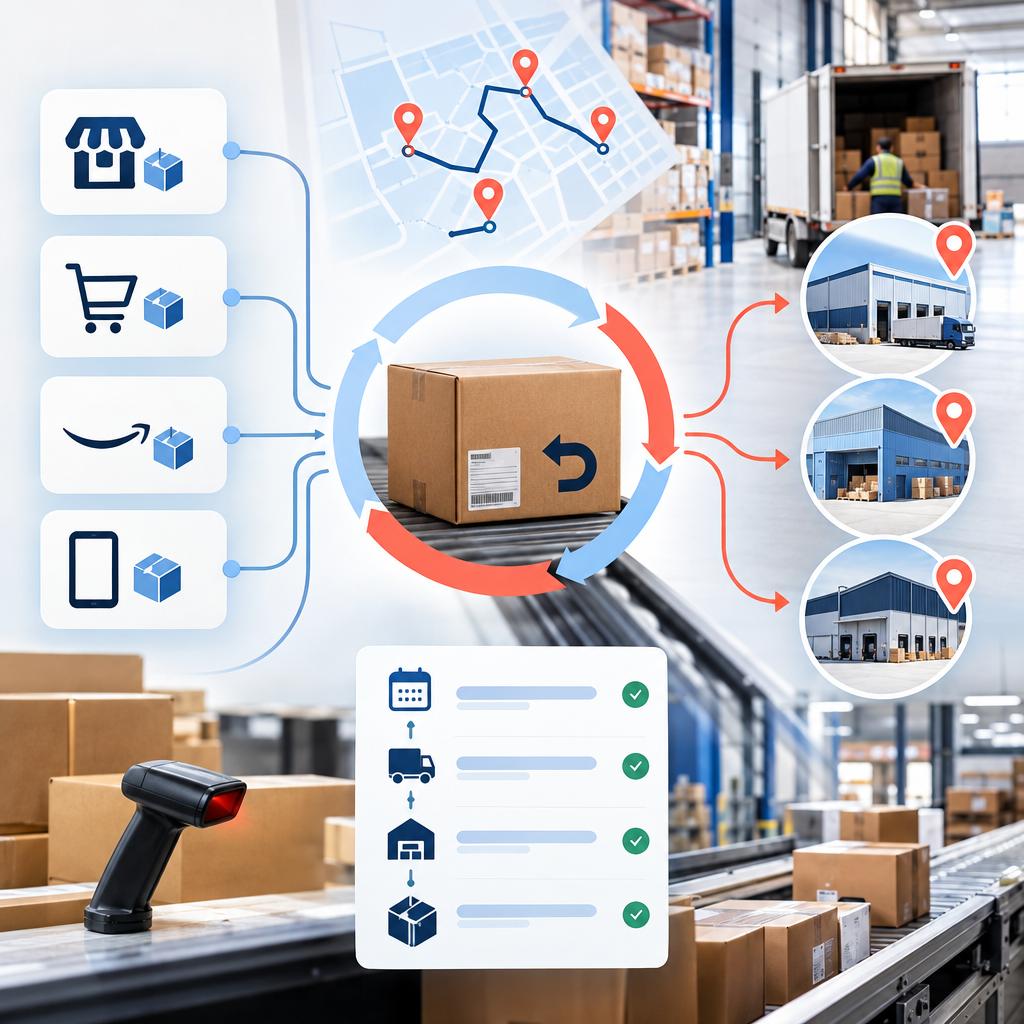
This managed service automates the end-to-end orchestration of customer returns and reverse logistics: it schedules carrier pickups, routes returned stock to the best warehouse or processing centre and keeps status in sync across your systems. The product reduces manual coordination between support teams, warehouses and carriers so pickups happen on time and returns are processed faster.
implementi.ai operates and maintains the automation once launched — we configure the integrations and rules with you, monitor nightly runs and fix orchestration errors so your operations team can focus on exceptions rather than routine scheduling.
The problem
Many companies coordinate returns through a mix of spreadsheets, emails and ad-hoc calls to carriers. Support agents capture a return request, operations staff manually create carrier bookings or wait for the customer to drop off items, and warehouses are notified inconsistently. As return volumes grow this manual coordination becomes slow and error-prone: pickups are missed, carrier time windows slip, returned goods arrive at the wrong location and reconciliation between the order, RMA and warehouse is difficult. That creates avoidable labour, delayed refunds and unclear status for customers.

What this solution automates
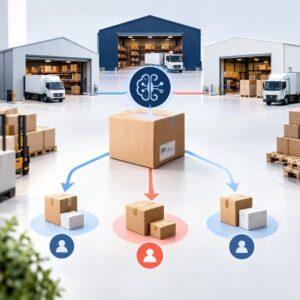
This product automates the orchestration and sequencing of reverse logistics from the moment a return is authorised until items arrive at the chosen receiving location. The service combines rules-based routing with operational monitoring and hands-on error handling by implementi.ai.
- Automatically select the optimal pickup window and carrier for each return based on size, location and SLA.
- Batch and sequence multiple returns from the same postcode or customer to reduce carrier stops.
- Route returns to the appropriate warehouse, returns dock or repair centre according to SKU rules, condition and stock location.
- Create carrier bookings and print or email labels where supported.
- Synchronise RMA status and tracking information back to your e-commerce/ERP/support systems.
- Detect and surface exceptions (missed pickup, address problem, oversized parcel) for human review.
What your business gains
- Faster, more reliable pickups. Automating carrier bookings and pickup sequencing reduces missed collections and the back-and-forth needed to confirm slots.
- Lower handling costs. Intelligent batching and routing reduces carrier stops and unnecessary warehouse moves, cutting avoidable operational steps.
- Clear customer communication. Synchronized tracking and RMA updates give support teams and customers the same, up-to-date status without manual lookups.
- Reduced exceptions workload. The automation handles routine cases and surfaces only real exceptions to staff, shrinking the volume of manual interventions.
- Audit trail and control. Every scheduled pickup, routing decision and status update is recorded, simplifying reconciliation and returns reporting across systems.
A practical use case
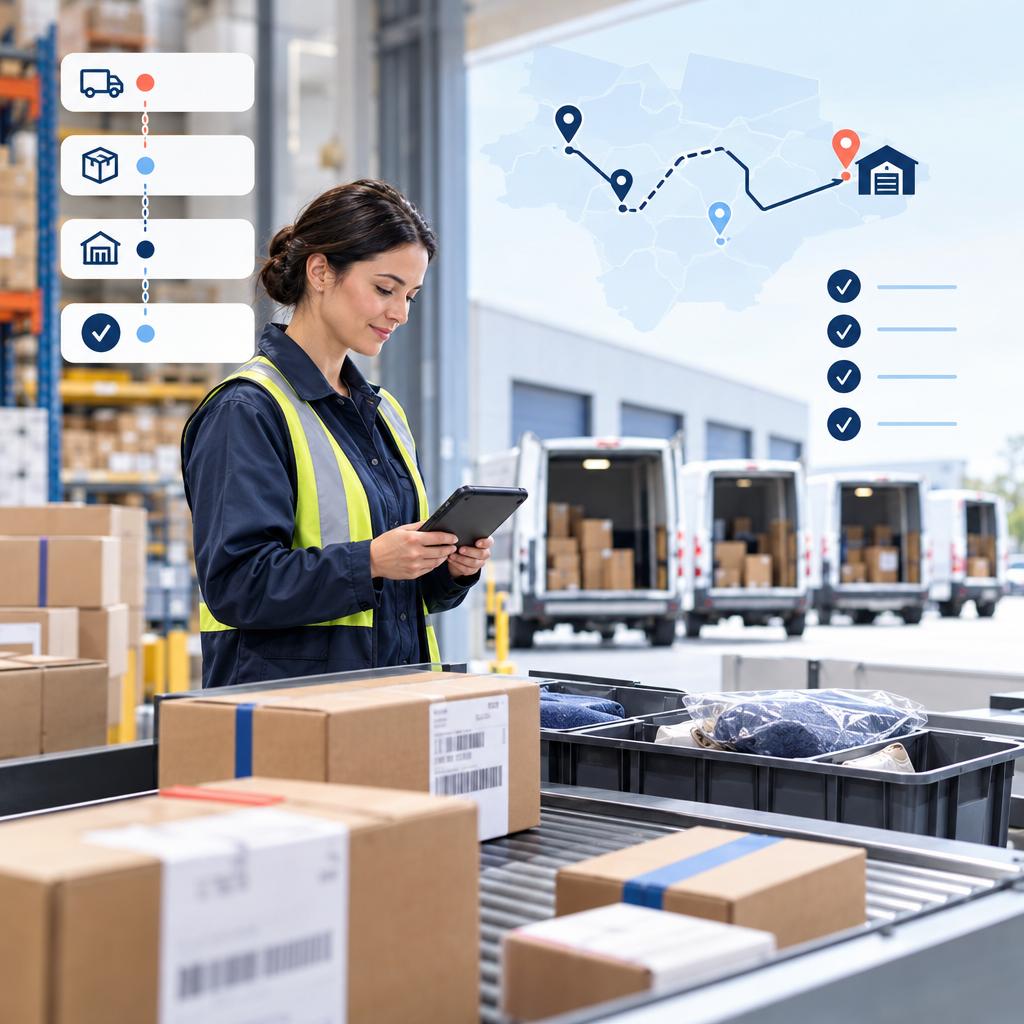
A mid-size online retailer receives hundreds of returns per week from multiple channels. Historically, support emails trigger a manual booking with the carrier, operations group manually picks a suitable day and the warehouse sometimes receives returns meant for a different location. With this service, return requests automatically enter the orchestration engine where the system picks the right carrier and pickup slot, groups compatible returns, issues labels when possible and notifies the receiving site. Exceptions such as incorrect addresses or oversized items are flagged for a human to approve. The result is fewer missed pickups, clearer RMA status for customers and smoother processing on arrival.
Who is it for?
- Online retailers and marketplaces that handle high volumes of consumer returns — to reduce pickup failures and returns handling costs.
- Manufacturers with warranty returns who must route items to inspection or repair centres — to automate routing by SKU and condition.
- Retail operations teams with multiple warehouses or returns processing sites — to centralise routing decisions and maintain inventory accuracy.
- Customer-service teams that need reliable tracking for refund timelines — to improve status visibility without manual lookups.
What is included in the monthly service
The monthly subscription covers the managed automation and its ongoing operation. implementi.ai configures and operates the connections and orchestration rules, monitors runs and handles errors and maintenance so the automation continues to work reliably.
- Operating the automation and routing rules agreed before launch.
- Connections with systems agreed before launch (APIs, carrier integrations, ERP/WMS, support tools).
- AI processing where used for decisioning and sequencing.
- Monitoring of the automation’s operation and handling/fixing automation errors.
- Reasonable configuration updates to keep the agreed solution working.
When this solution may not be necessary
- Businesses with only occasional or very low return volumes — manual processes may be sufficient and more cost-effective.
- Organisations that require deep custom integrations into highly proprietary systems without APIs — such scope may be excessive for this product as standardised integrations are assumed.
How it works
- Return capture. A return is authorised in your e-commerce, support or ERP system and the RMA event is sent to the orchestration service.
- Data enrichment and validation. The automation checks address, SKU, weight/size and return reason; it flags missing or conflicting information for quick correction.
- Routing and sequencing decision. Using configured rules (nearest returns site, SKU handling, SLA and preferred carriers) the system selects the optimal receiving location and carrier pickup window.
- Booking and label creation. The automation creates carrier bookings and labels where the carrier integration supports it, and notifies the customer and warehouse with pickup and tracking details.
- Batching and consolidation. Compatible returns are batched and sequenced to reduce carrier stops and optimise cost and throughput.
- Exception handling. Missed pickups, address issues or carrier refusals are detected automatically and routed to your operations or support team for human review with suggested remediation steps.
- Sync and archive. Status updates, tracking numbers and receiving confirmations are synchronised back to your systems and retained in the service for audit and reporting.
Example workflow
For example, imagine a company that sells small electronics and receives return requests through its web portal. When a customer submits an RMA, the portal sends the return details to the orchestration service. The system validates the shipping address, checks the item size and determines the nearest returns depot able to process warranty checks. It then chooses a carrier offering an appropriate pickup window and either issues a pre-paid label or books a collection. If several returns originate from the same neighbourhood on the same day, the automation groups them into a single pickup run. If a carrier reports a missed collection or the parcel is oversized, the case is flagged and forwarded to the operations team with suggested next steps, ensuring the return is either rebooked or escalated quickly.
Integrations
Typical systems
Typical systems we connect to include e-commerce platforms (Shopify, Magento, BigCommerce), marketplace order systems, warehouse management or WMS/ERP systems (SAP, NetSuite, Microsoft Dynamics, Odoo), carrier/parcel APIs (UPS, FedEx, DHL and local courier partners) and customer-support platforms (Zendesk, Freshdesk). Returns portals, RMA tools and label-printing services are commonly part of the flow. Other systems can potentially be connected after compatibility is confirmed.
Connection methods
Possible connection methods are platform APIs and webhooks for real-time events, scheduled CSV or SFTP imports for batch order/RMA data, email-triggered workflows where necessary, Google Sheets for handover tables and direct carrier API integrations for booking and label issuance. We confirm compatible methods for your systems before launch.
What we need from your company
Before launch we agree which systems will provide return/RMA events, the preferred receiving locations and carrier preferences, sample data or API credentials, and the decision rules for routing (for example: SKU-type → repair centre; value threshold → return-to-vendor). We also need to confirm who will handle exceptions and any approval rules for oversized or high-value returns. Compatibility and exact access methods are confirmed during scoping and before implementation.
FAQ
Which carrier and warehouse systems can you integrate with?
We typically integrate with major carrier APIs (UPS, FedEx, DHL and others) and with common WMS/ERP systems via API or scheduled file exchange. During scoping we confirm the exact systems and connection methods for your environment.
How are exceptions handled—who gets notified?
Exceptions (missed pickups, address issues, oversized items) are detected automatically and routed to the teams you specify. The automation includes suggested remediation actions; implementi.ai monitors the automation and will fix or escalate failing runs as part of the managed service.
Can you print or email return labels automatically?
Yes—where a carrier integration supports label issuance the service can generate and email or store pre-paid labels. If labels require manual approval we can queue them for a human to confirm before issuance.
How customizable are routing rules?
Routing rules (preferred carriers, returns-to site by SKU or customer location, batching thresholds) are configurable during setup and can be adjusted as your needs evolve. Reasonable configuration updates are included in the monthly service.
What data is synchronized back to my systems?
Status updates, tracking numbers, pickup confirmations and receiving confirmations are synchronised back to your ecommerce/ERP/support systems according to the connections agreed during scoping.
How do you start implementation?
We begin with a scoping discussion to confirm systems, sample data and routing requirements. Launch time depends on integrations and scope and is confirmed before implementation. The monthly service begins once the solution is live and accepted.
Price
The activation fee covers the initial setup, implementation and launch of the agreed automation scope.
The monthly subscription covers the ongoing operation, maintenance and management of the automation service.
The exact scope and final monthly subscription are confirmed before launch.
Ready to automate this process?
Tell us which e-commerce, WMS/ERP and carrier systems you currently use and rough weekly return volumes.
We’ll confirm how this solution can be connected, its scope and the final monthly subscription.
| Email uscontact@implementi.ai | Call us+48 660 983 178 |