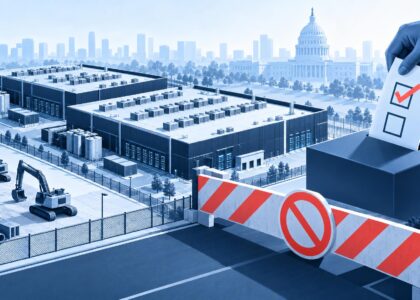

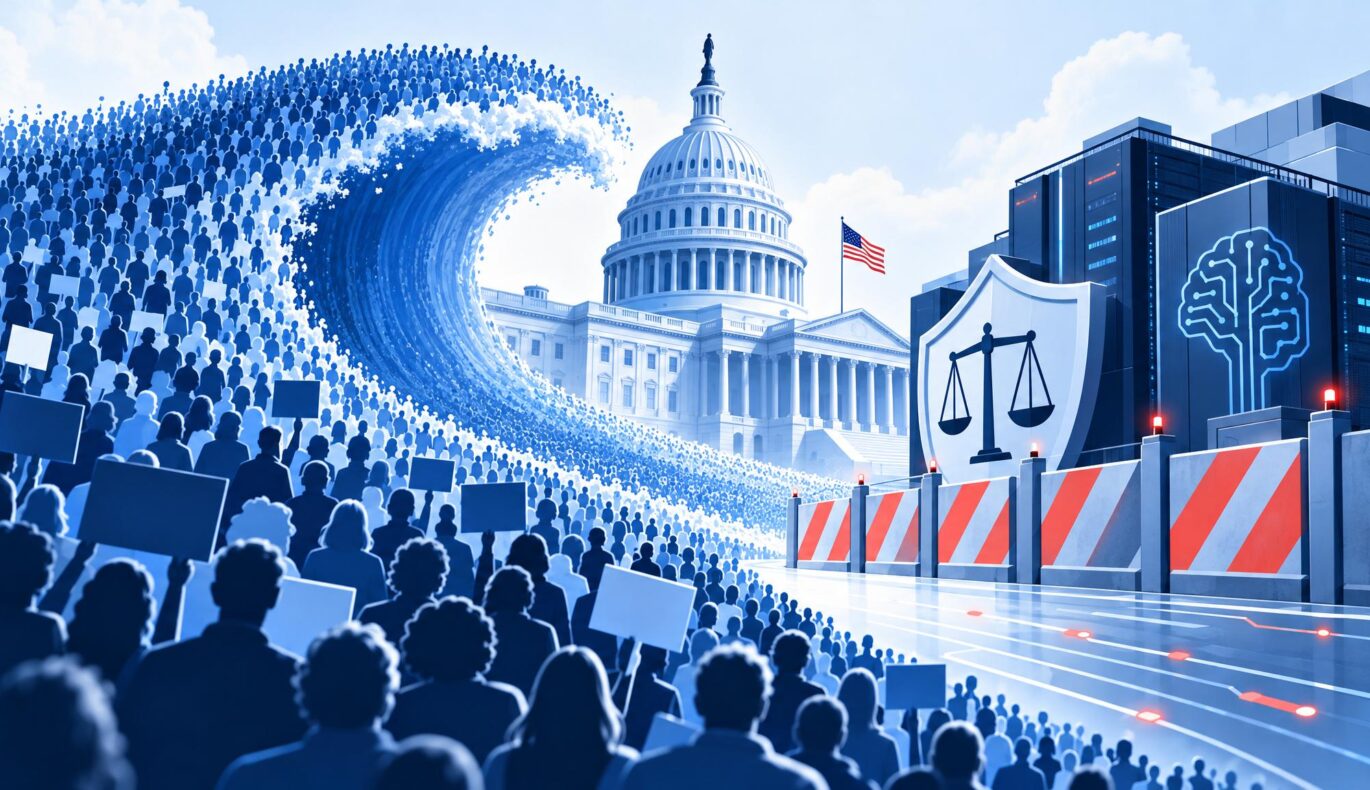
Democrats have taken control of both chambers of the US Congress after a broad electoral “blue wave,” and campaigns in several states made accountability for AI companies a prominent issue. The result matters to AI developers, data-centre operators and businesses that depend on large-scale computing because the source points to possible regulation and slower data-centre construction, although it does not establish that either change has been enacted.
What “the blue wave” could mean for AI
The reported election included Democratic victories in traditionally Republican and swing states, including the election of the first Black woman governor in Georgia and the first Native American woman governor in New Mexico. In Maine, a Senate seat changed hands after 30 years. According to the source, debates in these and other campaigns repeatedly returned to holding AI companies accountable to the American public.
That is the confirmed political shift. “Total repudiation” is the article’s framing, not a documented government policy or industry-wide rejection of AI. The material supplied does not identify a specific federal bill, regulatory rule, enforcement action or timetable for implementation.
Potential effects on AI companies and data centres
The immediate implication described is a more difficult policy environment for the AI industry. Possible outcomes include new regulation and delays or restrictions affecting data-centre construction, but the source does not say which proposals will advance, where they would apply, or whether existing projects will be affected.
For companies building or buying AI systems, this uncertainty could become a planning issue rather than an immediate product change. A developer assessing a new model deployment might need to track future requirements around infrastructure, energy or corporate accountability; however, the supplied reporting does not specify any new privacy, security, data-use or compliance obligations.
What remains unclear for businesses and developers
The source says most major AI company chief executives have remained publicly silent, but it does not provide their responses or explain whether companies are changing investment plans. It also does not confirm rollout locations, eligibility rules, costs, performance effects or technical changes to any AI product. There is therefore no reported feature here for users to enable, and no evidence that access to an AI service has changed.
For small businesses and engineering teams, the sensible next step is to separate political signals from enacted rules: keep infrastructure choices portable where practical, document providers and dependencies, and monitor official legislation and local permitting decisions. Hypothetically, a team planning a compute-intensive service could delay an irreversible data-centre commitment while comparing cloud options—but that is a risk-management response, not a requirement reported in the source. The election may reshape the operating environment for AI, but the scope and speed of that change remain unresolved.
Fuente: Reportaje original. Este artículo incluye un contexto editorial independiente y un análisis práctico.
Más información sobre la IA: Echa un vistazo a nuestra Últimos artículos sobre automatización y tecnología de IA, o echa un vistazo a soluciones de automatización listas para usar.