Descripción
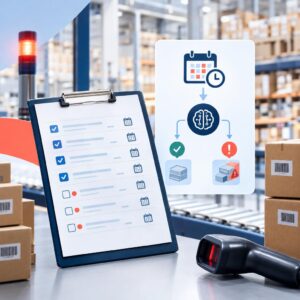
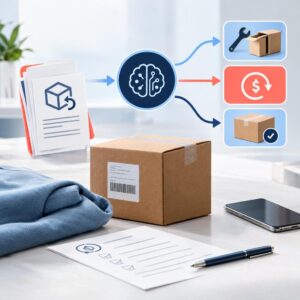
This managed service automates the end-to-end handling of supplier returns and the follow-up required to obtain credits or replacements. It continuously monitors return events, extracts and classifies required evidence (delivery notes, photos, supplier emails) and drives the next operational step—RMA issuance, warehouse pick-up instructions or credit-note requests—so teams stop wasting time on manual triage.
implementi.ai configures, operates and maintains the automation as an ongoing service: we connect the agreed systems, tune the classification rules and monitor the flow so your procurement, warehouse and accounts-payable teams see consistent, auditable outcomes every month.
El problema
Without automation, supplier returns are handled in silos: operations, procurement and accounts-payable rely on manual emails, spreadsheets and ad-hoc phone calls. Warehouse teams may receive poorly documented goods, procurement negotiates credits without necessary evidence, and AP cannot reconcile credit notes to outstanding invoices. As volume grows, tracking which returns generated a supplier credit, who approved the RMA and whether the credit was received becomes laborious and error-prone. The result is delayed supplier credits, duplicated work and lost visibility into supplier quality or recurring vendor issues.

Qué automatiza esta solución
This product automates the detection, classification and routing of supplier-return events and the associated credit recovery steps. It reduces manual handoffs by centralising evidence, proposing appropriate next actions and routing approvals to the right stakeholder. The service can:
- Identify return events from WMS, ERP or inbound emails and attach required proof.
- Classify return reasons (damage, wrong item, quality) and map them to contract or warranty rules.
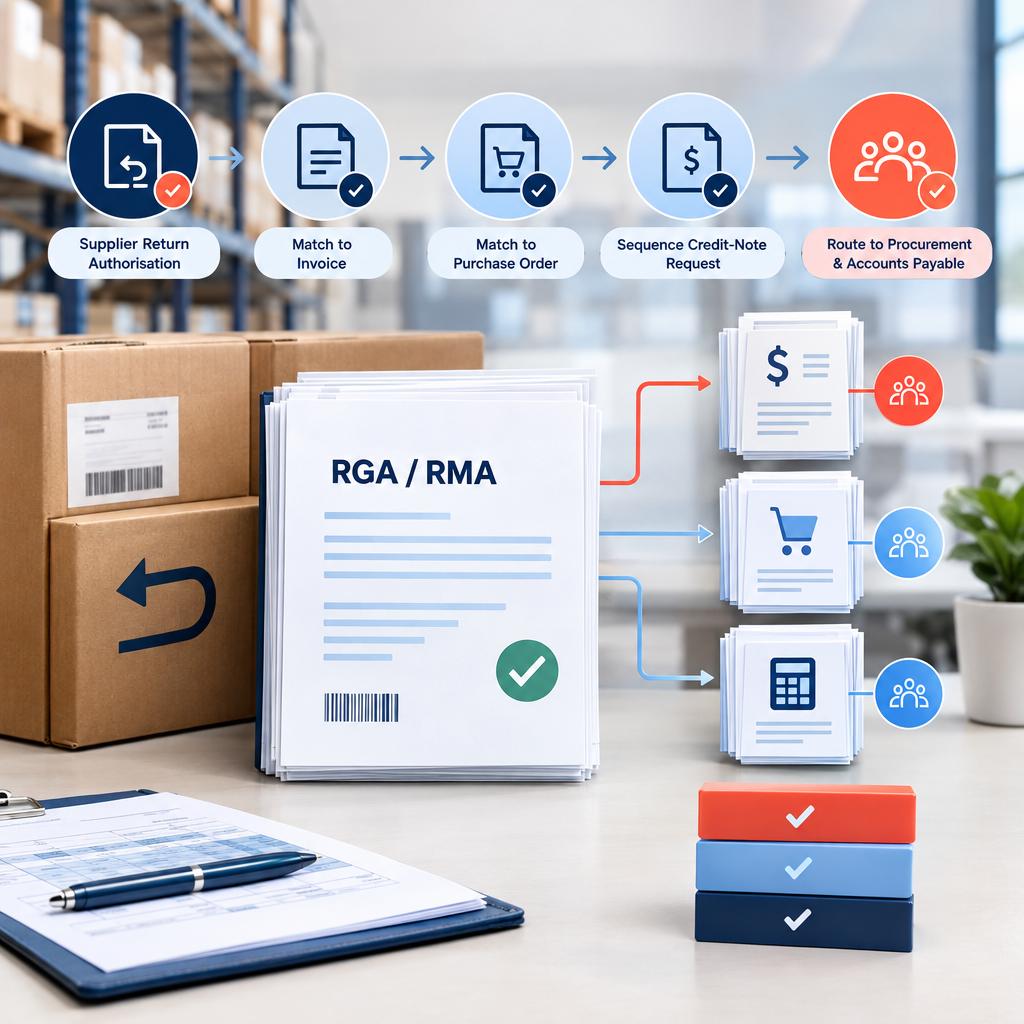
- Create or populate RMA/RGA requests and forward them to suppliers or procurement for approval.
- Match supplier credit notes to original invoices and notify AP for reconciliation.
- Prioritise returns that require urgent supplier action or financial recovery.
- Route exceptions to named approvers and maintain a searchable history of actions.
Lo que gana tu empresa
- Faster credit recovery. Automates evidence collection and supplier-credit requests so accounts-payable can match credits to invoices sooner and reduce manual chasing.
- Consistent RMA decisions. Standardised classification and decision rules reduce disputes and speed supplier responses by ensuring every return has the right documentation.
- Reduced cross-team friction. Single source of truth for returns aligns warehouse, procurement and AP reducing duplicated work and miscommunication.
- Transparencia operativa. Maintained history of return events, approvals and credit outcomes makes supplier performance easier to review and act upon.
- Reducir la carga de trabajo manual. Routine triage and routing tasks are handled automatically so staff focus on exceptions and negotiations.
Un caso práctico
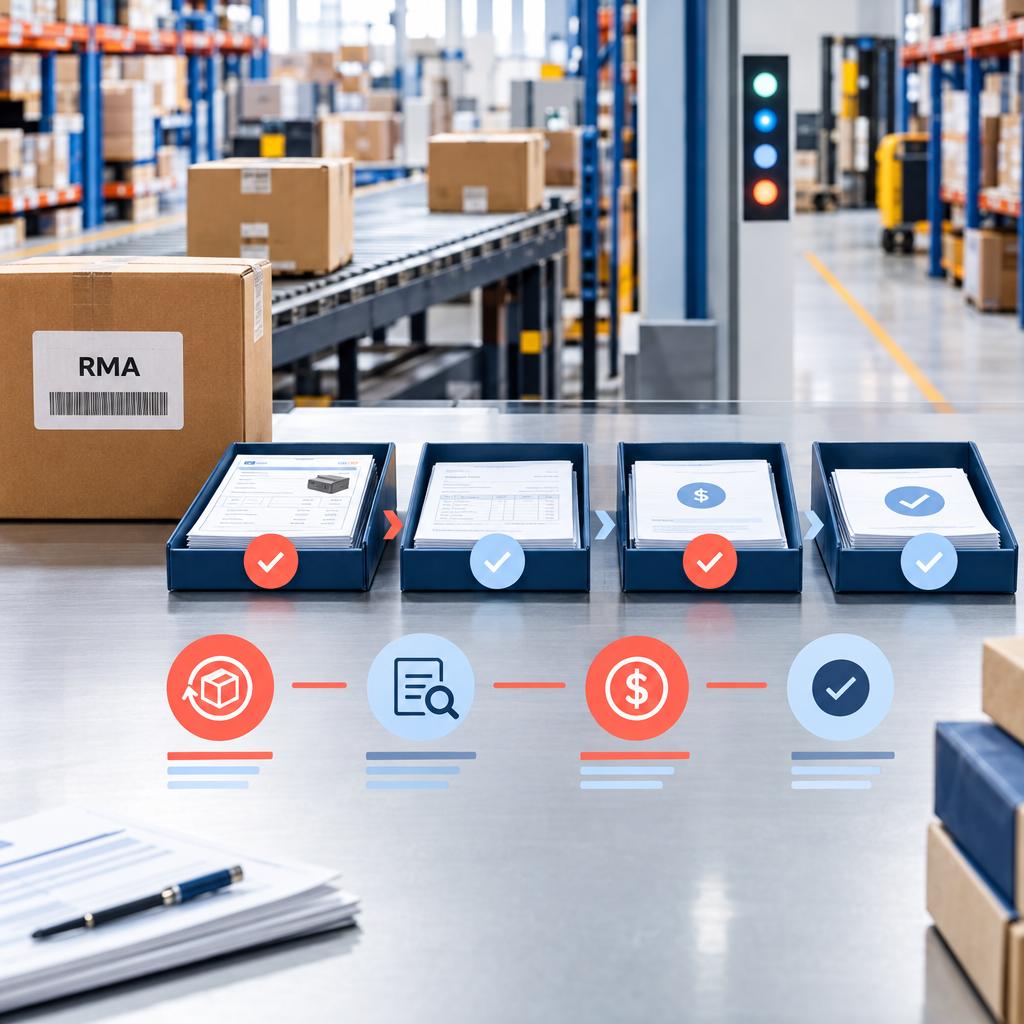
A mid-size electronics distributor receives recurring batches of defective components from several suppliers. Each return requires photos, a delivery note, a procurement approval and eventually a supplier credit. Today these items are tracked by email and a team of three people who spend hours assembling evidence and chasing credits. With this service, return events are detected from the WMS and supplier emails, evidence is attached automatically, the RMA request is created and routed to procurement, and AP receives a verified credit-note match for reconciliation. Exceptions are flagged to a named buyer for negotiation, reducing manual follow-up while preserving audit trails for finance.
¿A quién va dirigido?
- Procurement teams that manage frequent supplier returns and need standardised RMA handling.
- Operations/Warehouse managers who want consistent return instructions and clearer pick/putaway guidance for returns.
- Accounts-payable teams that need reliable matching of supplier credit notes to invoices and fewer unresolved credits.
- Mid-market manufacturers and distributors with ERPs and WMS looking to reduce manual cross-team coordination.
¿Qué incluye el servicio mensual?
The monthly subscription covers the operated automation and ongoing maintenance: implementing and running the return-detection and routing workflows, connecting agreed systems, monitoring operation and handling automation errors. implementi.ai also applies reasonable configuration updates to decision rules and classifications as processes evolve and fixes integration issues that arise in normal operation.
- Operated automation and monitoring of the workflow
- Connections with systems agreed before launch (ERP, WMS, AP systems)
- AI processing for document classification and evidence matching
- Error handling, fixes and reasonable configuration updates
Cuándo puede que esta solución no sea necesaria
- Companies with extremely low supplier-return volumes where manual handling is already cost-effective.
- Businesses that require full custom on-premise deployments or proprietary, unsupported legacy systems without any integration options.
Cómo funciona
- Detección de eventos. The automation monitors agreed sources — inbound supplier emails, WMS return receipts or ERP return flags — and captures new return events as they appear.
- Evidence aggregation. Attached documents, photos and delivery notes are automatically gathered and associated with the return record so reviewers have a single, complete file.
- Clasificación mediante IA. The system classifies the return reason (damage, wrong item, quality, over-supply) and suggests the appropriate recovery path based on configured rules and supplier terms.
- RMA creation & routing. When required, an RMA/RGA request is created or populated and routed to procurement and the supplier with the right supporting evidence and required approvals.
- Credit matching. Supplier credit notes and invoices are matched to the original PO and return; suspected mismatches are flagged for AP review.
- Gestión de excepciones. Complex or disputed cases are routed to named approvers with a concise brief and required evidence for fast human decision-making.
- History & reporting. Every action is recorded so procurement and finance can review supplier performance, credits outstanding and recurring return patterns.
Ejemplo de flujo de trabajo
For example, imagine a company that receives a pallet returned as ‘damaged’ at the inbound dock. The WMS posts a return receipt and the carrier email includes photos. The automation detects the event, attaches the photos and delivery note, and the AI classifier labels it as a packaging-damage case. The system auto-generates an RMA request, populates the supplier, PO and SKU details, and sends a credit request to the supplier while notifying procurement for approval. When the supplier issues a credit note, the automation matches it to the original invoice and notifies AP to apply the credit; if the credit amount differs, the case is routed back to procurement for negotiation.
Integraciones
Sistemas típicos
Typical systems we connect include ERP systems (for example SAP S/4HANA, Oracle NetSuite, Microsoft Dynamics 365 or Odoo), warehouse management systems and dock/WMS platforms, and accounts-payable or finance systems such as Xero or Sage. Procurement platforms or supplier portals (for example Coupa or SAP Ariba) can also be integrated where used. Other systems can potentially be connected via agreed methods; final compatibility is confirmed before launch.
Métodos de conexión
Connections are implemented using available APIs and webhooks where supported, or via scheduled CSV/SFTP exports, parsed supplier emails and secure file drops. Google Sheets or database extracts can be used as interim sources if direct API access is not available. The chosen method is agreed during scoping.
Lo que necesitamos de vuestra empresa
Before launch we agree the systems to connect, sample data for typical return events, and the decision rules for RMA approval and credit routing. We need example documents (delivery notes, supplier credit notes, common supplier emails) and a contact list for approvers. Access method and required credentials are confirmed and agreed before implementation.
Preguntas frecuentes
Which systems do you typically integrate with for supplier returns?
We usually integrate with ERP systems (SAP, NetSuite, Dynamics), warehouse management systems and AP/finance tools. If your system exposes an API, webhook, or scheduled export we can plan a connection—compatibility is confirmed during scoping.
How much customization of RMA decision rules is possible?
Decision rules are configured per customer during setup and can include supplier-specific terms, SKU-level rules or warranty windows. implementi.ai maintains and updates these rules as part of the monthly service when reasonable changes are needed.
What happens to exception or disputed returns?
Exceptions are routed to named approvers with an evidence pack and a recommended action. Human decisions are recorded in the system and the automation continues from that decision point, keeping a full audit trail for finance.
Do you guarantee supplier credit recovery?
We automate and accelerate credit requests and matching but do not guarantee supplier behaviour. The service reduces manual work and improves traceability, making recovery faster and easier to manage.
¿Qué factores influyen en el precio mensual?
Price is driven by the number and type of systems to integrate, expected return volume, complexity of rules (multiple supplier/contract rules), and the required level of ongoing tuning and exception handling. We confirm the final scope and price before launch.
Precio
La cuota de activación cubre la configuración inicial, la implementación y la puesta en marcha del alcance de la automatización acordado.
La cuota mensual cubre el funcionamiento, el mantenimiento y la gestión continuos del servicio de automatización.
El alcance exacto y el importe final de la suscripción mensual se confirman antes del lanzamiento.
¿Estás listo para automatizar este proceso?
Tell us which ERP, WMS and accounts-payable systems you use and your typical monthly supplier-return volume.
Te confirmaremos cómo se puede conectar esta solución, su alcance y el importe final de la cuota mensual.
Reserva una llamada de 30 minutos
| Envíanos un correo electrónicocontact@implementi.ai | Llámanos+48 660 983 178 |