描述
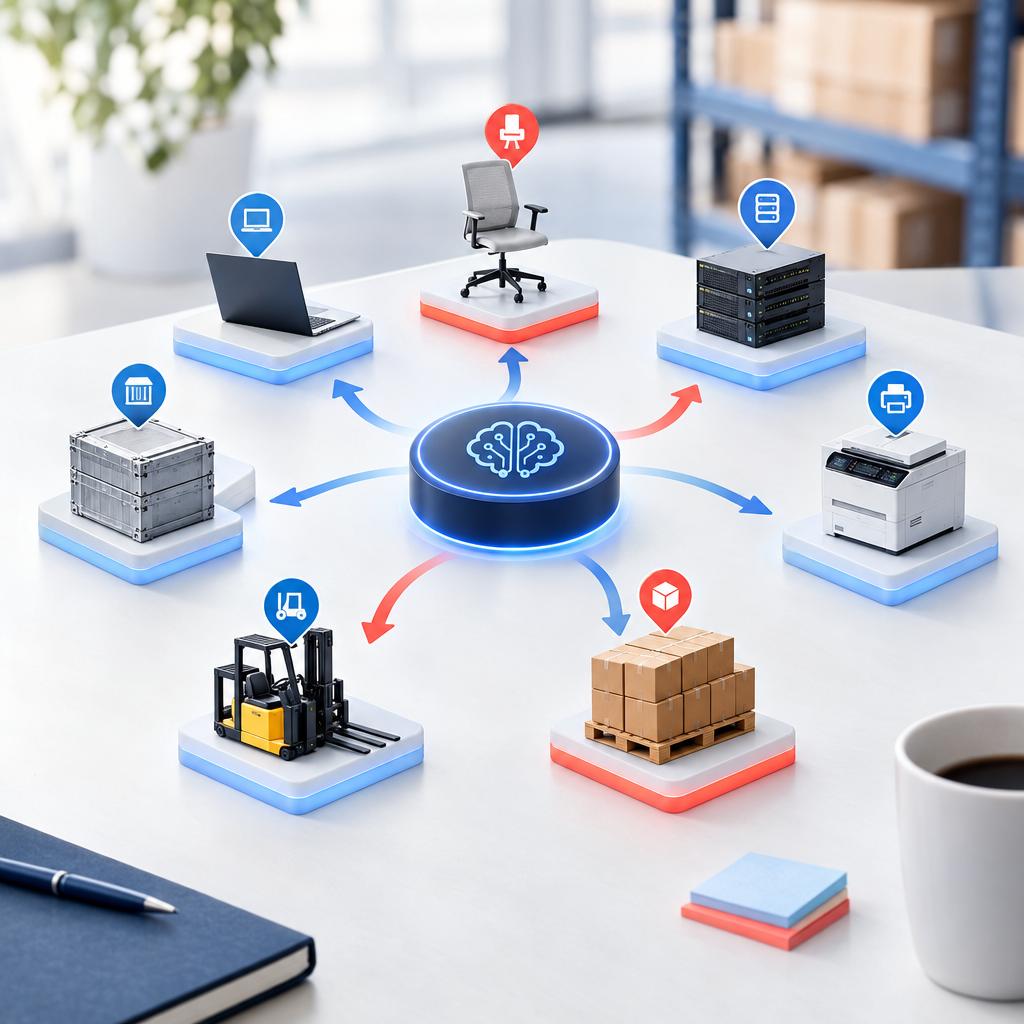
This managed service continuously consolidates asset utilisation signals from your asset register, telematics and maintenance/scheduling systems and applies AI-driven analytics to detect imbalances. When the system finds underused or overburdened equipment it can open transfer requests, update schedules or notify the responsible teams.
implementi.ai operates and maintains the automation: we connect the agreed systems, tune rules with your operations team, monitor the automation’s health and handle fixes and routine updates so your team receives reliable, actionable reallocation guidance every month.
问题
Many organisations rely on manual requests, spreadsheets and local knowledge to move equipment between sites. That approach creates slow, reactive transfers, duplicated requests, long wait times and avoidable hire or purchase decisions. Data about asset location, usage hours, maintenance status and bookings is scattered across telematics, CMMS, spreadsheets and ERP records, so operations teams lack a single trustworthy view. As headcount or site count grows, manual coordination becomes more time-consuming and error-prone, raising costs and increasing downtime for critical jobs.

该解决方案实现了哪些自动化功能
This product automates continuous monitoring, basic forecasting of near-term availability, and rule-based reallocation actions. It produces ranked reallocation suggestions, generates the required operational requests and keeps a running history of utilisation so trends and repeatable issues are visible.
- Continuous consolidation of utilisation and booking data from multiple systems.
- AI analysis to detect underused assets and identify shortage risk at other locations.
- Automated creation of transfer or reservation requests in scheduling/CMMS systems.
- Prioritised recommendations for approval by operations managers.
- Notifications to technicians, dispatch and procurement when manual intervention is required.
- Weekly or on-demand reports summarising utilisation trends and recurring bottlenecks.
您的企业将获得什么
- Faster job completion. By making the right asset available where it’s needed, teams spend less time waiting for equipment or arranging emergency rentals.
- Lower operating costs. Automatic reallocation reduces unnecessary purchases and ad-hoc rentals by improving visible utilisation across sites.
- 手部协调能力下降。. The automation cuts time spent on spreadsheets, emails and phone calls by producing ranked, actionable transfer requests.
- Better maintenance planning. Visibility of usage patterns helps schedule maintenance proactively and avoid overworking critical assets.
- Continuous improvement insights. Historical utilisation data and trend reports reveal systemic imbalances you can address through longer-term capacity or process changes.

一个实际应用案例
A regional field service business with 12 depots struggles to balance ladders, diagnostic kits and hydraulic pumps across sites. Dispatchers frequently create urgent transfer requests, and technicians sometimes wait days for specialised equipment. With this product, utilisation streams from telematics and the CMMS are consolidated, AI flags depots with chronic shortages or surplus, and the system proposes ranked transfer actions. Dispatchers approve or adjust suggested transfers; the automation then creates reservations or move orders and notifies drivers. Over time the operations manager receives trend reports that reveal which asset types need redistribution or different stocking levels.
为谁而设?
- Field service providers (utilities, HVAC, telecoms) — to improve technician uptime and reduce emergency transfers.
- Facilities and plant operations teams — to balance shared equipment across production sites and maintenance crews.
- Fleet operators with mixed assets — to optimise vehicle and trailer utilisation and reduce idle time.
- Regional distributors or rental fleets — to reduce duplicate hires and improve asset availability for bookings.
月度服务包含哪些内容
The monthly subscription covers the running automation and operational activities required to keep it working. implementi.ai maintains the connectors agreed at launch, monitors automation health, applies routine fixes and updates, and adjusts rules as your operational needs evolve.
- Connection and ongoing sync with the systems agreed before launch.
- AI processing to generate utilisation signals, recommendations and reports.
- Monitoring of automation operation and remedial fixes when flows fail.
- Maintenance and reasonable configuration updates to thresholds, rules and notification recipients.
何时可能不需要此解决方案
- Organisations with a very small, single-site inventory where manual coordination is already low-cost may not need continuous monitoring.
- Companies that lack any structured asset register, usage data or systems to accept automated transfer requests may require foundational data work before this product is useful.
工作原理
- 连接数据源。. We consolidate your asset register, scheduling/booking system, CMMS and any telematics or GPS feeds into a single operational dataset for daily analysis.
- Normalise and enrich records. Asset identifiers, locations, status and recent usage are normalised so the system can compare like-for-like items across sites and detect true imbalances.
- Continuous utilisation analysis. AI models compute current and near-term utilisation metrics and score assets by shortage risk and surplus likelihood, taking scheduled jobs and maintenance windows into account.
- Ranked reallocation suggestions. The automation produces ranked actions (transfer, reservation, hire, or keep) with the operational impact and estimated timelines for each option.
- Automated request creation. For approved suggestions the system creates transfer orders or reservations in the target scheduling/CMMS system and notifies the dispatch and receiving teams.
- Human approval and exception handling. Operations managers receive suggested lists and can accept, edit or reject items; exceptions (e.g., asset under repair) are routed for manual handling.
- Ongoing learning and reporting. The system keeps a running history of decisions and outcomes so rules can be tuned and weekly utilisation reports are produced for continuous improvement.
工作流示例
For example, imagine a company that runs 50 diagnostic vans across five regions. Overnight the system pulls telematics idle time, CMMS status and scheduled jobs for the next 72 hours. The AI identifies that Region A has three vans with low utilisation while Region C has scheduled jobs exceeding available diagnostic equipment. The automation ranks potential transfers from Region A to C, suggests the lowest-cost transfer windows, and creates tentative transfer reservations. Dispatch reviews and approves two moves; the system converts suggestions into confirmed reservations in the scheduling system and notifies drivers and depot managers. If a suggested van is flagged as due for maintenance, the exception is routed to maintenance planners instead of triggering a transfer, preventing a failed handover.
集成
典型系统
Typical systems we connect include CMMS platforms such as ServiceNow, Fiix or UpKeep; telematics and fleet platforms like Samsara or Verizon Connect; enterprise ERPs (SAP, Oracle NetSuite, Microsoft Dynamics 365) for asset registers and stock locations; and scheduling or dispatch systems that manage reservations and move orders. Other systems can potentially be connected where APIs, webhooks or file exports are available.
连接方法
Connections are implemented via the method agreed before launch: API integrations and webhooks are preferred for near‑real‑time data, while scheduled CSV/SFTP feeds, database access or Google Sheets exports are acceptable alternatives. For telematics platforms we typically use their public APIs or vendor-provided webhooks; for legacy systems we can ingest nightly exports.
我们希望贵公司能提供以下内容
Before launch we agree which systems to connect, sample data extracts and the access method (API keys, SFTP credentials or export format). We also need a list of asset types and identifiers, your preferred business rules for transfers (approval roles, minimum utilisation thresholds, permitted transfer windows), and a contact for operational decisions. Compatibility and exact access method are confirmed during scoping and before implementation.
常见问题解答
可以连接哪些系统?
We work with common CMMS, telematics, ERP and scheduling platforms when they provide an API, webhook or scheduled data export. During scoping we confirm the exact connectivity options for your systems and choose the most reliable method for ongoing operation.
需要多少定制?
We tune utilisation thresholds, prioritisation rules and approval workflows to match your operations. The base automation is standardised, but modest customer-specific configuration is typical to align suggestions with your existing processes.
Do humans approve every suggested transfer?
Approval rules are agreed before launch. The system can either create tentative transfer requests for manual approval or automatically create move orders for low-risk stock types—approval flows are configurable to match your control requirements.
What happens when an exception occurs (maintenance, lost asset)?
Exceptions are routed to the appropriate team: maintenance issues are fed back to the CMMS, while lost or missing assets are flagged for manual investigation. implementi.ai monitors these flows and fixes integration errors as part of the managed service.
定价是如何随规模调整的?
Monthly pricing is driven by the number and type of integrations, frequency of processing and amount of history retained. During scoping we confirm the final subscription tier based on your systems and operational needs.
价格
激活费涵盖商定的自动化范围的初始配置、实施和上线工作。.
月度订阅费用涵盖了自动化服务的日常运行、维护和管理。.
具体范围和最终的月费将在上线前确定。.
准备好将此流程自动化了吗?
Tell us which asset register, CMMS and telematics providers you use and how many assets you want monitored.
我们将确认该解决方案的接入方式、适用范围以及最终的月度订阅费用。.
| 给我们发电子邮件contact@implementi.ai | 请致电我们+48 660 983 178 |