
描述
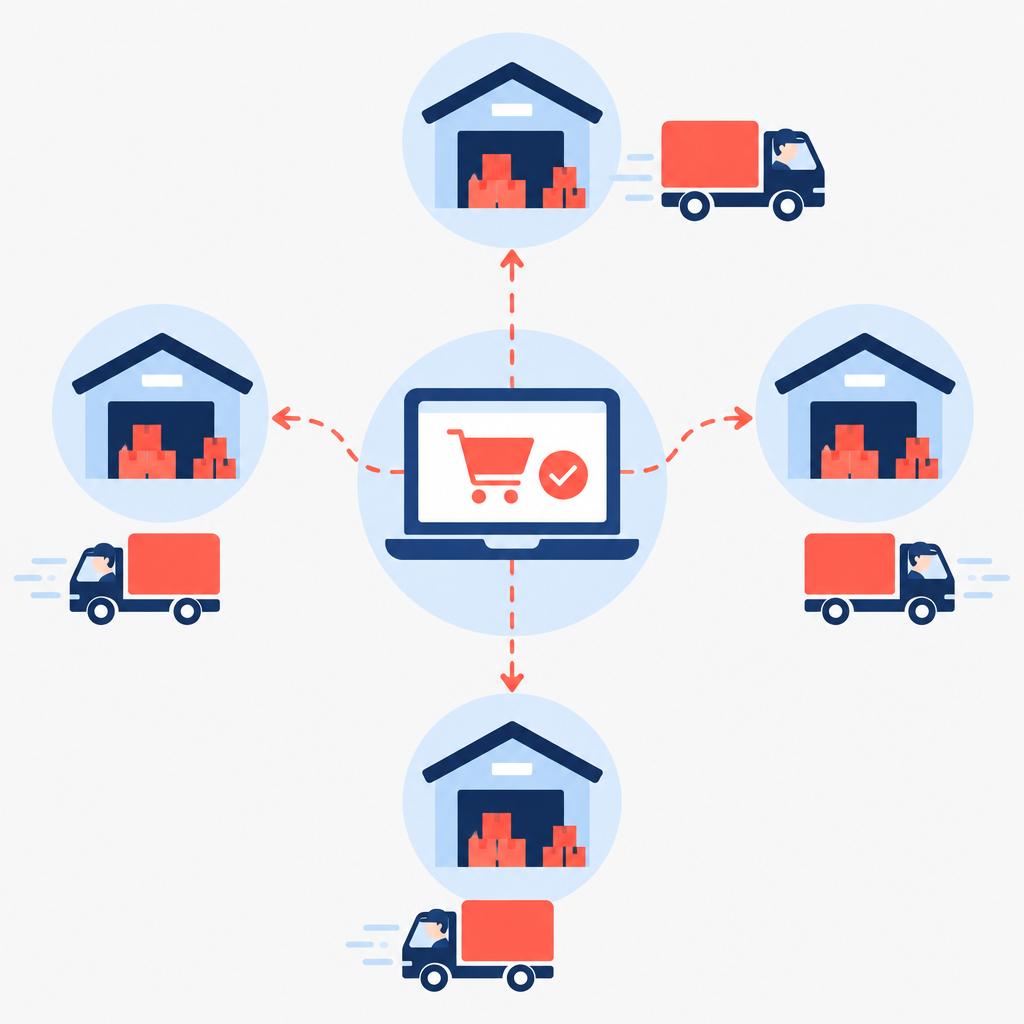
The AI Multi‑Warehouse Fulfilment Router automates the decisions and system updates required when a single customer order must be fulfilled from more than one location. It analyses inventory availability, preferred warehouses and carrier rules, then splits or consolidates shipments, creates pick/pack tasks and posts shipment details back to your order systems.
implementi.ai operates and maintains the automation as a managed service: we configure the routing rules and integrations, monitor daily operation, handle exceptions and update the solution as your network or rules change. This reduces manual routing work, late shipments and inconsistent customer messages.
问题
Without automation, multi‑warehouse fulfilment depends on spreadsheets, manual checks across inventory systems and ad‑hoc rules. Operations teams spend time deciding which warehouse should ship each item, creating separate shipments, coordinating carriers and updating order statuses. Mistakes appear as missed inventory, duplicate shipments, incorrect carrier choices or missed cut‑offs, and the overhead grows rapidly as order volume or the number of stock locations increases. Fragmented data across e‑commerce platforms, WMS, ERP or shipping tools makes consistent routing and timely customer updates hard to sustain manually.

该解决方案实现了哪些自动化功能
This product automates the decision-making and system updates needed to route and split orders across multiple fulfilment locations. It works per order and continuously enforces your configured business rules while handling common exceptions.
- Automatic allocation of order lines to warehouses based on availability, freshness, location, cost and SLA rules.
- Smart split‑shipment creation and consolidation suggestions when multi‑parcel routing is required.
- Carrier selection per parcel using rules for cost, service level and origin warehouse.
- Push of pick/pack tasks and shipment requests to WMS or fulfilment partners.
- Order-status updates in the e‑commerce/OMS and automated customer notifications about split shipments.
- Exception detection and alerting for backorders, missing SKUs or carrier failure responses.
您的企业将获得什么
- Reduced manual routing effort. Removes time-consuming manual decisions about which location should fulfil each item and automates shipment creation so operations teams focus on exceptions.
- Faster, more reliable deliveries. Consistent application of SLA and proximity rules improves the chance shipments meet promised delivery windows and reduces routing delays.
- Lower fulfilment cost. Automated carrier selection and warehouse choice reduce unnecessary cross‑region shipping and select better-cost service levels where appropriate.
- Fewer fulfilment errors. Automated allocation and system updates reduce duplicate shipments, incorrect fulfilment addresses and lost inventory reconciliations.
- Clear customer communication. Customers receive accurate tracking and split‑shipment notices automatically, reducing inbound support contacts.
一个实际应用案例
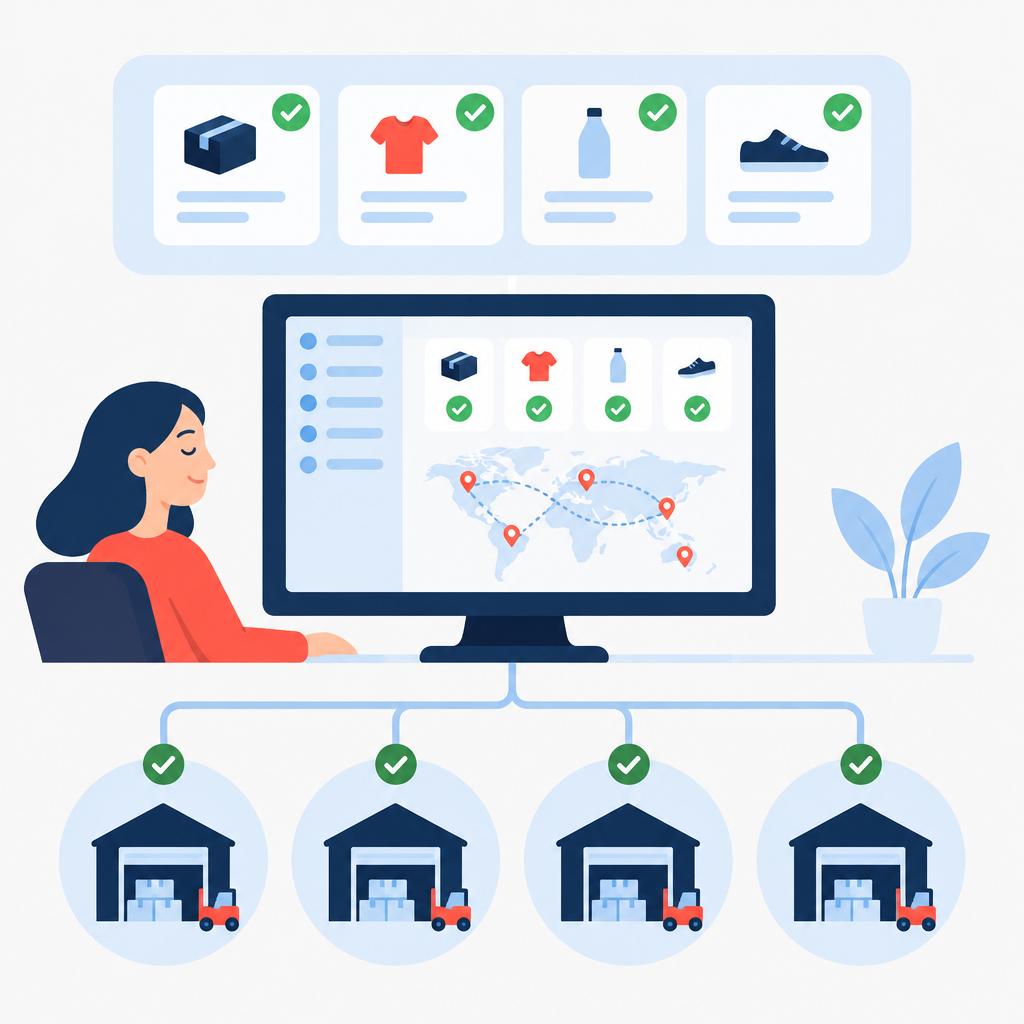
For a mid‑sized online retailer with regional warehouses and a national drop‑ship partner, daily orders often contain items stocked in different locations. Previously, staff manually inspected inventory and created separate shipments, producing delays and inconsistent customer messages. With this service, every incoming order is evaluated instantly: line items are allocated to the best fulfilment location, split shipments are created when necessary, carriers are selected per parcel, and the order and customer channels are updated with tracking information. Exceptions—such as missing SKUs or carrier label failures—are flagged for human review, so the team handles only true exceptions rather than routine routing tasks.
为谁而设?
- Multi‑warehouse e‑commerce retailers — need automated routing and split shipments to reduce manual work and mistakes.
- Third‑party logistics providers (3PLs) — want consistent, rules-based allocation across client inventories and carriers.
- Distributors with regional fulfilment centres — require reliable carrier selection and order updates for high volume B2B orders.
- Brands using a mix of owned warehouses and dropship vendors — need a single routing decision layer that coordinates across systems.
月度服务包含哪些内容
The monthly subscription covers the managed automation and ongoing operational services required to keep multi‑warehouse routing active and correct.
- Implementation and maintenance of the routing automation and configured integrations with your agreed systems.
- AI-driven processing of orders for allocation, split‑shipment decisions and carrier selection.
- Continuous monitoring of the automation’s operation and handling or fixing automation errors as they arise.
- Reasonable configuration updates to routing rules and mappings needed to keep the agreed solution working as your network changes.
何时可能不需要此解决方案
- Companies with a single fulfilment location and simple shipping needs — the automation may be unnecessary overhead.
- Businesses that prefer manual control of every shipment and are unwilling to formalise routing rules — this solution centralises and enforces rules.
工作原理
- Order intake and enrichment. Incoming orders are captured from your e‑commerce or OMS feed and enriched with real‑time inventory snapshots, location attributes and any customer delivery preferences.
- Availability and location scoring. Each order line is scored against available stock, warehouse proximity, SLA requirements and business rules to identify feasible fulfilment sources.
- Allocation and split decision. The system allocates items to one or more fulfilment locations and determines whether the order should be shipped as a single consolidated parcel or multiple shipments, based on rules and cost trade‑offs.
- Carrier and service selection. For each parcel, the automation selects carriers and service levels using configured preferences, label availability and origin constraints, then requests shipping labels where supported.
- Task creation and system updates. Pick/pack tasks and shipment requests are sent to WMS or fulfilment partners, and order status, tracking numbers and parcel details are posted back to your e‑commerce/OMS and customer channels.
- Exception detection and human review. If allocation fails, inventory data is inconsistent, or carrier label creation returns an error, the system flags the order for manual review and provides diagnostic context to resolve the issue.
- Ongoing reconciliation. Shipment confirmations and delivery events are reconciled to maintain order state and support post‑shipment actions such as returns routing or refunds routing rules.
工作流示例
For example, imagine a company that receives an online order containing three SKUs: one stocked at Warehouse A, one at Warehouse B, and one currently drop‑shipped by a partner. The automation enriches the order with live stock levels, applies proximity and SLA rules, and allocates each SKU to the optimal source. It creates two parcels (Warehouse A and Warehouse B), requests labels for the selected carriers, and sends pick/pack tasks to both warehouses. The drop‑ship item triggers a supplier order via the partner integration. Tracking numbers are posted back to the order system and customers receive split‑shipment notifications. If the carrier API returns a label error for Warehouse B, the order is flagged for review with clear diagnostics so staff can quickly fix or reroute that parcel.
集成
典型系统
Typical systems that can be connected include e‑commerce and order management platforms (Shopify, WooCommerce, Magento), warehouse management systems (WMS) and fulfilment partners, enterprise resource planning systems (ERP) such as NetSuite or Microsoft Dynamics for inventory visibility, and shipping/label services or aggregators (ShipStation, Shippo) and carrier APIs. Other systems can potentially be connected by agreement.
连接方法
Connections are implemented using available APIs and webhooks where supported, or by agreed alternatives such as secure CSV exports/imports, SFTP, or middleware platforms. For some fulfilment partners we use the partner’s integration endpoints; for legacy systems we can accept scheduled data extracts and push requests to update order status. The exact methods are confirmed during scoping.
我们希望贵公司能提供以下内容
Before launch we agree on systems to connect, access methods (API credentials, webhook endpoints, or file transfer), SKU and location mappings, carrier accounts and label access, and your routing rules (proximity, SLA, cost preferences, consolidation rules). We also need sample orders and inventory snapshots for testing and a list of exception-handling policies. Compatibility and the final access method are confirmed before implementation.
常见问题解答
Which e‑commerce and WMS platforms do you support?
We integrate with common e‑commerce platforms and WMS via APIs and partner connectors; during scoping we confirm specific platforms and the available integration methods for your systems.
Can I customise routing rules by SKU, region or customer type?
Yes. Routing policies are configurable: you can prioritise by proximity, warehouse cost, service level, channel or VIP customer rules. implementi.ai applies and maintains these rules as part of the managed service.
What happens when inventory data is inconsistent?
The automation flags discrepancies and applies configured fallback rules (e.g. reserve from alternate location or hold for manual review). Flags include diagnostic details so your team can resolve root causes quickly.
How are customers notified about split shipments?
Tracking numbers and parcel details are posted back to your order system and can be included in automated customer notifications or existing notification templates; the exact notification content is agreed before launch.
How do exceptions and manual approvals work?
Exceptions generate a clear ticket or alert with the required context. Your operations team can approve reallocation, cancel items or route alternative carriers; the automation learns from repeated decisions if you choose to convert them into a rule.
How does pricing change with volume or additional integrations?
Monthly pricing reflects the agreed integration scope, processing frequency and monitoring required. During scoping we confirm any additional costs linked to new systems, higher transaction volumes or special carrier integrations.
价格
激活费涵盖商定的自动化范围的初始配置、实施和上线工作。.
月度订阅费用涵盖了自动化服务的日常运行、维护和管理。.
具体范围和最终的月费将在上线前确定。.
准备好将此流程自动化了吗?
Tell us which e‑commerce platform, warehouse/WMS and primary carriers you use plus your average daily order volume.
我们将确认该解决方案的接入方式、适用范围以及最终的月度订阅费用。.
| 给我们发电子邮件contact@implementi.ai | 请致电我们+48 660 983 178 |