

Description
The AI Supplier Price & Contract Change Monitor continuously watches supplier pricing and contract terms across your invoices, purchase orders and catalogs to surface unexpected price increases, contract deviations and vendor-rate inconsistencies. It uses AI to compare current charges with contract terms and historical baselines, highlighting exceptions that need review.
implementi.ai configures and runs the automation, connects agreed systems, monitors operation and fixes issues so your team receives prioritized, actionable alerts rather than raw data. The service reduces manual price checks and helps you spot renegotiation or compliance opportunities earlier.
The problem
Procurement and finance teams typically rely on periodic manual checks, spreadsheets and ad‑hoc reviews to verify supplier prices and contract compliance. When invoices arrive, teams must cross-check unit rates, contract clauses, approved price lists and historical purchase prices—work that is repetitive, time-consuming and prone to missed details. As supplier bases and transaction volumes grow, the manual process breaks down: small price drifts go unnoticed, allowed contract discounts aren’t applied consistently, and opportunities to correct vendor charges or renegotiate terms slip through the cracks. These gaps increase controllable spend and create extra reconciliation work at month end.

What this solution automates
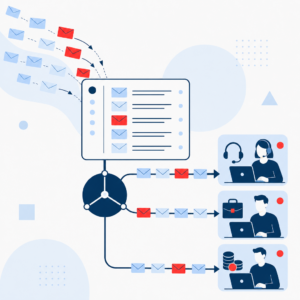
This managed automation continuously ingests pricing and contract-related data, compares current charges to contract rules and historical baselines, and outputs prioritized exceptions for human review.
- Automatically ingest invoices, purchase orders and supplier price lists from ERP/accounting systems.
- Parse and normalise contract terms and agreed rates for automated comparisons.
- Detect rate deviations, unexpected surcharges and mismatches vs approved price lists.
- Prioritise exceptions by estimated financial impact and frequency.
- Generate suggested actions: flag for approval, request supplier clarification, or create a reconciliation ticket.
- Deliver alerts and summaries to your chosen channels (email, Slack, procurement dashboard).
What your business gains
- Faster exception detection. The automation surfaces price and contract anomalies as they appear, reducing time spent hunting discrepancies in dispersed systems.
- Tighter contract compliance. By applying contract rules automatically, teams see when supplier charges deviate from agreed terms and can correct or dispute them sooner.
- Prioritised work queue. Alerts are ranked by likely financial impact and recurrence, so procurement and AP teams focus on the issues that matter most.
- Reduced reconciliation effort. Early detection of rate issues lowers month‑end firefighting and reduces manual invoice chasing.
- Ongoing operational ownership. implementi.ai monitors the automation, handles errors and applies reasonable updates so the solution keeps working as data sources change.

A practical use case
Procurement at a mid-sized manufacturer receives hundreds of supplier invoices weekly from multiple plants and a central ERP. A new supplier price list was distributed but not consistently applied; some invoices include legacy higher rates while others have ad‑hoc surcharges. The AI monitor ingests invoices and the supplier price list, spots repeated rate deviations for high‑volume parts, and escalates the highest‑impact exceptions to procurement with suggested next steps (dispute invoice, request corrected invoice, or confirm new rate). Procurement resolves the biggest anomalies quickly, reducing controllable overspend and clarifying the supplier’s pricing practice across locations.
Who is it for?
- Central procurement teams in manufacturing or distribution: need continuous price and contract checks across multiple locations and suppliers.
- Accounts payable teams with high invoice volumes: get fewer surprises and a prioritised exception queue to speed reconciliation.
- Small-to-medium businesses with negotiated supplier contracts: ensure contract terms are applied consistently without hiring extra headcount.
What is included in the monthly service
The monthly subscription covers operation and maintenance of the agreed automation, including system connections, AI processing for anomaly detection, monitoring of the automation’s operation, and handling and fixing of automation errors. It also includes reasonable configuration updates to keep the rules and thresholds aligned with your contracts and procurement practices.
- Operational automation and monitoring
- Connections configured with agreed systems
- AI analysis and prioritized exceptions
- Error handling and maintenance
- Reasonable configuration updates each month
When this solution may not be necessary
- Companies with very small supplier volumes and no formal contracts—manual checks may remain simpler.
- Organisations that cannot provide electronic invoices, order data or any method to access contract terms—automated comparison requires machine-readable data or agreed export methods.
How it works
- Connect data sources. We connect the agreed systems—ERP, accounting, procurement or file storage—to feed invoices, purchase orders and supplier price lists into the automation for regular processing.
- Extract and normalise. The service extracts unit prices, quantities, discount lines and contract identifiers, then normalises supplier names, SKUs and currency so records are comparable across systems and time.
- Parse contract terms. AI-assisted parsing examines stored contract documents or price lists to extract applicable rates, allowed surcharges and effective date ranges for automated rule creation.
- Compare and baseline. Current invoice charges are compared against contract rules and historical price baselines to identify deviations, unusual surcharges or missing discounts.
- Score and prioritise. Detected exceptions are scored by likely financial impact, frequency and supplier criticality so teams see high‑value issues first.
- Notify and suggest actions. The system delivers concise alerts with suggested next steps—request clarification, dispute an invoice or approve a supplier rate change—into your chosen channels.
- Monitor and refine. implementi.ai monitors automation performance, fixes errors, and applies reasonable configuration updates to thresholds and parsing rules as contracts or supplier behaviour change.
Example workflow
For example, imagine a company that receives weekly invoices from three logistics suppliers and stores contracts in a shared document repository. An invoice arrives charging a higher per‑km rate than the contract for a specific route. The automation imports the invoice from the accounting system, matches the supplier and SKU to the stored contract, extracts the agreed per‑km rate, and compares it to the invoice line. The system flags the discrepancy, scores it as high impact because the route is high volume, and sends a prioritized alert to procurement with a suggested action to request a corrected invoice. If the supplier has changed rates recently, the automation will surface the new price list and mark the case for human review rather than automatic dispute.
Integrations
Typical systems
Typical systems that customers connect include ERP and accounting systems (for example SAP, Microsoft Dynamics 365, NetSuite), procurement platforms and PO modules, document repositories or contract management systems, and e‑invoicing feeds. Other systems can potentially be connected by agreement, including e‑commerce or supplier portals that expose invoice or price list data.
Connection methods
Connections are implemented using available APIs, native integrations where supported, secure file exports (CSV/Excel), SFTP, email inbox ingestion for invoice PDFs or structured e‑invoicing feeds, and agreed access to contract documents (document repository or API). The specific method is confirmed during scoping and depends on your systems’ capabilities.
What we need from your company
Before launch we agree which systems will be connected, sample invoices, representative purchase orders and the location of contract documents or price lists. We also need your decision rules for when to escalate an exception, preferred notification channels and a list of priority suppliers or SKUs. Compatibility and exact access methods are confirmed before implementation.
FAQ
Which systems can you integrate with?
We typically integrate with ERP/accounting and procurement systems via APIs or file exports. We confirm exact compatibility during scoping and use generic methods (CSV, SFTP, email ingestion) when an API is not available.
How does the system know contract rates?
The automation extracts rates from contract documents or authorised price lists supplied by your team. Where contract text is complex, we create agreed extraction rules and keep them under ongoing configuration and maintenance.
Who handles false positives or parsing errors?
implementi.ai monitors the automation, handles errors and applies fixes or updates to parsing and matching rules. Your team reviews flagged exceptions and provides feedback that we use to reduce false positives over time.
Can the system automatically reject an invoice?
The solution recommends actions and can create a task or ticket in your workflow, but automatic invoice rejection or payment blocking is only implemented where explicitly agreed during scoping and with appropriate internal controls.
How does pricing change with scale or more integrations?
Monthly pricing reflects the agreed integrations, data volume and complexity. Significant increases in integrations or data processing frequency are reviewed and may require scope adjustments; we confirm any changes before implementation.
Price
The activation fee covers the initial setup, implementation and launch of the agreed automation scope.
The monthly subscription covers the ongoing operation, maintenance and management of the automation service.
The exact scope and final monthly subscription are confirmed before launch.
Ready to automate this process?
Tell us which ERP, procurement and contract storage systems you currently use and how invoices are received.
We’ll confirm how this solution can be connected, its scope and the final monthly subscription.